Industrial Integration of Small Diameter Pipe Laser Systems in Valencia, Venezuela
Valencia, the capital of the Carabobo State, remains the primary industrial hub of Venezuela, housing a dense concentration of automotive, HVAC, and metal-mechanical manufacturing facilities. As global supply chains demand higher precision and faster throughput, the adoption of specialized Small Diameter Pipe Laser technology has become a critical requirement for local manufacturers seeking to maintain international competitiveness. Unlike general-purpose tube lasers, systems designed for small diameters—typically ranging from 10mm to 120mm—address specific challenges regarding rotational speed, material vibration, and beam stability.
The implementation of these systems in the Venezuelan market is not merely a matter of hardware acquisition but involves a rigorous alignment with international safety and operational standards. Specifically, the integration of CE (Conformité Européenne) and NR-12 (Norma Regulamentadora 12) compliance ensures that high-speed laser processing does not compromise operator safety or equipment longevity in high-duty cycle environments.
Technical Specifications of Fiber Laser Processing for Small Tubes
The processing of small diameter tubing requires a high-frequency Fiber Laser Resonator capable of maintaining a stable beam quality (M2 < 1.1). In Valencia’s industrial sector, where materials such as stainless steel, copper, and aluminum are frequently utilized for heat exchangers and automotive fuel lines, the laser source must provide a wavelength of approximately 1.06 microns. This wavelength is optimal for absorption in metallic substrates, minimizing back-reflection risks that can damage the optical chain.
Precision in small diameter applications is dictated by the mechanical synchronization of the chucks. High-speed rotation, often exceeding 120 RPM, is necessary to maintain linear cutting speeds on small circumferences. Modern systems utilize Pneumatic Chuck Synchronization to ensure that thin-walled pipes are held with sufficient force to prevent slippage without inducing structural deformation. This is particularly vital for pipes with wall thicknesses below 1.0mm, where traditional mechanical clamping often fails.
CE Certification: Ensuring Electromagnetic and Optical Safety
For a Small Diameter Pipe Laser to be deployed in a globalized B2B framework, it must adhere to CE marking requirements, specifically the Machinery Directive 2006/42/EC. In the context of Valencia’s manufacturing plants, CE compliance guarantees that the equipment has undergone rigorous testing for electromagnetic compatibility (EMC) and pressure vessel safety (for assist gas systems).

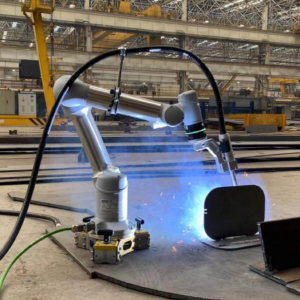
Industrial Application of Small Diameter Pipe Laser
Optical safety is categorized under EN 60825-1. Given that fiber lasers operate in the invisible infrared spectrum, CE-compliant machines must feature Class 1 enclosures. This involves specialized viewing windows made of certified polycarbonate or glass filters that attenuate the specific laser wavelength. Furthermore, the integration of interlocked access points ensures that the laser source is deactivated instantaneously if any protective panel is breached during operation. For Venezuelan enterprises exporting components to Europe or North America, utilizing CE-certified machinery is often a prerequisite for quality audits.
NR-12 Compliance in the Latin American Regulatory Landscape
While CE is a European standard, NR-12 is a Brazilian regulatory standard that has become a benchmark for machine safety across South America, including Venezuela. NR-12 focuses heavily on the physical integrity of the worker and requires a comprehensive risk analysis for every stage of the machine’s lifecycle, including transport, installation, operation, and maintenance.
Key requirements for NR-12 compliance in laser pipe cutting include:
- Safety Interface Monitoring: All emergency stops and light curtains must be monitored by safety relays or safety PLCs (Programmable Logic Controllers) with redundancy.
- Physical Barriers: Fixed and mobile guards must prevent access to the “danger zones,” such as the rotating chucks and the moving laser head gantry.
- Reset Circuits: The system must require a manual reset after a safety interruption, preventing the machine from restarting automatically when a fault is cleared.
- Technical Documentation: All manuals, safety signs, and operational procedures must be provided in the local language (Spanish) to ensure clear communication of risks.
Implementing NR-12 in Valencia’s factories reduces the incidence of workplace injuries and minimizes the legal liabilities for manufacturers, creating a standardized safety culture that aligns with global ESG (Environmental, Social, and Governance) goals.
Optimizing Production with Automatic Load Sensing
Efficiency in small diameter pipe processing is significantly enhanced by Automatic Load Sensing technology. In many Valencia-based facilities, manual loading of small tubes is time-consuming and prone to human error. Automated bundle loaders equipped with sensors can detect tube geometry and orientation, feeding them into the laser chucks without operator intervention.
The control software utilizes nesting algorithms specifically designed for tubing, which minimize “remnant” or scrap material. By calculating the optimal sequence of cuts and rotations, the system can achieve material utilization rates exceeding 95%. This is especially critical in the Venezuelan market, where the cost of imported raw materials—such as high-grade 316L stainless steel—can be volatile. Reducing waste directly correlates to improved profit margins in B2B contract manufacturing.
Environmental and Operational Considerations in Valencia
The local climate in Valencia, characterized by high humidity and ambient temperatures, necessitates robust cooling systems for laser resonators. Chiller units must be sized with sufficient overhead to maintain the laser medium and the cutting head at a constant 20-25 degrees Celsius. Failure to manage thermal loads can lead to beam divergence and premature failure of the diode modules.
Furthermore, the stability of the power grid in the region requires the installation of industrial-grade voltage stabilizers and UPS (Uninterruptible Power Supply) systems. A sudden power fluctuation during a high-speed cut can result in the loss of both the workpiece and the expensive laser nozzle. Compliance with CE and NR-12 also extends to the electrical cabinet design, requiring proper grounding and circuit separation to mitigate the risks associated with electrical instability.
Industry Insight: The Shift Toward Autonomous Tube Processing
The transition toward Small Diameter Pipe Laser systems in Valencia reflects a broader global shift in the metal fabrication industry. We are moving away from multi-stage processes—where tubes are sawed, drilled, and milled on separate machines—toward “all-in-one” laser processing. This consolidation of workflows reduces the total cost of ownership and eliminates the cumulative tolerances associated with moving parts between different workstations.
As the industry evolves, the integration of Industry 4.0 protocols will become the next frontier for Venezuelan manufacturers. Real-time monitoring of gas consumption, laser power degradation, and cutting speeds via IoT (Internet of Things) platforms will allow for predictive maintenance. For regional players, the commitment to international safety standards like CE and NR-12 is no longer optional; it is the foundational framework required to participate in the high-tech global supply chain. The future of Valencian manufacturing lies in the precision of light, governed by the strictness of international safety engineering.
Industrial Expertise & Support
Are you looking for high-performance Small Diameter Pipe Laser tailored for the Global market? Our engineering team provides comprehensive solutions for modern manufacturing.