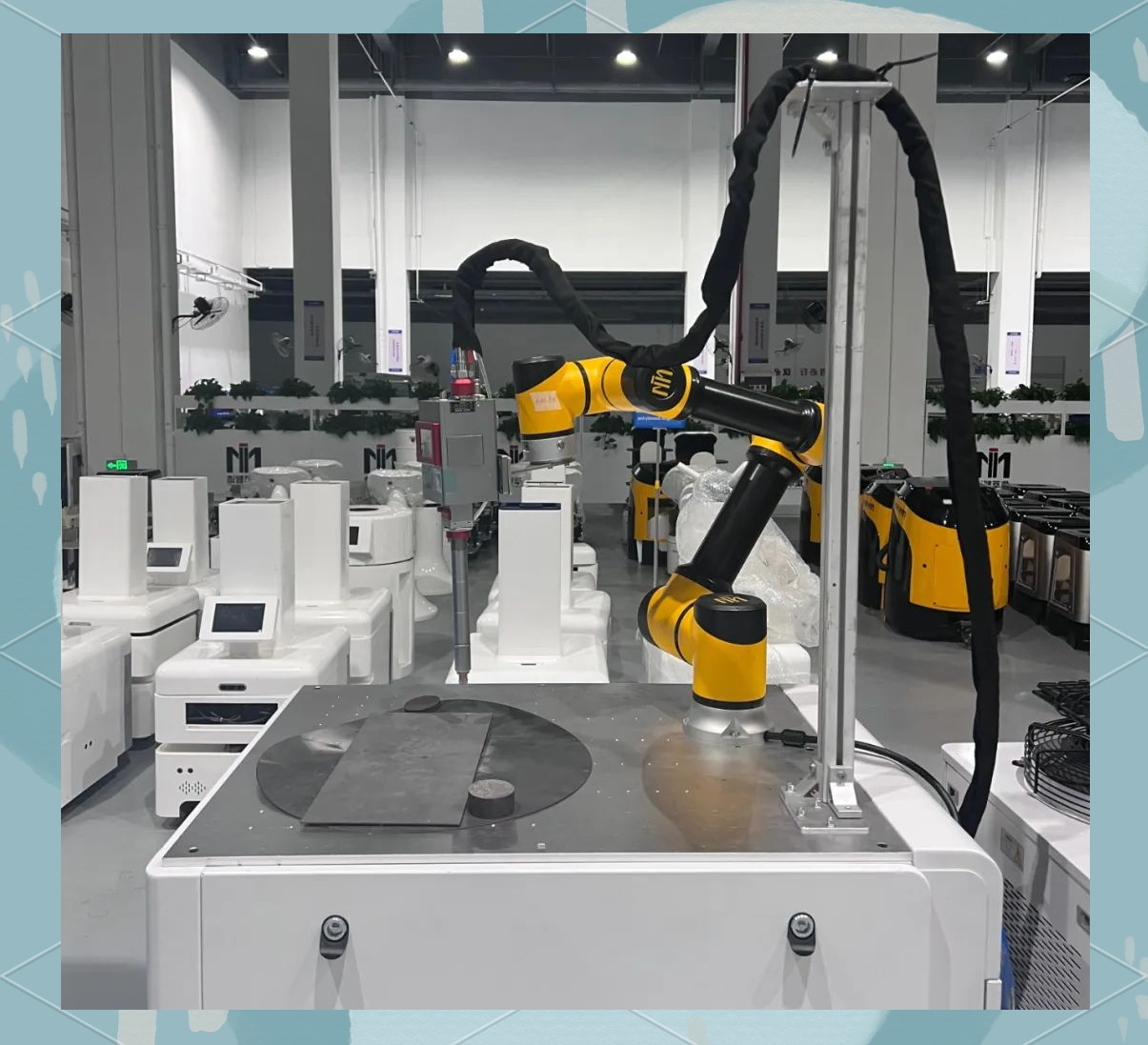
Description
Technical Overview
The CMC-LW-1500-C is an integrated portable fiber laser welding system featuring a 1500W continuous wave (CW) laser source and a 6-axis collaborative robot (cobot) arm. This system is designed for high-precision joining of stainless steel, carbon steel, and aluminum alloys. By utilizing a 6-axis motion controller, the unit maintains a constant welding speed and focal position, which reduces material distortion and eliminates the need for post-weld grinding. The portable chassis allows for rapid deployment in different production cells, providing a direct ROI through reduced labor requirements and a 98 percent first-pass yield rate.
Technical Parameters
| Parameter | Specification |
| Model | CMC-LW-1500-C |
| Laser Power | 1500W |
| Laser Source | Fiber Laser (CW) |
| Wavelength | 1080nm ± 10nm |
| Robot Degrees of Freedom | 6-Axis |
| Working Radius | 911 mm |
| Payload Capacity | 5 kg |
| Positioning Repeatability | ±0.03 mm |
| Welding Speed | 0 – 120 mm/s |
| Cooling Method | Integrated Industrial Water Chiller |
| Protection Rating | IP54 |
| Input Voltage | AC 220V, 50/60Hz |
| Wire Feeder Support | 0.8mm / 1.0mm / 1.2mm / 1.6mm |
| Operating Temperature | 10°C to 40°C |
Key Performance Advantages
Automated Precision: The 6-axis arm provides consistent torch angles and travel speeds that manual operators cannot maintain over long shifts. This ensures uniform penetration and bead width across complex geometries.
Safety and Collaboration: The system utilizes force-sensing technology to detect obstructions. If the arm contacts an object or person, it stops immediately, allowing for operation in shared workspaces without the need for traditional safety cages.
Simplified Programming: The control interface supports “drag-to-teach” programming. Operators can manually move the arm to the start and end points of a weld, significantly reducing the time required to set up new production runs.
High Thermal Efficiency: The 1500W fiber laser source concentrates energy into a narrow beam, creating a minimal heat-affected zone (HAZ). This prevents warping in thin-gauge sheet metal applications below 2.0mm thickness.
Industrial Applications
Sheet Metal Processing: Used for welding electrical enclosures, server racks, and HVAC ductwork where aesthetic finish and structural integrity are required.
Automotive Manufacturing: Integration into production lines for welding exhaust components, seat frames, and small structural brackets.
Kitchenware and Appliances: High-speed joining of stainless steel sinks, commercial ovens, and refrigeration units without the need for secondary polishing.
Hardware and Tooling: Precision welding of hand tools, valves, and pipe fittings requiring leak-proof seals and high pressure resistance.
Maintenance FAQ
What is the daily maintenance routine for the laser head? The protective lens must be inspected every 8 hours for dust or spatter. If contamination is found, clean the lens using a lint-free swab and 99.9 percent isopropyl alcohol.
How often should the cooling water be replaced? The integrated chiller uses distilled water to prevent mineral buildup. The water level should be checked weekly, and the entire volume should be replaced every 3 to 6 months depending on the ambient dust levels in the facility.
Does the cobot arm require lubrication? The 6-axis joints are sealed for life under standard operating conditions. Maintenance is limited to checking the cable harness for wear and ensuring the mounting bolts remain torqued to specification.
What gas is required for operation? The system typically uses Argon or Nitrogen as a shielding gas. The flow rate should be maintained between 15-20 L/min to ensure the weld pool remains free of oxidation.