Precision Engineering: The Rise of Small Diameter Pipe Laser Technology in Santiago’s Industrial Sector
The industrial landscape of Santiago, Chile, has undergone a significant transformation, moving from traditional mechanical fabrication toward high-precision automated systems. As a primary hub for mining equipment manufacturing, food processing infrastructure, and aerospace components in South America, the demand for high-tolerance pipe processing has reached a critical threshold. Central to this evolution is the deployment of the Small Diameter Pipe Laser, a technology designed to address the complexities of processing tubes with diameters ranging from 10mm to 150mm. Unlike large-scale structural steel cutting, small diameter processing requires a higher degree of thermal control and mechanical synchronization to ensure structural integrity and weld readiness.
The integration of fiber laser technology into the Chilean manufacturing sector is not merely an upgrade in cutting speed; it is a fundamental shift in how metallurgical joints are prepared. In high-pressure environments, such as those found in copper leaching plants or hydraulic systems, the quality of the weld is dictated by the precision of the edge preparation. The transition to automated 45-degree beveling represents a move toward zero-defect manufacturing, where the laser system performs both the dimensional cut and the weld preparation in a single continuous cycle.
The Mechanics of 45-Degree Beveling for Seamless Welding
In the context of pipe fabrication, a 45-degree bevel is the standard requirement for creating a V-groove butt joint. This geometry is essential for ensuring full root penetration during the welding process. When utilizing a Fiber Laser Source, the system employs a multi-axis cutting head capable of tilting relative to the pipe’s longitudinal axis. This allows for the creation of a precise chamfered edge that maintains a consistent land thickness across the entire circumference of the workpiece.
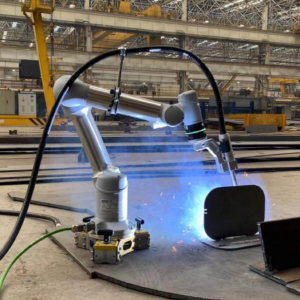
The technical advantage of using a laser for this process, as opposed to traditional plasma or mechanical milling, lies in the Heat Affected Zone (HAZ). Laser cutting concentrates energy into a microscopic focal point, resulting in a narrow kerf and minimal thermal distortion. For small diameter pipes, where the wall thickness is often between 1mm and 6mm, managing heat dissipation is vital. Excessive heat can lead to grain growth in the metal or warping of the pipe profile, both of which compromise the subsequent welding phase. By utilizing high-frequency pulse modulation, modern laser systems in Santiago are achieving bevels that require no secondary grinding or cleaning, directly facilitating a seamless transition to robotic or manual TIG/MIG welding.
Addressing Challenges in Small Diameter Workpieces
Processing small diameter pipes introduces specific mechanical challenges that are not present in heavy-duty structural steel. The primary issue is material stability. Small tubes are prone to vibration and deformation under the centrifugal forces of high-speed rotation. To counteract this, the systems deployed in Santiago utilize specialized pneumatic or electric chucks with high-sensitivity pressure regulation. These chucks provide sufficient clamping force to maintain Beveling Geometry accuracy without crushing the thin-walled profiles.

Industrial Application of Small Diameter Pipe Laser
Furthermore, the internal reflection of the laser beam is a concern in small diameters. When cutting the top wall of a 20mm pipe, the beam can potentially strike the inner surface of the opposite wall. Advanced CNC algorithms now include “active anti-collision” and “power ramping” features. These software-driven controls adjust the laser power and gas pressure in real-time based on the cutting head’s position and the pipe’s rotational speed, ensuring that the integrity of the internal pipe wall remains uncompromised during the beveling process.
Integration with Santiago’s Mining and Infrastructure Projects
Santiago serves as the logistical and engineering center for Chile’s massive mining sector. The pipes used in these environments often carry corrosive fluids or operate under extreme hydraulic pressure. A 45-degree bevel produced by a Small Diameter Pipe Laser ensures that the weld bead can be deposited with maximum surface area contact, significantly reducing the risk of joint failure. This is particularly critical in stainless steel and specialized alloy piping, where precise fit-up is required to maintain the corrosion-resistant properties of the material.
Beyond mining, the local HVAC and food-grade piping industries benefit from the high throughput of these systems. The ability to program complex nesting patterns—where multiple beveled parts are cut from a single six-meter raw pipe—minimizes material waste. In a global economy where raw material costs are volatile, the efficiency gain of a laser system over traditional saw-and-mill methods provides a significant competitive advantage to Chilean exporters.
Technical Specifications and Accuracy Standards
The performance of laser pipe cutting systems in a B2B context is measured by positioning accuracy and repeatability. Current-generation machines operating in the Santiago industrial corridor typically offer a positioning accuracy of plus or minus 0.03mm and a repeatability of 0.02mm. For a 45-degree bevel, the angular tolerance is often held within 0.5 degrees. This level of precision is necessary for “seamless welding,” a term that refers to the ability of the two pipe ends to meet with zero gap, allowing for a uniform weld pool that requires minimal filler material.
The use of Nitrogen as an assist gas is also standard for high-end applications in the region. Unlike Oxygen, which causes oxidation on the cut surface, Nitrogen provides a clean, oxide-free edge. This is crucial for stainless steel pipes used in Santiago’s pharmaceutical and food processing sectors, as it eliminates the need for post-cut pickling or chemical cleaning before welding.
Economic Impact and Operational Efficiency
The transition to automated laser beveling represents a significant reduction in labor hours. In a traditional workflow, a pipe would be cut to length, moved to a secondary station for manual beveling, and then cleaned. A Small Diameter Pipe Laser consolidates these three steps into one. For a facility in Santiago processing 500 units per shift, the elimination of secondary handling can reduce the total production cycle time by up to 60 percent. This operational efficiency is a key driver for the adoption of the technology in the Southern Cone, allowing local manufacturers to compete with global suppliers by lowering their per-unit cost while increasing quality standards.
Concluding Industry Insight: The Future of South American Fabrication
The adoption of small diameter pipe laser technology in Santiago, Chile, is a microcosm of a larger global trend: the move toward “intelligent fabrication.” As Industry 4.0 principles continue to permeate the South American market, we expect to see these laser systems integrated into fully automated production lines where the pipe is loaded, cut, beveled, and moved to a robotic welding cell without human intervention. The future of the industry lies in the data-driven optimization of the 45-degree bevel, where real-time sensors adjust the laser parameters to account for minor variations in material thickness or alloy composition. For global B2B stakeholders, the Santiago market now offers a sophisticated hub for high-precision pipe components that meet the most stringent international welding standards, signaling a new era of manufacturing excellence in the region.
Industrial Expertise & Support
Are you looking for high-performance Small Diameter Pipe Laser tailored for the Global market? Our engineering team provides comprehensive solutions for modern manufacturing.