Advancements in Small Diameter Pipe Laser Processing: Addressing Reflective Materials in Rosario’s Industrial Hub
The industrial landscape of Rosario, Argentina, has evolved into a critical center for metallurgical excellence, specifically within the automotive, HVAC, and electrical component manufacturing sectors. As global demand for high-efficiency heat exchangers and lightweight conductive pathways increases, the technical requirements for processing non-ferrous metals have become more stringent. The implementation of Small Diameter Pipe Laser systems equipped with advanced anti-reflection technology represents a significant shift in how regional manufacturers handle copper and aluminum alloys.
Processing small diameter pipes—typically those with an outside diameter (OD) of less than 30mm—presents unique mechanical and optical challenges. When these pipes are composed of highly reflective materials like C101 copper or 6061 aluminum, the complexity of laser-material interaction increases exponentially. The primary technical hurdle is the low absorption rate of standard laser wavelengths and the subsequent risk of catastrophic back-reflection into the resonator. In Rosario’s high-output facilities, solving these issues is essential for maintaining operational uptime and achieving the micron-level tolerances required for modern engineering specifications.
The Physics of Reflectivity in Non-Ferrous Pipe Fabrication
Copper and aluminum are characterized by high non-ferrous thermal conductivity and low initial absorption of infrared light. At room temperature, copper can reflect over 95 percent of a standard fiber laser’s energy at the 1070nm wavelength. This reflection is not merely an efficiency loss; it poses a direct threat to the laser source. If the reflected beam travels back through the delivery fiber, it can cause thermal runaway in the optical isolators or destroy the pump diodes.
In the context of small diameter pipes, the geometry exacerbates the problem. The curved surface of a 10mm or 15mm tube can act as a convex mirror, scattering the beam or, in certain orientations, focusing the reflection back into the cutting head optics. To mitigate this, the integration of back-reflection isolation systems is mandatory. These systems utilize optical sensors that monitor the return light in real-time. If the sensor detects a reflection threshold that exceeds safe operational parameters (typically measured in milliseconds), the system modulates the power or shuts down the beam to prevent hardware failure.
Anti-Reflection Technology and Beam Modulation
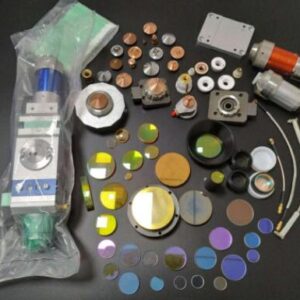
Modern laser systems deployed in the Rosario industrial corridor utilize specific hardware and software configurations to overcome the reflective barrier. One primary method is the use of nLIGHT or IPG-style back-reflection protection, which employs a combination of optical de-coupling and absorptive “dumps” within the laser source itself. This allows the machine to process copper and aluminum continuously without the risk of damage that plagued earlier generations of CO2 or standard fiber lasers.

Industrial Application of Small Diameter Pipe Laser
Furthermore, the cutting process for small diameter pipes relies on high-frequency fiber laser modulation. By pulsing the laser at specific kilohertz frequencies rather than using a continuous wave (CW) at the start of the cut, the system creates a “piercing” effect that rapidly changes the material’s state from solid to liquid. Once the material is molten, its absorption rate increases significantly, allowing the laser to transition to a more stable cutting state. This transition must be managed with extreme precision in small diameter tubes to avoid “burn-through” on the opposite wall of the pipe, where the beam could inadvertently damage the interior surface.
Mechanical Precision in Small Diameter Handling
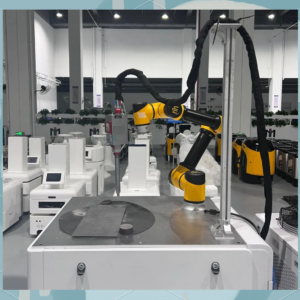
Beyond the optical challenges, the mechanical handling of small diameter pipes requires specialized motion control. In Rosario’s manufacturing plants, the integration of high-speed rotary chucks is vital. Because the mass of a 12mm copper tube is low, the rotational speeds required to maintain the necessary surface feet per minute (SFM) for a clean laser cut are significantly higher than those required for larger structural tubing.
The synchronization between the laser’s power output and the rotational velocity is governed by advanced CNC algorithms. If the rotation slows during a complex geometry cut—such as a saddle notch or a miter—the laser must instantly adjust its power density to prevent dross accumulation or thermal deformation. In aluminum processing, this is particularly sensitive because the narrow “plastic” temperature range of the material means that even a slight excess of heat can lead to structural sagging or poor edge quality.
Gas Dynamics and Kerf Management
The role of assist gases in small diameter pipe laser cutting cannot be overstated. For copper and aluminum, high-pressure nitrogen is the standard choice. Nitrogen acts as a mechanical force to eject the molten metal from the kerf before it can re-solidify, and it also prevents oxidation of the cut edge. In Rosario’s B2B supply chains, providing “weld-ready” parts is a competitive necessity; therefore, eliminating the oxide layer during the cutting process is a critical requirement.
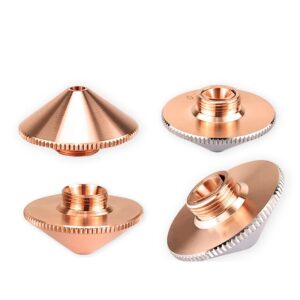
The nozzle geometry for small diameter pipes is often tapered to allow for closer proximity to the tube surface, ensuring that the gas pressure is concentrated directly on the focal point. This is essential for maintaining a clean internal diameter (ID). Any slag or dross that adheres to the inside of a small diameter pipe can restrict fluid flow in HVAC applications or create turbulence in hydraulic lines, leading to system inefficiencies or failure.
Industrial Applications in the Argentine Market
The adoption of these technologies in Rosario is driven by several key sectors. The agricultural machinery industry, a pillar of the Santa Fe province, requires high-precision aluminum fuel and hydraulic lines that can withstand vibration and high pressure. Similarly, the regional expansion of renewable energy projects has increased the demand for copper busbars and tubular connectors that require precise laser slotting and cutting.
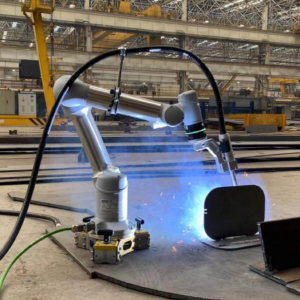
By utilizing anti-reflection technology, local manufacturers are able to move away from traditional mechanical sawing and drilling, which are prone to deforming thin-walled small diameter pipes. Laser processing ensures that the structural integrity of the tube is maintained, as it is a non-contact process. This results in higher repeatability and lower scrap rates, which are essential metrics for B2B contracts where material costs for copper remain volatile.
Concluding Industry Insight
The transition toward specialized laser processing for reflective materials marks a maturity phase in the global pipe fabrication market. For industrial hubs like Rosario, the investment in anti-reflection hardware is no longer an optional upgrade but a foundational requirement for participating in the global supply chain. As we look toward the next decade, the integration of Artificial Intelligence (AI) in monitoring the melt pool in real-time will likely be the next frontier. This will allow for even more aggressive processing speeds on copper and aluminum by dynamically adjusting beam parameters to the instantaneous absorption fluctuations of the material. Companies that master the intersection of high-speed mechanical rotation and advanced optical protection will define the standards for precision fluid-handling and electrical architecture in the modern industrial era.
Industrial Expertise & Support
Are you looking for high-performance Small Diameter Pipe Laser tailored for the Global market? Our engineering team provides comprehensive solutions for modern manufacturing.