Precision Infrastructure Maintenance: Small Diameter Pipe Laser Deployment in Quito
The modernization of urban infrastructure in high-altitude metropolitan areas presents a unique set of engineering challenges. Quito, Ecuador, situated at an elevation of approximately 2,850 meters, requires specialized technical approaches for subsurface utility maintenance and rehabilitation. The integration of Small Diameter Pipe Laser technology has emerged as a critical solution for addressing the city’s dense historical and residential layouts. Unlike traditional mechanical methods that rely on abrasive force, laser-based systems offer a non-contact, high-precision alternative that aligns with international Environment, Health, and Safety (EHS) protocols.
In Quito’s specific geographic context, the preservation of structural integrity in aging pipe networks—ranging from potable water systems to specialized industrial conduits—is paramount. The application of laser technology allows for the removal of calcification, corrosion, and biological blockages without the risk of mechanical stress fractures. This technical shift is driven by the need for localized precision in conduits where traditional robotic cutters lack the maneuverability or the refined control required for thin-walled or compromised pipe materials.
Technical Specifications and Operational Parameters
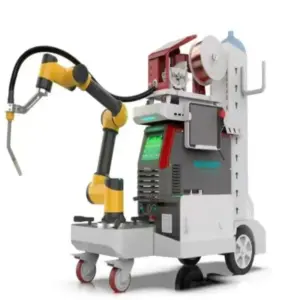
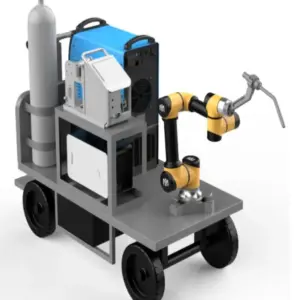
The deployment of a Small Diameter Pipe Laser involves the use of fiber-coupled delivery systems capable of navigating bends and offsets in pipes with diameters as small as 50mm. These systems typically utilize Ytterbium-doped fiber lasers operating in the 1064nm to 1080nm wavelength range. This specific wavelength is highly absorbed by metallic oxides and common mineral deposits, facilitating efficient material removal through a process of thermal ablation and sublimation.
Key technical parameters for these operations include peak power density, pulse frequency, and the scan speed of the laser head. In the thin atmosphere of Quito, thermal dissipation rates differ from sea-level operations. Engineers must calibrate the Heat-Affected Zone (HAZ) to ensure that the base material of the pipe—whether ductile iron, PVC, or reinforced concrete—does not undergo detrimental phase changes. By modulating the pulse width, operators can achieve precise layer-by-layer removal of contaminants while maintaining the structural thickness of the host pipe.

Industrial Application of Small Diameter Pipe Laser
Mechanisms of Dust-Free Operation and Sublimation
One of the primary advantages of laser-based pipe remediation is the inherent “dust-free” nature of the process when coupled with integrated extraction systems. Traditional mechanical grinding or hydro-blasting generates significant particulate matter or slurry, which requires complex containment and disposal procedures. In contrast, high-energy laser beams facilitate Sublimation Extraction, where solid contaminants are converted directly into a gaseous state or fine micro-particulates that are immediately captured at the point of origin.
The laser head is equipped with a coaxial or paraxial suction nozzle connected to a high-vacuum turbine. This system ensures that the byproduct of the ablation process is drawn into a multi-stage filtration unit. This is particularly vital in Quito’s urban core, where the discharge of industrial waste into the municipal sewage system is strictly regulated. By capturing the waste at the source, the process eliminates the risk of cross-contamination and reduces the volume of secondary waste generated during the maintenance cycle.
EHS Standards and Air Quality Management
Modern EHS standards, such as those outlined by ISO 45001 and local Ecuadorian environmental regulations, mandate the mitigation of airborne pollutants in confined spaces and urban environments. The use of High-Efficiency Particulate Air (HEPA) filtration systems in conjunction with pipe lasers ensures that 99.97 percent of particles as small as 0.3 microns are removed from the exhaust stream. This level of filtration is essential for protecting both the technical operators and the general public from inhaling crystalline silica or heavy metal particulates often found in legacy piping.
Furthermore, the dust-free operation minimizes the risk of combustible dust explosions in industrial settings—a critical safety factor for Quito’s manufacturing and processing sectors. The absence of mechanical friction also reduces the noise profile of the operation, allowing for 24-hour maintenance schedules in noise-sensitive residential zones without violating local municipal ordinances. This compliance with modern EHS standards is not merely a regulatory requirement but a functional necessity for maintaining the social license to operate in densely populated areas.
Atmospheric Considerations at High Altitude
Operating laser equipment at 2,850 meters requires specific adjustments to the gas assist systems. The lower atmospheric pressure in Quito affects the dynamics of the plasma plume generated during the laser ablation process. To compensate, the assist gas pressure (typically nitrogen or compressed air) must be increased to ensure efficient expulsion of the melt or vapor from the work area. This prevents the redeposition of material onto the pipe surface, which could compromise the “dust-free” objective.
Technical teams must also account for the cooling requirements of the laser source. Air-cooled systems may experience reduced efficiency due to the lower air density. Consequently, water-cooled or hybrid-cooled laser systems are preferred for sustained operations in the Ecuadorian highlands. These engineering considerations ensure that the equipment maintains a stable power output and beam quality throughout the duration of the project, preventing inconsistencies in the cleaning or cutting profile.
Economic and Environmental Impact Analysis
From a B2B perspective, the transition to laser-based pipe maintenance represents a significant shift in CAPEX and OPEX calculations. While the initial investment in a Small Diameter Pipe Laser system is higher than mechanical tools, the reduction in downtime and secondary waste processing provides a rapid return on investment. In Quito, where excavation costs are high due to the volcanic soil composition and the density of existing utilities, trenchless laser maintenance offers a non-invasive alternative that avoids the massive overhead of surface restoration.
The environmental footprint is also drastically reduced. Traditional hydro-blasting can consume thousands of liters of water per hour, whereas laser ablation is a dry process. In a region where water conservation is increasingly prioritized, the ability to maintain infrastructure without taxing the local water supply is a significant strategic advantage. The precision of the laser also extends the service life of existing assets, delaying the need for carbon-intensive pipe replacement projects.
Industry Insight: The Future of Photonic Infrastructure Maintenance
The adoption of laser technology in Quito’s utility sector reflects a broader global trend: the shift from mechanical force to photonic precision in civil engineering. As urban environments become more congested and environmental regulations tighten, the tolerance for “dirty” industrial processes is vanishing. The industry is moving toward a model where infrastructure maintenance is invisible, silent, and particulate-free.
The integration of Artificial Intelligence (AI) with pipe laser systems is the next logical progression. Real-time sensor feedback can allow the laser to adjust its power output based on the material composition detected within the pipe, further optimizing the dust-extraction process. For global stakeholders, the Quito model serves as a case study in how advanced photonic tools can be adapted to challenging geographic and regulatory environments. The future of urban sustainability lies in the ability to maintain the hidden arteries of our cities with surgical precision, ensuring that the modernization of our infrastructure does not come at the cost of public health or environmental integrity.
Industrial Expertise & Support
Are you looking for high-performance Small Diameter Pipe Laser tailored for the Global market? Our engineering team provides comprehensive solutions for modern manufacturing.