Precision Engineering in High-Altitude Industrial Hubs: The Quito Context
The industrial landscape of Quito, Ecuador, has undergone a significant transformation, transitioning from traditional fabrication to high-precision manufacturing. As a regional hub for HVAC components, automotive heat exchangers, and aerospace ducting, the demand for processing non-ferrous metals has surged. Specifically, the integration of Small Diameter Pipe Laser systems has become a critical requirement for facilities aiming to meet international quality standards. However, processing copper and aluminum presents unique thermophysical challenges, particularly regarding optical reflectivity and thermal conductivity. In the high-altitude environment of Quito, where atmospheric pressure affects cooling cycles and gas dynamics, the deployment of anti-reflection technology is not merely an upgrade but a technical necessity for operational stability.
The Physics of Reflectivity in Non-Ferrous Pipe Fabrication
Copper and aluminum are characterized by their high electron mobility, which results in excellent electrical and thermal conductivity. From a laser processing perspective, this mobility also facilitates high reflectivity at the standard 1.06-micron wavelength used by most fiber lasers. At room temperature, polished copper can reflect over 95 percent of incident infrared radiation. This back-reflection poses a dual threat: it prevents the initial keyhole formation required for deep-penetration welding or cutting, and it sends high-energy photons back into the delivery fiber, potentially damaging the Fiber Laser Resonator.
For small diameter pipes—typically defined as those with an outer diameter between 3mm and 25mm—the margin for error is negligible. The thin walls of these components, often ranging from 0.5mm to 1.5mm, require precise energy deposition to avoid structural deformation. In Quito’s manufacturing sector, the implementation of beam oscillation, or “wobble” technology, combined with advanced optical isolators, has allowed operators to bypass the traditional limitations of high-reflectivity materials.

Industrial Application of Small Diameter Pipe Laser
Anti-Reflection Technical Architecture
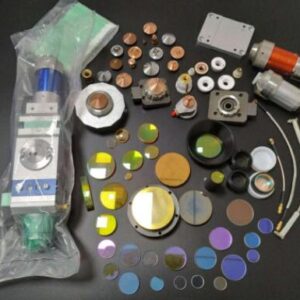
To mitigate the risks associated with back-reflection, modern pipe laser systems utilize a multi-stage protection strategy. The first line of defense is the optical isolator, a passive component that allows light to pass in one direction while absorbing or diverting reflected light. However, in high-power applications required for thick-walled aluminum or rapid copper cutting, passive isolation is insufficient.
Advanced systems now incorporate Back-Reflection Suppression modules. These modules utilize real-time sensors to monitor the power levels within the optical feed. If the sensors detect a threshold of reflected energy that could compromise the diode banks, the system adjusts the laser parameters in microseconds or executes a safety shutdown. This is particularly vital in Quito, where fluctuations in power grid stability can interact with laser control electronics, necessitating robust internal hardware protection.
Optimizing the Heat-Affected Zone (HAZ) in Small Diameters
When working with small diameter pipes, the management of the Heat-Affected Zone (HAZ) is paramount. Excessive heat input leads to grain growth in aluminum alloys, such as the 6000 series commonly used in Ecuadorian aerospace components, which significantly reduces the tensile strength at the joint or cut edge. In copper, high thermal diffusivity causes heat to migrate rapidly away from the focal point, requiring a high-intensity initial pulse to achieve absorption.
To address this, Quito-based facilities are adopting modulated pulse wave (PW) settings rather than continuous wave (CW) delivery. By pulsing the laser at high frequencies, the system delivers enough peak power to overcome the reflectivity of the material while allowing for brief cooling intervals. This maintains the metallurgical integrity of the pipe, ensuring that the finished product can withstand the high-pressure environments typical of refrigeration and hydraulic systems.
Mechanical Handling and CNC Integration
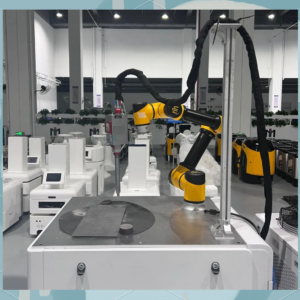
The precision of the laser source must be matched by the mechanical handling of the pipe. Small diameter tubes lack the structural rigidity of larger profiles, making them susceptible to vibration during high-speed rotation. The latest CNC pipe lasers in the Quito industrial corridor utilize multi-point pneumatic chucking systems that provide consistent pressure without deforming the thin-walled copper or aluminum.
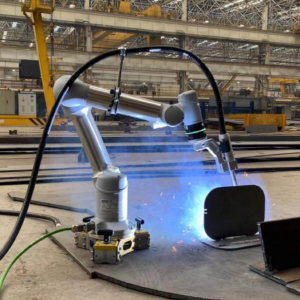
Furthermore, the integration of Beam Oscillation Technology (wobble) allows for a wider weld seam or a cleaner cut path by moving the laser beam in specific patterns (circular, linear, or figure-eight) as it moves along the axis. This oscillation assists in stabilizing the melt pool, which is notoriously turbulent in aluminum, and helps in bridging small gaps in the fit-up of small diameter assemblies, thereby reducing the scrap rate in high-volume production runs.
Environmental Factors: Altitude and Shielding Gas Dynamics
Quito’s elevation (approximately 2,850 meters) introduces variables that are often overlooked in standard technical manuals. The lower atmospheric pressure affects the ionization potential of shielding gases such as Nitrogen and Argon. In laser cutting and welding, the assist gas is responsible for expelling molten material and protecting the processing zone from oxidation.
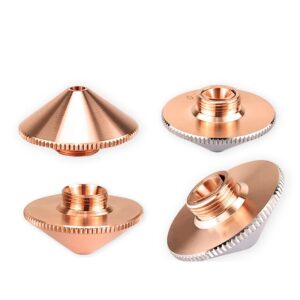
Technical data suggests that at higher altitudes, the flow rate and pressure of the assist gas must be recalibrated to compensate for the decreased air density. For aluminum processing, where oxidation occurs almost instantaneously, the purity and delivery pressure of the gas are critical. Local engineers have found that increasing the nozzle diameter slightly while maintaining higher-than-standard pressures helps in achieving the laminar flow necessary to clear the kerf in small diameter copper pipes, where the surface tension of the melt is higher than that of carbon steel.
Industry Insight: The Shift Toward Specialized Material Processing
The global shift toward electrification and high-efficiency thermal management is placing unprecedented pressure on the supply chain for specialized metal components. As copper becomes the backbone of EV infrastructure and aluminum remains the standard for lightweighting, the ability to process these materials with high precision is a competitive differentiator.
The adoption of anti-reflection technology in Quito represents a broader industry trend: the movement away from “all-purpose” laser systems toward material-specific configurations. For B2B stakeholders, the investment in specialized pipe laser systems offers a clear ROI through reduced secondary processing. When a small diameter pipe is cut or welded with minimal HAZ and zero back-reflection damage, the need for manual deburring, cleaning, or structural reinforcement is eliminated. Moving forward, the integration of AI-driven monitoring within these laser systems will likely allow for real-time adjustment to material impurities, further refining the capabilities of manufacturing hubs in unique geographical locations like the Ecuadorian Andes.
Industrial Expertise & Support
Are you looking for high-performance Small Diameter Pipe Laser tailored for the Global market? Our engineering team provides comprehensive solutions for modern manufacturing.