The Technological Landscape of Precision Tube Processing in Mendoza
The industrial sector in Mendoza, Argentina, has undergone a significant transformation, pivoting from traditional metal-mechanical fabrication toward high-precision automated systems. Central to this evolution is the deployment of the Small Diameter Pipe Laser, a technology designed to handle the rigorous demands of the energy, viticulture, and aerospace industries. Unlike standard flat-bed lasers, these specialized systems are engineered to process tubular geometries with diameters ranging from 12mm to 120mm, offering a level of accuracy that was previously unattainable through manual or mechanical cutting methods. This shift is not merely a hardware upgrade; it represents a fundamental change in how manufacturing facilities in the Cuyo region interface with global supply chains through advanced digital connectivity.
The integration of fiber laser sources, typically ranging from 1kW to 3kW for small diameter applications, allows for high-speed processing of stainless steel, carbon steel, and aluminum. In Mendoza’s industrial parks, the adoption of these machines is driven by the need for tight tolerances and complex geometries, such as interlocking joints and intricate hole patterns. However, the true competitive advantage lies in the digital architecture supporting the hardware. The convergence of Enterprise Resource Planning (ERP) systems and sophisticated nesting software has created a closed-loop manufacturing environment where data flows seamlessly from the initial design phase to the final cut part.
Hardware Specifications: High-Speed Fiber Laser Dynamics
The technical efficacy of a Small Diameter Pipe Laser is defined by its acceleration rates and the precision of its chucking system. In the context of Mendoza’s manufacturing base, machines are often equipped with pneumatic or electric four-chuck systems that ensure stable rotation at high RPMs. This stability is critical when processing thin-walled tubes where vibration can lead to kerf distortion. Fiber laser technology, operating at a wavelength of approximately 1.06 microns, provides a focused beam diameter that facilitates extremely narrow cut widths. This precision is essential for the production of specialized components used in pressurized irrigation systems and mining equipment.
Beyond simple cutting, these systems utilize 3D head motion to perform beveling and countersinking in a single pass. The kinematic performance of the machine—often exceeding 1.2G acceleration—minimizes non-productive time during rapid traverses between cuts. For global B2B partners sourcing components from Argentinian fabricators, this technical capability translates to lower per-part costs and higher repeatability. The hardware, however, remains a localized asset unless it is synchronized with the broader digital infrastructure of the enterprise.
The Role of Advanced Nesting in Material Efficiency
Material costs represent a significant portion of the total expenditure in tube fabrication. To mitigate waste, Mendoza-based facilities utilize Automatic Nesting Algorithms that optimize the arrangement of parts on a single length of pipe. Modern nesting software does more than just fit shapes together; it accounts for the mechanical constraints of the laser, such as the “dead zone” where the chuck grips the material. By implementing common-line cutting and heat-distortion compensation, the software ensures that the maximum number of parts is extracted from every raw tube.

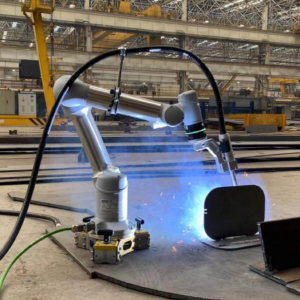
Industrial Application of Small Diameter Pipe Laser
The connectivity between the nesting software and the machine’s CNC controller allows for real-time adjustments based on material deviations. For instance, if a batch of stainless steel tubing exhibits slight longitudinal bowing, the software’s sensing logic adjusts the cutting path in real-time to maintain focal consistency. This level of digital oversight ensures that the theoretical yield calculated in the engineering office matches the actual output on the shop floor, providing a transparent data set for cost auditing and quality assurance.
ERP Connectivity and the Digital Thread
The bridge between high-level business strategy and shop-floor execution is the Application Programming Interface (API) that links the laser’s nesting software to the ERP system. In a modern Mendoza fabrication facility, an order placed in the ERP automatically triggers a series of digital events. The system checks raw material inventory, allocates the necessary tube stock, and pushes the geometry requirements to the nesting engine. This eliminates manual data entry, which is the primary source of error in complex fabrication projects.
This digital thread allows for granular tracking of production metrics. Managers can monitor OEE (Overall Equipment Effectiveness) by analyzing data packets sent from the laser to the ERP. These packets include information on beam-on time, gas consumption, and idle intervals. For global clients, this connectivity offers the possibility of real-time project tracking. When a small diameter pipe is cut, the system can automatically update the project status, generate a unique QR code for traceability, and notify the logistics department that the part is ready for the next stage of finishing or shipping.
Strategic Implications for Global Supply Chains
The geographical positioning of Mendoza, combined with these technical advancements, makes it an emerging hub for precision metalwork. The ability to integrate ERP and nesting software ensures that local manufacturers can meet the stringent documentation and quality standards required by international markets. Digital connectivity reduces the “distance” between the designer in Europe or North America and the production line in Argentina. CAD files can be sent, nested, and cut with minimal human intervention, ensuring that the integrity of the design is maintained throughout the process.
Furthermore, the data collected through these integrated systems facilitates predictive maintenance. By analyzing the power stability and motor load data stored in the ERP, maintenance teams can intervene before a component failure occurs. This proactive approach to machine uptime is critical for maintaining the reliable lead times expected in global B2B contracts. The synergy between robust hardware and intelligent software transforms the Small Diameter Pipe Laser from a standalone tool into a critical node within a globalized smart factory network.
Concluding Industry Insight
The convergence of precision laser technology and digital ecosystem integration in Mendoza signifies a broader trend in the Fourth Industrial Revolution. As the global market moves toward mass customization and shorter product lifecycles, the ability to rapidly reconfigure production lines through software becomes more valuable than raw throughput. The future of tube processing lies in the “Digital Twin” concept, where every physical action on the Small Diameter Pipe Laser is mirrored in a digital environment. This allows for virtual stress testing and flow optimization before a single piece of material is consumed. For the B2B sector, the takeaway is clear: the competitive edge is no longer just about the laser’s wattage, but about the fluidity and accuracy of the data that drives the beam. Manufacturers who master this digital connectivity will define the next decade of industrial efficiency, turning regional centers like Mendoza into vital pillars of the global manufacturing infrastructure.
Industrial Expertise & Support
Are you looking for high-performance Small Diameter Pipe Laser tailored for the Global market? Our engineering team provides comprehensive solutions for modern manufacturing.