Optimizing Sub-Surface Infrastructure Precision: Small Diameter Pipe Laser Integration in Lima
The modernization of Lima’s municipal infrastructure presents a unique set of geophysical and electrical challenges for civil engineering firms. As the metropolitan area expands, the requirement for precision gravity-flow piping systems—including sanitary sewers and storm drainage—has necessitated the deployment of advanced instrumentation. Central to these operations is the Small Diameter Pipe Laser, a tool engineered for high-accuracy grade and alignment control within confined utility corridors. However, in the context of Lima’s evolving electrical infrastructure, the technical performance of these devices is heavily dependent on integrated power management systems designed to counteract local grid instability.
For global contractors operating in the Peruvian market, the intersection of precision optics and power electronics is a critical focal point. Traditional laser systems often suffer from diode degradation or beam drift when subjected to inconsistent power inputs. In Lima, where industrial zones and residential sectors often share aging distribution networks, voltage fluctuations are a documented operational variable. Addressing this through built-in regulation ensures that project timelines and accuracy standards remain uncompromised by the local utility environment.
The Impact of Voltage Fluctuations on Laser Diode Integrity
Precision laser instrumentation relies on a stable current to maintain a consistent photon emission rate. In the case of a Small Diameter Pipe Laser, the internal laser diode is sensitive to transient voltage spikes and brownouts. In many regions of Lima, the nominal 220V/60Hz supply can experience deviations exceeding 10% during peak industrial demand periods. Without internal stabilization, these fluctuations translate directly to the diode’s output.
Technically, a spike in voltage can lead to thermal runaway within the semiconductor material of the laser diode. This results in wavelength shifting, which affects the visibility and focus of the beam at long distances. Conversely, voltage drops can cause the beam to flicker or lose intensity, rendering it impossible for the receiver to lock onto the grade. By integrating Automatic Voltage Regulation (AVR) directly into the laser’s internal circuitry, manufacturers provide a buffer that normalizes the input current, ensuring the beam remains constant regardless of the external power source’s quality. This is particularly vital when charging internal battery packs or running the unit directly from site generators that lack sophisticated sine-wave modulation.
Grid Stability and the Lima Infrastructure Context
Lima’s electrical grid is characterized by a mix of hydroelectric and natural gas generation, distributed through a network that is undergoing significant upgrades. For sub-surface utility projects, power is often drawn from temporary site connections or mobile distribution units. These sources are prone to electromagnetic interference and harmonic distortion. For a Small Diameter Pipe Laser, which must maintain a grade accuracy of ±10 arc seconds, any electrical noise can interfere with the internal leveling sensors.

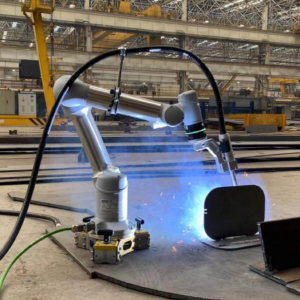
Industrial Application of Small Diameter Pipe Laser
The implementation of built-in regulation serves a dual purpose: it protects the sensitive electronic components and filters out electronic noise. This filtering is achieved through high-frequency capacitors and inductors that smooth the DC signal after rectification. In the narrow trenches and micro-tunneling environments common in Lima’s historic and densely populated districts, the reliability of this electronic architecture prevents the need for frequent recalibration, which is a significant cost driver in urban pipe-laying projects.
Thermal Management and Digital Signal Processing
Beyond simple voltage clamping, sophisticated pipe lasers utilize Digital Signal Processing (DSP) to monitor power consumption in real-time. In Lima’s coastal climate, where humidity levels are high and temperatures can fluctuate, the laser must also manage the heat generated by its own power regulation circuits. Built-in regulation systems are now designed with high-efficiency switching regulators that minimize heat dissipation compared to older linear regulators.
This thermal efficiency is critical when the laser is placed inside a small diameter pipe where airflow is non-existent. Excessive heat can cause the internal mechanical leveling components to expand, introducing incremental errors in the grade setting. By maintaining a stable voltage and minimizing heat waste, the laser maintains its structural and optical calibration over 8-to-12-hour shifts. This level of technical redundancy is mandatory for meeting the stringent international ISO standards required by Tier-1 contractors in the South American market.
Operational Benefits for Global Contractors
The transition to lasers with integrated power stabilization offers quantifiable benefits in terms of Mean Time Between Failure (MTBF). For a global B2B entity, the cost of equipment downtime in a location like Lima involves not just the repair cost, but the logistical overhead of shipping specialized parts across borders. Instruments that can withstand the “dirty power” often found in developing urban centers represent a lower Total Cost of Ownership (TCO).
Furthermore, the ability to operate across a wide input voltage range (e.g., 100V to 240V AC) without external transformers allows for greater fleet flexibility. A contractor can move a Small Diameter Pipe Laser from a project in North America to a site in Lima without requiring hardware modifications. The internal regulation handles the conversion and stabilization, ensuring the beam intensity and grade accuracy remain identical regardless of the geographical location or the state of the local grid.
Concluding Industry Insight: The Future of Resilience in Precision Tools
The evolution of construction instrumentation is moving toward total environmental and electrical autonomy. As urban centers like Lima continue to expand their utility networks, the demand for “resilient instrumentation” will increase. The integration of Laser Diode Thermal Management and advanced voltage regulation is no longer an optional feature but a baseline requirement for high-stakes infrastructure projects.
The industry is shifting toward a model where the tool must compensate for the deficiencies of the job site environment. In the coming decade, we expect to see further integration of IoT-based power monitoring within these lasers, allowing project managers to receive data on grid quality and instrument health remotely. For the global B2B market, the focus will remain on hardware that eliminates variables. By neutralizing the risks associated with grid instability through superior internal engineering, manufacturers enable contractors to achieve millimeter-perfect accuracy in the most challenging urban landscapes on earth. The success of Lima’s utility expansion serves as a blueprint for how technical resilience in hardware can overcome local infrastructure limitations.
Industrial Expertise & Support
Are you looking for high-performance Small Diameter Pipe Laser tailored for the Global market? Our engineering team provides comprehensive solutions for modern manufacturing.