Precision Fabrication in the Southern Cone: The Economic Case for Advanced Laser Integration
The industrial landscape of Córdoba, Argentina, has long served as a critical node for South American automotive, aerospace, and agricultural machinery manufacturing. As global supply chains demand higher precision and shorter lead times, the transition from conventional mechanical sawing and drilling to automated laser processing has become a necessity for maintaining competitive margins. Specifically, the implementation of Small Diameter Pipe Laser systems within Córdoba’s industrial parks—such as those in Ferreyra and the Circunvalación belt—is demonstrating a measurable Return on Investment (ROI) through the elimination of secondary processes and the reduction of material waste.
For global stakeholders looking at the Argentine manufacturing sector, the shift toward fiber laser technology represents a modernization of the regional supply chain. This article analyzes the technical specifications, operational efficiencies, and financial metrics that define the success of small-diameter tube processing in the local context.
Technical Parameters of Small Diameter Pipe Laser Systems
Small diameter pipe lasers are specifically engineered to handle tubular profiles ranging from 12mm to 150mm in diameter. Unlike large-scale structural steel lasers, these systems prioritize high-speed acceleration and high-frequency pulse control to maintain dimensional integrity on thin-walled materials. In the Córdoba industrial corridor, these machines are primarily utilized for stainless steel, aluminum, and carbon steel alloys.
The core of this technology lies in the Fiber Laser Resonator, which provides a wavelength that is highly absorbable by reflective metals. This allows for a significantly narrower Kerf Width compared to CO2 lasers or plasma cutting. When processing small diameters, the heat-affected zone (HAZ) must be minimized to prevent structural deformation of the pipe walls. High-speed linear motors and specialized chucking systems ensure that the tube remains centered during high-RPM rotations, allowing for complex geometries, such as interlocking joints and flow-drill holes, to be executed in a single pass.
ROI Drivers: Operational Efficiency and Material Utilization
The financial justification for adopting Small Diameter Pipe Laser technology in Córdoba’s industrial parks is rooted in three primary areas: labor reduction, scrap mitigation, and throughput acceleration.
1. Elimination of Secondary Operations: Traditional tube fabrication involves a sequence of cutting, deburring, drilling, and milling. Each transfer between workstations introduces logistical lag and the potential for human error. A fiber laser system consolidates these steps into a single CNC-controlled process. For local manufacturers supplying the automotive sector in Santa Isabel or Ferreyra, this consolidation reduces the cost-per-part by approximately 30 to 45 percent by eliminating the need for dedicated jigs and manual finishing.

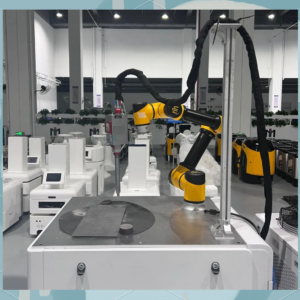
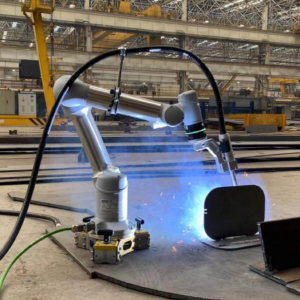
Industrial Application of Small Diameter Pipe Laser
2. Nesting Optimization and Scrap Reduction: Advanced software algorithms allow for the nesting of multiple parts on a single raw tube length. In Córdoba, where raw material costs can fluctuate due to import dynamics, maximizing material yield is essential for profitability. Automated systems can achieve remnants as short as 50mm, significantly lower than the 200mm to 300mm remnants typical of mechanical cold saws.
3. Automated Bundle Loading: To achieve maximum ROI, local facilities are increasingly integrating automated loading magazines. This allows for “lights-out” manufacturing during off-peak energy hours, a critical factor in managing operational expenditures in the Argentine energy market. By automating the feed process, a single operator can oversee multiple laser cells, further driving down the labor component of the total cost of ownership.
Local Context: Córdoba’s Industrial Parks as Integration Hubs
Córdoba’s industrial parks are characterized by a high density of Tier 2 and Tier 3 suppliers. These companies often produce components for hydraulic systems, seating frames, and exhaust manifolds. The precision required for these components makes the Small Diameter Pipe Laser an ideal asset.
The geographic concentration of these parks facilitates a “service center” model. Companies that invest in high-capacity fiber lasers often act as specialized subcontractors for smaller local firms, ensuring that the machine maintains a high duty cycle. A high duty cycle is the most significant predictor of ROI; a machine operating at 80 percent capacity in a three-shift environment typically reaches its break-even point within 18 to 24 months, despite the initial capital expenditure associated with high-end European or Asian laser brands.
Technical Challenges and Maintenance in the Regional Environment
While the ROI is proven, achieving it requires a rigorous maintenance protocol. The environmental conditions in some of Córdoba’s older industrial zones can involve high particulate matter and temperature fluctuations. Fiber laser sources are sensitive to dust and require climate-controlled enclosures for the power source and the cutting head.
Furthermore, the stability of the electrical grid in South America necessitates the use of industrial-grade voltage stabilizers and UPS systems to protect the sensitive CNC electronics. Local firms that have successfully implemented these systems have invested heavily in technician training, ensuring that the optical path and gas pressures (Nitrogen or Oxygen) are calibrated daily to maintain edge quality and cutting speed.
Comparative Analysis: Mechanical vs. Laser Processing
To quantify the ROI, one must compare the throughput of a standard mechanical setup with a laser system. In a production run of 1,000 units of a complex 40mm stainless steel manifold component, a mechanical setup requiring drilling and notch-milling would take approximately 60 hours of total processing time, including setup and part transfer. A 2kW fiber pipe laser can complete the same batch in under 8 hours. The reduction in “Work in Progress” (WIP) inventory alone provides a significant boost to cash flow, allowing manufacturers to respond to Just-In-Time (JIT) delivery requirements from major OEMs located in the region.
Concluding Industry Insight: The Future of Argentine Fabrication
The industrial sector in Córdoba is at a technological crossroads. The historical reliance on versatile but slow manual machinery is being superseded by the requirement for digital integration and repeatable precision. The Small Diameter Pipe Laser is not merely a tool for cutting; it is a data-driven platform that aligns local production capabilities with international ISO standards.
As the global market trends toward electrification and lightweighting, particularly in the automotive and aerospace sectors, the demand for thin-walled, high-strength alloy tubing will increase. Manufacturers in Córdoba who have already integrated fiber laser technology are positioned to capture this demand. The long-term industry insight suggests that the regional winners will be those who view laser technology as a cornerstone of a broader Industry 4.0 strategy, utilizing the precision of the laser to facilitate automated welding and assembly downstream. The proven ROI in Córdoba serves as a blueprint for other emerging manufacturing hubs in Latin America, demonstrating that capital investment in high-precision hardware is the most effective hedge against rising operational costs and market volatility.
Industrial Expertise & Support
Are you looking for high-performance Small Diameter Pipe Laser tailored for the Global market? Our engineering team provides comprehensive solutions for modern manufacturing.