Precision Engineering in the Southern Cone: The Evolution of Small Diameter Pipe Laser Systems
The industrial landscape of Córdoba, Argentina, has undergone a significant transformation driven by the automotive, aerospace, and agricultural machinery sectors. As manufacturing requirements shift toward higher complexity and tighter tolerances, the integration of specialized laser cutting technology has become a prerequisite for maintaining global competitiveness. Specifically, the deployment of the Small Diameter Pipe Laser has addressed a critical gap in the processing of thin-walled, narrow-gauge tubing that conventional CO2 or mechanical sawing systems cannot achieve with requisite repeatability.
In high-throughput environments, the technical challenge lies in managing the structural integrity of the workpiece during high-speed oscillation. Córdoba’s industrial corridor now hosts advanced fiber laser installations designed to handle diameters ranging from 10mm to 120mm. These systems utilize sophisticated kinematics to ensure that the centrifugal forces generated during high-speed rotation do not result in material deformation or kerf deviation. This article examines the technical infrastructure supporting these systems, focusing on the localized availability of critical components and the rigorous service protocols required to sustain 24/7 production cycles.
Technical Specifications and Kinematic Stability
The Small Diameter Pipe Laser operates on a fiber-optic delivery system, typically utilizing a solid-state ytterbium laser source. The wavelength, generally around 1.06 microns, allows for superior absorption rates in reflective materials such as stainless steel, aluminum, and brass. Unlike larger format tube lasers, small-diameter systems require specialized Automatic Centering Chucks. These pneumatic or electric chucks must exert precise clamping pressure to prevent “crushing” of thin-walled profiles while maintaining the high rotational speeds necessary for efficient processing.
In Córdoba’s manufacturing facilities, these machines are often configured with high-acceleration linear motors. The synchronization between the rotational axis (A-axis) and the longitudinal cutting head movement (Z and Y axes) is managed by high-speed CNC controllers capable of sub-millisecond processing times. This ensures that the focal point remains constant relative to the pipe surface, even when dealing with tubes that exhibit slight mill-run deviations or longitudinal bowing. The result is a positional accuracy of ±0.05mm, a standard required for the complex assemblies found in modern hydraulic systems and automotive exhaust manifolds.

Industrial Application of Small Diameter Pipe Laser
Localized Spare Parts: Reducing the Mean Time To Repair (MTTR)
For global manufacturers operating in Argentina, the primary logistical hurdle has historically been the lead time associated with imported components. To mitigate this, a localized ecosystem for Localized Spare Parts has been established in the Córdoba region. This inventory management strategy focuses on high-wear components and critical electronic assemblies that are susceptible to the fluctuations of industrial power grids or intensive duty cycles.
The localized inventory includes, but is not limited to:
- Laser cutting heads and protective windows (Quartz/Silica).
- Ceramic nozzle holders and copper nozzles with varying orifice diameters.
- Fiber-optic delivery cables and collimator lenses.
- Pneumatic valves and high-precision sensors for height sensing systems.
- Servo drives and specialized cooling system filters.
By maintaining these components within the Córdoba province, the Mean Time To Repair (MTTR) is drastically reduced. Instead of awaiting international customs clearance and transcontinental shipping—which can stall production for weeks—manufacturers can access critical hardware within hours. This localized supply chain is essential for Just-In-Time (JIT) manufacturing models where inventory buffers are minimal and machine downtime translates directly into significant financial penalties.
The 24h Service Response Protocol
Technical superiority in hardware is insufficient without a robust support framework. The “24h Service Response” model implemented in the Córdoba region is structured around a tiered diagnostic approach. Given the complexity of Fiber Laser Source integration, the service protocol begins with remote telemetry. Modern laser systems are equipped with IoT gateways that allow field engineers to analyze error logs, beam quality parameters, and chiller performance in real-time.
If the anomaly cannot be resolved through remote software calibration, the 24-hour protocol dictates the dispatch of a field service engineer. These technicians are trained in the specific optical alignment procedures required for small-diameter processing. The intervention includes recalibrating the capacitive height sensing system and ensuring the concentricity of the chucking mechanism. This rapid response is facilitated by the geographic concentration of technical expertise in Córdoba, which serves as a centralized hub for the Southern Cone’s metalworking industry.
Material Versatility and Gas Dynamics
The application of small diameter lasers in the local market extends to various alloys. The cutting process is heavily dependent on the assist gas dynamics. For stainless steel applications, high-pressure nitrogen is utilized to achieve an oxide-free edge, facilitating immediate downstream welding. For carbon steels, oxygen-assisted cutting is employed to leverage the exothermic reaction, increasing cutting speeds on thicker wall sections. The ability to switch between these gases, coupled with automated focal point adjustment, allows the Small Diameter Pipe Laser to transition between different production runs with minimal setup time.
Furthermore, the software integration for these machines supports complex nesting algorithms. This is particularly relevant for the furniture and medical device industries in Argentina, where material yield optimization is a primary driver of profitability. By nesting multiple parts on a single length of tubing and utilizing “common line” cutting, manufacturers can reduce scrap rates by up to 15 percent compared to traditional methods.
Industry Insight: The Future of Autonomous Tube Processing
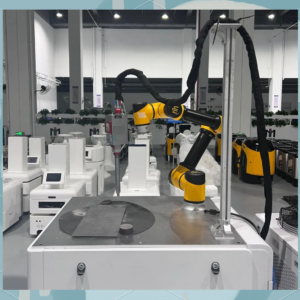
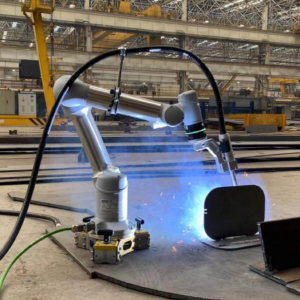
The convergence of localized technical support and advanced laser kinematics represents a significant milestone for South American manufacturing. As we look toward the next decade, the industry is moving beyond simple cutting toward fully integrated “Load-to-Unload” automation. In Córdoba, the next phase of implementation involves the integration of robotic arms with Small Diameter Pipe Laser units to automate the sorting and palletizing of finished parts.
The critical takeaway for global stakeholders is that the viability of high-tech manufacturing in emerging hubs is no longer dictated solely by the availability of the machinery itself, but by the maturity of the local support ecosystem. The transition from reactive maintenance to a proactive, localized service model in Córdoba serves as a blueprint for other industrial regions. By securing the supply chain for Localized Spare Parts and guaranteeing a 24h response, the region has effectively de-risked the adoption of high-precision fiber laser technology. This infrastructure not only supports current production demands but also provides the stability required for future investments in Industry 4.0 technologies, where machine uptime and data-driven maintenance are the cornerstones of operational excellence.
Industrial Expertise & Support
Are you looking for high-performance Small Diameter Pipe Laser tailored for the Global market? Our engineering team provides comprehensive solutions for modern manufacturing.