Introduction: The Industrial Shift in the Caracas Metropolitan Region
The industrial landscape of Caracas, Venezuela, particularly within the specialized zones of La Yaguara, Los Ruices, and the Guarenas-Guatire industrial corridor, is undergoing a rigorous technical transition. As local manufacturers face increasing pressure to optimize material yields and reduce secondary processing times, the adoption of high-precision thermal cutting technology has become a necessity. Central to this evolution is the implementation of the Small Diameter Pipe Laser, a tool designed to address the specific geometric and structural requirements of thin-walled tubing and small-profile sections. This article analyzes the technical deployment of fiber laser systems in these industrial hubs and evaluates the measurable Return on Investment (ROI) provided by transitioning from mechanical sawing and plasma cutting to automated laser processing.
Technical Specifications of Small Diameter Pipe Laser Systems
Processing pipes with diameters ranging from 10mm to 120mm requires a high level of beam stability and rotational synchronization. Traditional CO2 lasers often struggle with the reflectivity of non-ferrous metals commonly used in Caracas’s pharmaceutical and food processing sectors. In contrast, modern fiber laser systems utilize a 1.06-micron wavelength, which is absorbed more efficiently by stainless steel, aluminum, and copper. This efficiency is critical for maintaining a minimal Heat-Affected Zone (HAZ), ensuring that the structural integrity of the pipe is not compromised during high-speed thermal cycles.
The integration of a Fiber Laser Resonator allows for a high-intensity beam with a narrow kerf width, typically between 0.05mm and 0.1mm. For industrial parks in Caracas, where raw material costs are influenced by global market fluctuations, reducing the kerf width directly correlates to higher nesting efficiency and lower scrap rates. Furthermore, the high-speed modulation of the laser power allows for the intricate cutting of complex geometries, such as interlocking tabs and slots, which are essential for the rapid assembly of industrial racking and automotive components.
Quantifying ROI: Capital Expenditure vs. Operational Efficiency
The financial justification for integrating a Small Diameter Pipe Laser into a Caracas-based facility involves a multi-variable analysis of Capital Expenditure (CAPEX) against long-term Operational Expenditure (OPEX). While the initial investment in a fiber laser system is higher than that of a mechanical band saw or a manual cold saw, the reduction in labor-intensive secondary operations provides a rapid payback period. In many local industrial applications, the laser system eliminates the need for deburring, drilling, and milling, as the laser achieves a finished edge quality in a single pass.
Data from industrial installations indicates that throughput speeds for 2mm wall-thickness stainless steel tubing can exceed 15 meters per minute, depending on the complexity of the cut. When compared to traditional methods, which require separate setups for cutting and hole-punching, the laser system reduces total part processing time by approximately 60 percent to 80 percent. In the context of Caracas’s industrial parks, where energy costs and labor availability fluctuate, the ability to produce more units per kilowatt-hour of electricity consumed is a vital metric for maintaining global competitiveness.

Industrial Application of Small Diameter Pipe Laser
Automated Material Handling and Labor Optimization
One of the primary drivers of ROI in high-volume production environments is the reduction of manual material handling. Advanced laser systems are equipped with Automated Bundle Loading mechanisms that allow for continuous operation with minimal operator intervention. This is particularly advantageous for the industrial parks surrounding Caracas, where manufacturing facilities often run multi-shift operations. An automated loader can measure, orient, and feed pipes into the chuck system, compensating for slight deviations in material straightness through integrated sensors and software algorithms.
By automating the loading and unloading sequences, facilities can transition from a one-operator-per-machine model to a one-operator-per-cell model, where a single technician oversees multiple laser systems. This shift not only lowers the direct labor cost per part but also significantly reduces the risk of human error in the measurement and positioning phases, ensuring consistent part tolerances within +/- 0.1mm across high-volume batches.
Material Versatility and Market Expansion for Local Manufacturers
The versatility of the Small Diameter Pipe Laser allows Caracas-based manufacturers to diversify their product offerings. Traditionally, many local firms were limited to mild steel due to the technical difficulties of cutting reflective materials. However, the high-frequency pulsing of fiber lasers enables the clean cutting of brass and copper, which are essential for electrical components and specialized heat exchangers. This capability allows local industrial parks to compete for high-value contracts in the aerospace, medical, and renewable energy sectors that were previously outsourced to international suppliers.
Furthermore, the software integration of these machines allows for rapid prototyping. Using CAD/CAM interfaces, engineers can move from a design concept to a finished prototype in minutes rather than days. This agility is a significant competitive advantage in the global B2B marketplace, allowing Caracas-based firms to respond faster to tender requirements and engineering change orders (ECOs).
Maintenance and Technical Support in the Venezuelan Context
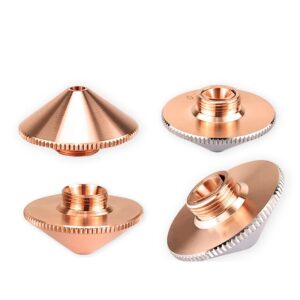
A critical component of ROI is the uptime of the equipment. Modern fiber laser sources have a diode life expectancy exceeding 100,000 hours, which minimizes the long-term maintenance burden compared to older CO2 technology that requires gas refills and complex mirror alignments. For industrial parks in Caracas, establishing a robust supply chain for consumables—such as nozzles, protective windows, and ceramic rings—is essential. Many global manufacturers now provide remote diagnostic capabilities, allowing technicians to troubleshoot software or parameter issues via an internet connection, bypassing the logistical delays of on-site international service visits.
Concluding Industry Insight: The Path Toward Autonomous Fabrication
The deployment of Small Diameter Pipe Laser technology in Caracas is not merely an incremental upgrade; it represents a fundamental shift toward the digitalization of the Venezuelan manufacturing sector. As global supply chains move toward “just-in-time” delivery models, the ability to produce high-precision tubular components with zero-defect rates becomes the baseline for participation. The data suggests that the industrial parks of Caracas are well-positioned to leverage this technology to offset logistical challenges through superior manufacturing efficiency.
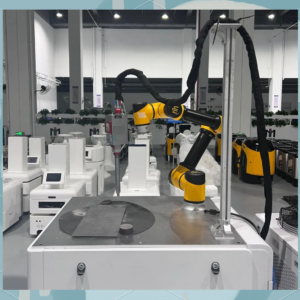
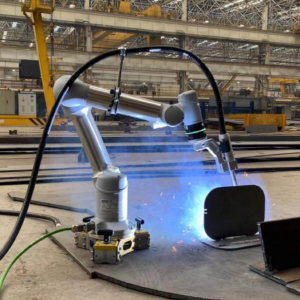
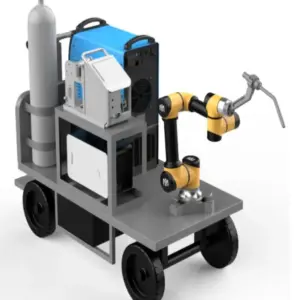
The final industry insight for stakeholders is the move toward fully integrated fabrication ecosystems. The future of ROI in this sector will not be found in the cutting speed alone, but in the seamless integration of the laser system with downstream robotic welding and assembly stations. Facilities that invest in high-precision laser cutting today are building the necessary foundation for the autonomous “smart factories” of tomorrow. For the industrial landscape of Venezuela, this technological leap is the most viable strategy for achieving sustainable growth and securing a position within the high-tech global manufacturing hierarchy.
Industrial Expertise & Support
Are you looking for high-performance Small Diameter Pipe Laser tailored for the Global market? Our engineering team provides comprehensive solutions for modern manufacturing.