Introduction: The Industrial Evolution of Bogotá’s Metalworking Sector
Bogotá, Colombia, has emerged as a critical node in the South American industrial landscape, particularly in the precision fabrication of components for agricultural machinery. As global demand for durable, high-efficiency farming equipment rises, the technical requirements for structural components have shifted toward higher tolerances and superior material integrity. Central to this shift is the adoption of Small Diameter Pipe Laser technology. This specialized manufacturing process addresses the historical limitations of mechanical cutting and traditional thermal processing by prioritizing the minimization of the Heat Affected Zone (HAZ). For the agricultural sector, where machinery is subjected to high-frequency vibration and corrosive environments, the implementation of small-HAZ laser processing in Bogotá represents a significant advancement in component longevity and structural reliability.
Technical Parameters of Small Diameter Pipe Laser Processing
The processing of small diameter pipes—typically defined as those with an outside diameter (OD) ranging from 12mm to 120mm—requires distinct kinematic and optical configurations compared to large-scale structural steel cutting. In Bogotá’s high-precision facilities, fiber laser sources ranging from 2kW to 4kW are utilized to maintain high power density while ensuring rapid feed rates. The integration of CNC-controlled rotary chucks allows for the simultaneous management of longitudinal movement and high-speed rotation, ensuring that the laser focal point remains perpendicular to the pipe surface at all times.
The primary advantage of the Small Diameter Pipe Laser in this context is its ability to maintain a consistent Kerf Width, often as narrow as 0.1mm. This precision is vital for the complex geometries required in modern agri-machinery, such as hydraulic manifolds, seating frames, and specialized fluid delivery systems. By utilizing high-pressure nitrogen or oxygen as assist gases, the process ensures clean cuts with minimal dross, reducing the need for secondary finishing operations that can introduce additional mechanical stress to the workpiece.
The Physics of the Heat Affected Zone (HAZ) in Agri-Machinery
In metal fabrication, the Heat Affected Zone (HAZ) is the area of base metal which has not been melted, but whose mechanical properties and microstructure have been altered by the heat of the cutting or welding process. For agricultural machinery, which frequently utilizes High-Strength Low-Alloy (HSLA) steels, the HAZ is a critical point of potential failure. Excessive heat input during the cutting phase leads to grain growth and the formation of brittle phases, such as martensite, in the area surrounding the cut.
By employing Small Diameter Pipe Laser technology, Bogotá-based manufacturers can achieve a significantly reduced HAZ compared to plasma or oxy-fuel cutting. The high energy density of the fiber laser allows for extremely fast processing speeds, which minimizes the duration of thermal conduction into the surrounding material. This results in a Microstructural Integrity that preserves the original tensile strength and fatigue resistance of the steel. In practical terms, a smaller HAZ translates to a lower probability of stress-corrosion cracking and fatigue failure at the joint interfaces of a tractor’s chassis or a harvester’s frame.
Applications in High-Stress Agricultural Components
Agricultural machinery operates in some of the most demanding physical environments on earth. Components are subjected to cyclic loading, varying soil resistances, and chemical exposure from fertilizers and pesticides. The use of precision-cut small diameter pipes is prevalent in several key areas:

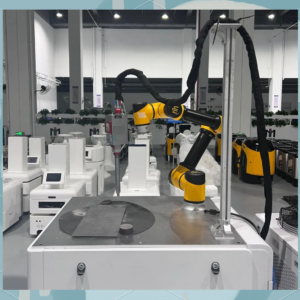
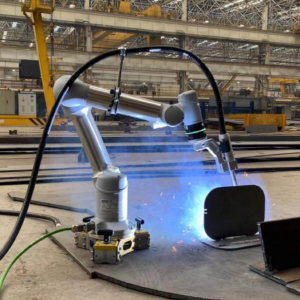
Industrial Application of Small Diameter Pipe Laser
Hydraulic and Fluid Delivery Systems
Modern harvesters rely on intricate hydraulic networks to power articulated movements and steering. These systems require pipes with precise apertures and burr-free internal surfaces to prevent contamination of hydraulic fluids. Laser cutting ensures that the entry and exit points for fittings are geometrically perfect, facilitating high-pressure seals that are less prone to leakage over thousands of operational hours.
Structural Space Frames and Roll-Over Protective Structures (ROPS)
The safety and structural rigidity of agri-machinery depend on the integrity of the tubular frames. When pipes are cut with a Small Diameter Pipe Laser, the fit-up between intersecting tubes is optimized. This “tab-and-slot” design capability allows for self-fixturing components, which significantly improves the accuracy of subsequent robotic welding. Because the HAZ from the initial laser cut is minimal, the cumulative thermal stress during the welding phase is better managed, resulting in a stronger overall assembly.
Bogotá as a Strategic Hub for Global Agri-Tech Supply Chains
The geographical and economic positioning of Bogotá provides a strategic advantage for global OEMs (Original Equipment Manufacturers). The city’s industrial sectors have invested heavily in European and Asian laser technologies, bridging the gap between cost-effective labor and high-tier technical output. Bogotá’s proximity to major shipping routes via both the Pacific and Atlantic coasts allows for the efficient export of processed tubular components to markets in North America and Europe.
Furthermore, the local engineering talent in Bogotá is increasingly specialized in CAD/CAM integration for laser processing. This allows for rapid prototyping and the transition from design to mass production with minimal lead times. For global agricultural brands looking to diversify their supply chains, Bogotá offers a technical maturity that rivals traditional manufacturing hubs, specifically in the niche of small-diameter, high-precision tubular components.
Longevity and Maintenance Reductions
The ultimate metric for agricultural machinery is total cost of ownership (TCO). Equipment that requires frequent structural repairs or suffers from premature frame failure represents a significant liability for end-users. By utilizing components processed with small-HAZ laser technology, manufacturers can extend the mean time between failures (MTBF). The retention of the base metal’s ductility near the cut edges ensures that the components can better absorb the shocks and vibrations inherent in field operations without developing micro-cracks.
In addition to mechanical durability, the precision of laser-cut pipes allows for better application of protective coatings. Uniform edges and the absence of slag ensure that powder coating or galvanization adheres more effectively, providing a superior barrier against oxidation. This synergy between precision fabrication and surface treatment is essential for machinery that must withstand decades of exposure to the elements.
Concluding Industry Insight: The Shift Toward Thermal Management
As the agricultural machinery industry moves toward electrification and autonomous operation, the demand for lightweight yet ultra-strong structural components will intensify. The industry is reaching a tipping point where traditional mechanical processing is no longer sufficient to meet the required strength-to-weight ratios. The shift toward Small Diameter Pipe Laser technology is not merely an upgrade in cutting speed; it is a fundamental shift in thermal management.
The future of agri-machinery longevity lies in the ability to manipulate high-strength materials without compromising their internal physics. Bogotá’s growing expertise in minimizing the Heat Affected Zone (HAZ) positions the region as a vital contributor to this evolution. For global stakeholders, the insight is clear: the quality of the “cut” is now as critical as the quality of the “alloy.” Precision thermal processing is the primary variable in the equation of machinery endurance, and the facilities currently operating in Bogotá are setting the standard for how this variable is controlled in the South American market and beyond.
Industrial Expertise & Support
Are you looking for high-performance Small Diameter Pipe Laser tailored for the Global market? Our engineering team provides comprehensive solutions for modern manufacturing.