Strategic Integration of Small Diameter Pipe Laser Technology in Asunción’s Industrial Sector
The industrial landscape of Asunción, Paraguay, is undergoing a significant transition from traditional mechanical fabrication to high-precision automated systems. As industrial parks in regions such as Villeta and Mariano Roque Alonso expand their footprint, the demand for specialized metal processing has intensified. Specifically, the implementation of Small Diameter Pipe Laser systems has emerged as a critical factor for facilities aiming to optimize throughput for complex geometries. Unlike general-purpose tube lasers, these specialized machines are engineered to handle the unique vibrational harmonics and high rotational speeds required for pipes typically ranging from 10mm to 120mm in diameter.
For global investors and local manufacturers, the shift toward fiber laser technology in the Paraguayan market is driven by the need for export-grade precision. As Paraguay positions itself as a manufacturing hub within the MERCOSUR trade bloc, the ability to produce components with tight tolerances—without the need for secondary finishing processes—provides a distinct competitive advantage. This article analyzes the technical parameters and the quantifiable Return on Investment (ROI) associated with deploying small-diameter fiber laser systems in Asunción’s burgeoning industrial zones.
Technical Specifications and Operational Advantages
Small diameter pipe lasers are distinguished by their high-speed pneumatic chucks and lightweight cutting heads. In the context of Asunción’s metal-mechanic industry, where light-gauge tubing is prevalent in furniture manufacturing, automotive components, and HVAC systems, the technical superiority of a dedicated small-tube system is evident in its acceleration rates. Standard tube lasers often struggle with the inertia of large mechanical components when processing small workpieces; however, specialized systems utilize High-Speed Pneumatic Chucks capable of reaching speeds up to 150 RPM, ensuring that the linear cutting speed remains consistent even during intricate cornering.
Furthermore, the integration of Fiber Laser Oscillation technology allows for superior beam quality. This results in a significantly reduced heat-affected zone (HAZ), which is vital for maintaining the structural integrity of thin-walled pipes. When processing materials like stainless steel or aluminum, the precision of the fiber source ensures that the kerf width remains minimal, typically under 0.1mm. This level of precision eliminates the requirement for manual deburring or post-process grinding, which are common bottlenecks in traditional Paraguayan workshops.
Quantifying ROI: Labor and Material Optimization
The financial justification for adopting laser technology in Asunción’s industrial parks rests on three pillars: labor reduction, material utilization, and energy efficiency. Historically, the production of a perforated and notched tube required four separate stages: measuring, cutting, drilling, and milling. A Small Diameter Pipe Laser consolidates these four stages into a single automated cycle. Data from local installations indicate a reduction in processing time per unit by approximately 70% compared to cold saw and mechanical press brake methods.

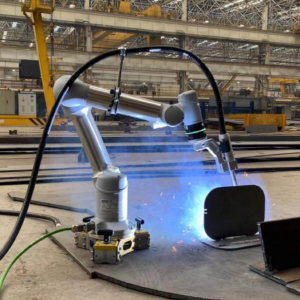
Industrial Application of Small Diameter Pipe Laser
Material waste is another significant factor in the ROI equation. Advanced nesting software, integrated with the laser system, calculates the optimal arrangement of cuts to minimize the “tailing” or remnant material at the end of each pipe. In many instances, the remnant can be reduced to as little as 40mm. For high-volume production runs common in Asunción’s export-oriented factories, a 5% to 8% saving in raw material costs can equate to tens of thousands of dollars in annual operational expenditure (OpEx) savings.
Energy Efficiency and Maintenance in the Paraguayan Climate
Paraguay offers a unique advantage for energy-intensive industries due to its abundant hydroelectric power. However, industrial equipment must be resilient to the local climate, characterized by high humidity and temperatures. Modern fiber laser systems are equipped with Closed-Loop Cooling Systems that maintain stable internal temperatures for both the laser source and the cutting head. This technical feature is essential for preventing thermal drift, which can compromise accuracy during long production shifts in the summer months.
From a maintenance perspective, fiber lasers require significantly less intervention than CO2 lasers or mechanical saws. There are no mirrors to align and no blades to sharpen. The solid-state design of the fiber source provides a maintenance-free life cycle of up to 100,000 hours. For a facility in Asunción, this translates to higher machine uptime and a lower Total Cost of Ownership (TCO). When factoring in the lower cost of electricity in Paraguay, the operational cost per hour of a 2kW small-diameter laser is remarkably low, further accelerating the payback period on the initial capital investment.
Market Scalability and Export Potential
The industrial parks surrounding Asunción are increasingly focused on the automotive and agribusiness sectors. These industries demand high-repeatability components, such as fuel lines, hydraulic supports, and structural frames for agricultural machinery. By utilizing Small Diameter Pipe Laser technology, local manufacturers can meet international ISO standards that were previously difficult to attain with manual fabrication. This capability opens doors to supply chains in Brazil and Argentina, where precision requirements are stringent.
The ability to perform “Common Line Cutting”—where two parts share a single cut line—further enhances scalability. This technique not only saves time but also reduces the consumption of assist gases (Nitrogen or Oxygen). As local operators become more proficient in sophisticated CNC programming, the flexibility to switch between small-batch custom prototypes and high-volume production runs becomes a strategic asset for Paraguayan firms looking to diversify their client base.
Concluding Industry Insight: The Path Toward Autonomous Fabrication
The adoption of small diameter pipe lasers in Asunción represents more than just a mechanical upgrade; it signifies a move toward the “Smart Factory” model within the Southern Cone. As the global supply chain continues to seek regionalized manufacturing hubs to mitigate logistics risks, Paraguay’s combination of low energy costs and increasing technical sophistication positions it as an ideal candidate for industrial expansion. The integration of automated loading and unloading systems with laser cutting units is the logical next step for the local industry.
The long-term industry insight for Asunción’s industrial sector is clear: ROI is no longer found in cheap labor, but in the precision and speed of automated systems. Facilities that invest in specialized laser technology today are not merely improving their current output; they are building the infrastructure necessary to participate in the global high-tech manufacturing economy. As the technology matures, we expect to see a surge in specialized “micro-hubs” in Paraguay that focus exclusively on high-precision tubular components, driven by the efficiency and reliability of fiber laser systems.
Industrial Expertise & Support
Are you looking for high-performance Small Diameter Pipe Laser tailored for the Global market? Our engineering team provides comprehensive solutions for modern manufacturing.