Introduction: The Industrial Shift in São Paulo’s Metalworking Sector
São Paulo stands as the primary industrial engine of South America, hosting a dense concentration of automotive, aerospace, and structural engineering firms. Historically, the region’s tube fabrication relied heavily on manual labor-intensive processes, including mechanical sawing, manual deburring, and pillar drilling. However, rising operational overheads and the demand for tighter dimensional tolerances have forced a transition toward high-precision automation. This technical analysis examines a specific case study of a mid-sized fabrication facility in São Paulo that successfully integrated a Fiber Tube Laser Cutter, resulting in a documented operational expenditure reduction of $5,000 per month through the displacement of manual processing stages.
The Technical Limitations of Manual Tube Fabrication
Before the implementation of fiber laser technology, the facility utilized traditional mechanical methods. Manual sawing using cold saws or band saws presents significant technical challenges, primarily regarding repeatability and angular accuracy. Mechanical cutting introduces physical stress on the material, often leading to deformation in thin-walled tubes. Furthermore, the secondary processes required—such as manual layout marking, drilling for bolt holes, and grinding to remove burrs—extended the production cycle time significantly.
In a manual workflow, a single complex chassis component required four distinct workstations and three separate material handlings. This fragmented process increased the probability of cumulative error, where slight deviations in the initial cut propagated through subsequent drilling and welding stages. The labor cost associated with these four stages, including social charges and benefits mandated by Brazilian labor laws, created a high baseline cost per part that limited the firm’s ability to compete on international contracts.
Implementing the Fiber Tube Laser Cutter: System Specifications
The transition involved the installation of a 3kW Fiber Tube Laser Cutter equipped with an automated bundle loader. Unlike CO2 lasers, fiber technology utilizes an optical fiber doped with rare-earth elements as the active gain medium. This allows for a significantly higher wall-plug efficiency and a smaller focal spot size. For the São Paulo facility, the technical advantages were immediate:

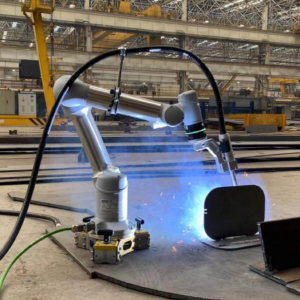
Industrial Application of Fiber Tube Laser Cutter
1. Wavelength Efficiency: The 1.06-micron wavelength of the fiber laser is absorbed more efficiently by reflective metals such as aluminum and brass, which are common in local automotive supply chains.
2. Integrated Processing: The CNC system manages cutting, hole-making, and complex geometry profiling (such as bird-mouth joints) in a single continuous operation.
3. Precision and Kerf width: The system maintains a Kerf width of approximately 0.1mm to 0.15mm, ensuring that the material loss is negligible compared to the 1.5mm to 3.0mm loss associated with mechanical blades.
Quantifying the $5,000 Monthly Operational Savings
The $5,000 monthly saving is not a generic estimate but a calculation based on three primary variables: labor reassignment, material yield optimization, and the elimination of secondary finishing.
Labor Displacement and Reassignment
In the São Paulo industrial corridor, the total cost of a skilled manual operator (including salary, FGTS, and social security) averages approximately $1,400 to $1,800 USD per month. By automating the cutting and drilling phases, the facility was able to reduce the headcount on the fabrication floor by three full-time equivalents. These operators were not terminated but reassigned to high-value assembly and quality control roles, allowing the plant to increase its total output without increasing its total payroll. The direct reduction in “cost-per-cut” labor contributed roughly $4,200 to the monthly savings.
Nesting Optimization and Material Yield
Manual marking and cutting often result in high scrap rates due to “human-error” measurements and the inability to tightly nest parts on a single length of raw material. The laser system utilizes advanced Nesting optimization software. This algorithm analyzes the production queue and arranges parts to minimize “remnant” material. In this specific case, the facility improved material utilization by 12 percent. Given the rising cost of stainless steel and aluminum in the Brazilian market, this reduction in raw material waste accounted for approximately $800 in monthly savings.
Reduction in the Heat-Affected Zone (HAZ) and Finishing Costs
A critical technical advantage of the fiber laser is the minimized Heat-Affected Zone (HAZ). High-speed laser cutting concentrates energy so precisely that the surrounding material remains below its critical transformation temperature. This preserves the metallurgical properties of the tube, which is essential for components undergoing subsequent heat treatment or high-stress applications. Because the laser produces a clean, dross-free edge, the facility eliminated the manual deburring station. This reduction in consumables (grinding discs, sandpaper) and the electricity required for handheld power tools further padded the monthly savings margins.
Throughput Comparison: Manual vs. Automated
To understand the scale of efficiency, consider a standard 50mm diameter stainless steel tube with four 10mm holes and a 45-degree miter cut.
Manual Process:
– Sawing: 2 minutes
– Deburring: 3 minutes
– Layout/Marking: 2 minutes
– Drilling: 4 minutes
– Total: 11 minutes per part.
Fiber Tube Laser Cutter Process:
– Total cycle time (including loading and unloading): 42 seconds.
The throughput increase is over 1,500 percent. This allows the São Paulo facility to fulfill orders in 2 days that previously required 3 weeks of lead time, significantly improving cash flow and reducing the need for large on-site inventories.
Concluding Industry Insight: The Democratization of Precision
The case of the São Paulo fabrication shop highlights a broader trend in global manufacturing: the democratization of high-end CNC technology. As fiber laser sources become more affordable and robust, the barrier to entry for “tier-two” and “tier-three” suppliers has lowered. The transition from manual labor to automated laser systems is no longer an elective upgrade for growth; it is a requirement for survival in a market where “just-in-time” delivery and “six-sigma” quality are the baseline expectations.
For industrial hubs in emerging economies, the primary insight is that labor cost is no longer a sustainable competitive advantage. Precision, repeatability, and material efficiency—driven by Fiber Tube Laser Cutter technology—are the new metrics of success. The $5,000 monthly saving identified in this study represents more than just a reduction in expenses; it represents the capital necessary for further R&D and digital integration, ensuring that local manufacturers can maintain a foothold in the global supply chain.
Industrial Expertise & Support
Are you looking for high-performance Fiber Tube Laser Cutter tailored for the Global market? Our engineering team provides comprehensive solutions for modern manufacturing.