Optimizing Industrial Uptime: High-Power Laser Integration in the South American Manufacturing Sector
The industrial landscape of São Paulo, Brazil, serves as the primary engine for South American heavy manufacturing, spanning automotive assembly, aerospace engineering, and large-scale structural steel fabrication. Within these sectors, the demand for high-precision thermal processing has transitioned from standard CO2 systems to advanced fiber-based architectures. The implementation of a Heavy-Duty Beam Laser in this region requires more than just high-kilowatt output; it demands a robust support ecosystem capable of mitigating the high costs associated with unplanned machine downtime. As global manufacturers decentralize their production, the presence of localized technical support and immediate component availability has become the primary metric for evaluating Return on Investment (ROI) in laser procurement.
The transition toward high-power density applications necessitates a shift in how maintenance and service contracts are structured. In the context of the Brazilian market, where import duties and logistical bottlenecks can delay international shipments by weeks, the establishment of a localized hub in São Paulo for spare parts is a strategic necessity. This article examines the technical requirements of heavy-duty laser systems and the operational framework required to sustain 24-hour service response in a high-intensity production environment.
Technical Architecture of the Heavy-Duty Beam Laser
A Heavy-Duty Beam Laser is characterized by its ability to maintain beam stability and power consistency over extended duty cycles, often exceeding 20 hours of daily operation. Unlike light-industrial units, these systems utilize reinforced gantry structures and high-torque linear motors to handle the inertia of heavy workpieces. The beam delivery system must be hermetically sealed to prevent contamination from the ambient industrial atmosphere, which is particularly relevant in the diverse climatic conditions of the São Paulo metropolitan area.

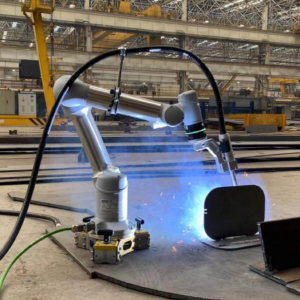
Industrial Application of Heavy-Duty Beam Laser
Core Components and Power Scaling
The heart of these systems is the fiber laser resonator, which utilizes rare-earth-doped active fibers to generate high-brightness beams. For heavy-duty applications, these resonators are typically configured in a multi-module array, allowing for power scaling from 12kW to 40kW or higher. This modularity provides a level of redundancy; if one module fails, the system can often continue to operate at reduced power, preventing a total production halt. However, the complexity of these modules requires precise calibration and specialized cooling systems to maintain the narrow wavelength tolerances required for efficient material absorption.
Localization of High-Power Laser Optics and Consumables
The efficiency of a laser system is highly dependent on the integrity of its optical path. In the São Paulo industrial corridor, the availability of high-power laser optics is critical. These components, including protective windows, collimating lenses, and focusing elements, are subject to extreme thermal stress. Even microscopic levels of surface contamination can lead to catastrophic optical failure when exposed to multi-kilowatt energy densities.
Inventory Management for Rapid Replacement
Localized spare parts inventory in Brazil focuses on three primary categories:
1. Consumables: Copper nozzles, ceramic rings, and protective windows that require frequent replacement to maintain cut quality.
2. Critical Electronics: Motor drivers, sensors, and PLC modules that are susceptible to power fluctuations in the local grid.
3. Optical Assemblies: Pre-aligned cutting heads and fiber delivery cables that require clean-room conditions for assembly.
By maintaining these components within the state of São Paulo, manufacturers circumvent the “Despacho Aduaneiro” (customs clearance) delays that typically plague imported high-tech components. This allows for a transition from a Just-in-Case inventory model to a more efficient localized support model.
Precision Engineering via the CNC Motion Control System
The synchronization between the laser source and the mechanical movement is governed by the CNC motion control system. In heavy-duty applications, this system must process high volumes of encoder feedback data in real-time to adjust for mechanical vibrations and thermal expansion of the machine bed. The integration of localized service means that software technicians can provide on-site PID tuning and drive optimization, ensuring that the machine maintains its micron-level accuracy despite the heavy payloads of thick-plate processing.
Real-Time Diagnostics and Predictive Maintenance
Modern motion controllers are equipped with IoT-enabled diagnostic tools. These tools monitor parameters such as following error, motor temperature, and bus voltage. When integrated with a 24h service response team in São Paulo, these data streams allow for predictive maintenance. Technicians can identify a failing bearing or a degrading power supply before it results in a system-wide failure, scheduling repairs during planned maintenance windows rather than during peak production hours.
Thermal Management and Environmental Adaptation
Industrial environments in São Paulo can experience significant fluctuations in humidity and temperature. For a high-power laser, these variables are critical. The thermal management modules—comprising industrial chillers, heat exchangers, and internal climate control units—must be calibrated to the specific dew point of the facility. A localized service team understands these regional environmental factors and can implement specialized filtration and refrigeration settings that a remote global support desk might overlook.
Chiller Maintenance and Water Chemistry
The cooling system for a heavy-duty laser requires deionized water with specific conductivity levels. Localized service includes regular testing of the coolant chemistry and the provision of specialized additives that prevent algae growth and internal corrosion of the laser source. Failure to maintain these systems leads to “thermal lensing,” where the optical properties of the laser change due to heat, resulting in inconsistent cut quality and potential damage to the resonator.
The 24h Service Response Framework
A 24-hour service response is not merely a promise of a phone call; it is a commitment to on-site technical intervention. In the São Paulo region, this is facilitated by a fleet of mobile service units equipped with specialized diagnostic tools, such as beam profilers and power meters. The response protocol typically follows a three-tier structure:
Tier 1: Remote digital diagnostics to identify the fault code and determine the necessary parts.
Tier 2: Dispatch of a local technician with the required components from the São Paulo warehouse.
Tier 3: On-site repair, recalibration, and verification of the system’s performance parameters.
This localized approach reduces the Mean Time to Repair (MTTR) by up to 80% compared to models relying on international technical deployment. For a facility operating a 20kW laser, every hour of downtime can represent thousands of dollars in lost throughput, making the speed of service a critical component of the machine’s total cost of ownership.
Industry Insight: The Future of Localized Industrial Support
The global manufacturing trend is moving toward “Regionalization of Resilience.” As supply chains become more fragmented and geopolitical factors influence the movement of high-tech goods, the ability to service complex machinery locally will define the winners in the industrial sector. In Brazil, and specifically within the São Paulo industrial hub, the infrastructure for Heavy-Duty Beam Laser support is evolving. We are seeing a shift from simple mechanical repair toward high-level optical and electronic refurbishment performed locally.
The integration of localized spare parts and rapid service response is no longer a value-added service; it is a fundamental requirement for the adoption of Industry 4.0 technologies. As laser powers continue to climb and applications expand into new alloys and thicker materials, the proximity of technical expertise and hardware inventory will be the primary factor in maintaining the competitive edge of Brazilian manufacturing on the global stage. Companies that invest in systems backed by local infrastructure will achieve higher operational stability, better precision, and a significantly faster path to profitability.
Industrial Expertise & Support
Are you looking for high-performance Heavy-Duty Beam Laser tailored for the Global market? Our engineering team provides comprehensive solutions for modern manufacturing.