Precision Engineering in the Santa Catarina Industrial Hub
Joinville, Brazil, has established itself as a primary center for metallurgical excellence in South America, serving as a critical node for the global mining supply chain. As extraction environments become increasingly abrasive, the demand for high-performance wear-plates has surged. The integration of the Heavy-Duty Beam Laser into Joinville’s manufacturing facilities represents a significant shift in how abrasion-resistant (AR) materials are processed. Unlike traditional mechanical shearing or plasma cutting, high-wattage fiber laser systems offer the thermal density required to penetrate hardened alloys while maintaining the metallurgical properties of the substrate.
The mining sector relies on components such as liners, chutes, and hopper plates that can withstand extreme mechanical stress and friction. In the past, the lead times for customized wear-plates were extended by the difficulty of machining materials with high Brinell hardness ratings. By leveraging localized expertise in Joinville, operators can now access rapid customization services that utilize advanced beam oscillation and high-pressure nitrogen assist gases to produce components with exceptional edge quality and dimensional accuracy.
Technical Specifications of High-Wattage Fiber Systems
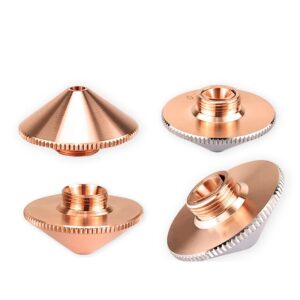
The implementation of a Heavy-Duty Beam Laser typically involves fiber-optic power sources ranging from 12kW to 30kW. These systems are designed to handle the high reflectivity and thermal conductivity of specialized mining alloys. The core advantage lies in the power density; the laser focuses energy into a diameter of mere microns, allowing for a narrow Kerf Width that minimizes material waste. This is particularly vital when processing expensive materials like Manganese steel or high-chromium alloys.
Furthermore, these systems utilize sophisticated CNC controllers that manage beam parameters in real-time. This includes the adjustment of focal position and pulse frequency based on the material thickness and composition. For mining applications, where plate thicknesses often exceed 20mm, the ability to maintain a stable cutting front is essential to prevent dross accumulation and ensure that the final component meets the rigorous tolerances required for heavy machinery assembly.

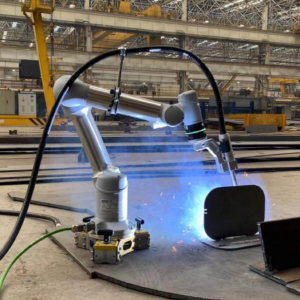
Industrial Application of Heavy-Duty Beam Laser
Minimizing the Heat-Affected Zone in Wear-Plate Fabrication
One of the primary technical challenges in fabricating mining wear-plates is the preservation of the material’s hardness profile. Traditional thermal cutting methods, such as oxy-fuel or standard plasma, generate significant heat that penetrates deep into the material. This results in a substantial Heat-Affected Zone (HAZ), where the microstructure of the steel is altered, often leading to localized softening or increased brittleness. In a mining context, a large HAZ is a failure point where premature cracking or accelerated wear will occur.
The Heavy-Duty Beam Laser mitigates this risk through high-speed processing and localized energy delivery. Because the laser moves at higher feed rates than conventional methods, the total heat input per unit of length is drastically reduced. This ensures that the specialized quenching and tempering of the wear-plate remain intact up to the very edge of the cut. For components like Chromium Carbide Overlay (CCO) plates, this precision is critical to prevent the delamination of the hardfacing layer from the base plate during the cutting process.
Rapid Customization via CAD/CAM Integration
The transition from standardized wear-plates to site-specific customized solutions is driven by integrated digital workflows. In Joinville’s high-tech facilities, engineers utilize CAD/CAM integration to translate field measurements from mine sites directly into cutting paths. This eliminates the need for physical templates and allows for the rapid iteration of component designs. If a specific chute liner in a Chilean copper mine or an Australian iron ore facility shows uneven wear patterns, the geometry can be adjusted digitally, and a replacement can be precision-cut in Brazil within hours.
This digital agility is supported by nesting algorithms that optimize the layout of parts on a single sheet of steel. Given the weight and cost of high-grade wear-plates, maximizing material utilization is a key factor in reducing the total cost of ownership for mining operators. The precision of the laser allows for tighter nesting than is possible with mechanical or plasma methods, further enhancing the economic viability of customized production runs.
Logistical Advantages and Global Export Capacity
Joinville’s strategic location provides a dual advantage: proximity to Brazil’s massive domestic mining operations (such as those in the Carajás region) and efficient access to international shipping lanes through the ports of Itapoá and São Francisco do Sul. This infrastructure allows for the rapid export of custom-fabricated wear-plates to global markets. The ability to produce high-tolerance components in a lower-cost manufacturing environment without sacrificing technical quality has made Joinville a preferred partner for global OEMs (Original Equipment Manufacturers).
The facility’s ability to handle large-format plates—often up to 12 meters in length—ensures that even the largest mining truck liners or primary crusher components can be processed as single units. This reduces the need for secondary welding and assembly, which in turn reduces the number of potential failure points in the finished product. The combination of heavy-duty hardware and a sophisticated logistical network ensures that downtime at the mine site is minimized through the reliable delivery of precisely engineered replacement parts.
Industry Insight: The Shift Toward Subtractive Precision
As the global mining industry moves toward more autonomous and data-driven operations, the requirements for hardware reliability have reached unprecedented levels. The historical tolerance for “rough-cut” components is disappearing. The industry is witnessing a clear shift toward subtractive precision, where the Heavy-Duty Beam Laser is no longer viewed as a luxury but as a baseline requirement for Tier 1 suppliers. The ability to maintain metallurgical integrity while achieving complex geometries allows for the development of more efficient material handling systems that reduce energy consumption and increase throughput.
Looking forward, the integration of real-time monitoring and AI-driven predictive maintenance within the laser systems themselves will further refine the customization process. In Joinville, the convergence of material science, high-power optics, and logistical efficiency is setting a new standard for the global supply of wear-resistant components. For mining enterprises, the focus has shifted from merely sourcing “hard steel” to sourcing “engineered solutions” that are optimized for the specific abrasive characteristics of their particular ore body. This evolution in manufacturing ensures that the next generation of mining infrastructure will be more durable, more precise, and more rapidly adaptable to the changing demands of global mineral extraction.
Industrial Expertise & Support
Are you looking for high-performance Heavy-Duty Beam Laser tailored for the Global market? Our engineering team provides comprehensive solutions for modern manufacturing.