Industrial Integration of Heavy-Duty Beam Laser Systems in Joinville, Brazil
The industrial landscape of Joinville, Santa Catarina, represents one of the most concentrated metallurgical clusters in Latin America. As global manufacturing demands shift toward higher throughput and increased material thickness, the deployment of Heavy-Duty Beam Laser technology has become a critical requirement for Tier-1 and Tier-2 suppliers. These systems, often operating in the 12kW to 40kW power range, are engineered to handle the rigorous demands of structural steel fabrication, automotive chassis production, and heavy machinery manufacturing. However, the technical efficacy of these high-power systems is inextricably linked to the robustness of the local support infrastructure, specifically regarding localized spare parts procurement and rapid service response protocols.
In the context of heavy-duty thermal cutting, operational uptime is the primary metric for determining Return on Investment (ROI). The integration of fiber laser resonators into large-format gantries allows for the processing of oversized structural beams and thick-gauge plates with a precision that plasma or oxy-fuel systems cannot replicate. To maintain this precision over multi-shift operations, the synchronization between machine hardware and local technical support in Joinville is essential for minimizing unscheduled downtime.
Technical Specifications and Structural Requirements
A Heavy-Duty Beam Laser is defined by its ability to maintain structural stability under extreme acceleration and deceleration cycles while carrying high-power cutting heads. In Joinville’s industrial facilities, these machines typically utilize a reinforced hollow-bed design, heat-treated to relieve internal stresses, ensuring that the machine frame remains stable over decades of use. The motion system usually employs high-precision rack and pinion sets paired with planetary gearboxes to achieve the necessary torque for moving large-scale gantries.
The Fiber Laser Resonator serves as the core component, delivering a high-brightness beam through a transport fiber to the cutting head. At power levels exceeding 20kW, the management of thermal lensing and beam waist stability becomes a significant engineering challenge. Localized technical teams must be proficient in calibrating these parameters to ensure consistent cut quality across the entire working area, which can often exceed 12 meters in length. This requires a sophisticated understanding of Dynamic Motion Control algorithms that compensate for mechanical vibrations and thermal expansion during prolonged cutting cycles.
Localized Spare Parts: Ensuring Supply Chain Resilience
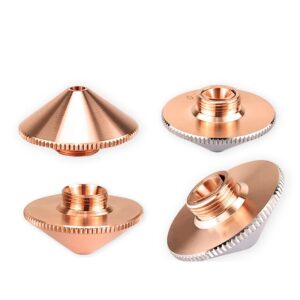
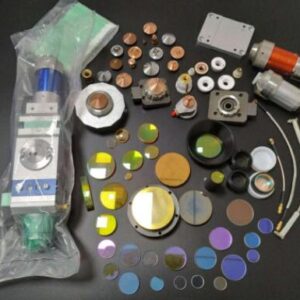
The geographical distance between South American manufacturing hubs and European or Asian OEMs often presents a logistical bottleneck. By establishing a localized spare parts inventory in Joinville, the supply chain for critical consumables and high-value components is drastically shortened. This inventory typically includes copper nozzles, protective windows, ceramic rings, and specialized optics that are susceptible to wear during high-pressure nitrogen or oxygen cutting.

Industrial Application of Heavy-Duty Beam Laser
Beyond consumables, the local availability of critical electronic components—such as servo drives, PLC modules, and sensor arrays—is vital. In a heavy-duty environment, a single component failure can halt an entire production line. Having these parts situated within the Santa Catarina industrial corridor eliminates the delays associated with customs clearance and international air freight. This localized approach ensures that Kerf Width Optimization and other precision-dependent processes are not compromised by the use of non-genuine or “make-shift” parts while waiting for imports.
The 24h Service Response Framework
Technical support for Heavy-Duty Beam Laser systems in Joinville is structured around a tiered response strategy designed to achieve a 24-hour onsite resolution window. This framework begins with remote diagnostics via Industry 4.0 interfaces. Modern laser systems are equipped with integrated sensors that monitor gas pressure, cooling water temperature, and beam reflection back-scatter in real-time. If a deviation from nominal parameters is detected, technicians can often perform a remote reset or software calibration.
When physical intervention is required, the proximity of service engineers in Joinville allows for a rapid transition from diagnosis to repair. The 24h service response commitment includes the dispatch of certified engineers equipped with specialized diagnostic tools, such as beam profilers and interferometers. This level of service is mandatory for industries where the cost of a halted production line can exceed thousands of dollars per hour. The technical team’s ability to perform onsite fiber splicing or optical head refurbishment is a significant advantage for the local metallurgical sector.
Strategic Impact on Global Manufacturing Nodes
Joinville’s emergence as a hub for high-power laser processing has implications for the global supply chain. International companies looking to outsource heavy structural components find a reliable partner in Brazilian firms that utilize state-of-the-art laser technology backed by localized support. The ability to process high-strength low-alloy (HSLA) steels with minimal heat-affected zones (HAZ) allows for the production of components that meet stringent international standards for structural integrity.
Furthermore, the localization of service and parts contributes to the overall sustainability of the manufacturing process. By reducing the carbon footprint associated with long-distance shipping of heavy components and minimizing material waste through precise laser nesting, Joinville-based manufacturers can offer more competitive and environmentally conscious solutions to the global market. The synergy between advanced hardware and local technical expertise creates a self-sustaining ecosystem that attracts further investment in high-tech industrial equipment.
Concluding Industry Insight: The Shift Toward Autonomous Maintenance
As we look toward the future of heavy-duty laser applications, the industry is moving beyond reactive service models toward predictive and autonomous maintenance. The data collected by service centers in Joinville is increasingly being used to train machine learning models that can predict component failure before it occurs. For the Heavy-Duty Beam Laser, this means that the next generation of systems will not only benefit from localized parts and 24h response but will also feature self-correcting optical paths and automated nozzle changers that further reduce the need for human intervention.
In conclusion, the success of high-power laser operations in Brazil is not merely a result of the hardware itself, but the result of a comprehensive support infrastructure. The combination of localized spare parts and a rigorous 24-hour service response ensures that Joinville remains a competitive force in the global industrial arena. For B2B stakeholders, the focus must remain on the total cost of ownership (TCO), where the reliability of the local service ecosystem is just as critical as the kilowatt rating of the laser source.
Industrial Expertise & Support
Are you looking for high-performance Heavy-Duty Beam Laser tailored for the Global market? Our engineering team provides comprehensive solutions for modern manufacturing.