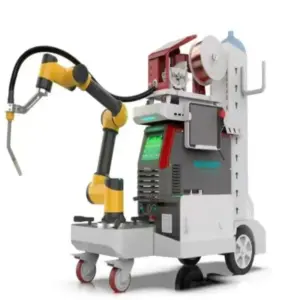
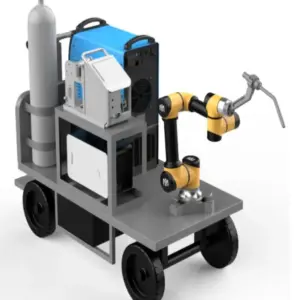
Industrial Integration of Heavy-Duty Beam Laser Systems in Joinville’s Manufacturing Sector
Joinville, situated in the state of Santa Catarina, stands as the primary industrial hub of Southern Brazil. The city’s metal-mechanical cluster demands high-precision equipment capable of sustained operation in rigorous environments. Among these technologies, the Heavy-Duty Beam Laser has become a cornerstone for high-thickness plate processing, precision welding, and additive manufacturing. However, the deployment of such high-energy systems in the Brazilian market is not merely a matter of mechanical installation. It requires a sophisticated alignment between international performance benchmarks and localized safety mandates.
For global manufacturers and local operators in Joinville, the integration of high-power laser resonators necessitates a dual-layered approach to certification. Systems must satisfy the European CE (Conformité Européenne) directives for global exportability while strictly adhering to Brazil’s NR-12 (Norma Regulamentadora 12) standards. This technical analysis explores the engineering requirements, safety architectures, and regulatory frameworks governing these systems within the Brazilian industrial landscape.
Technical Specifications and Power Dynamics of Heavy-Duty Systems
A Heavy-Duty Beam Laser is defined by its ability to maintain beam stability and power density over extended duty cycles. In the context of Joinville’s heavy industries—which include automotive parts, refrigeration components, and large-scale machinery—these lasers typically utilize fiber-optic delivery systems with power outputs ranging from 6kW to 30kW. The beam quality, measured by the Beam Parameter Product (BPP), is critical for ensuring minimal heat-affected zones (HAZ) during the processing of carbon steel, stainless steel, and aluminum alloys.

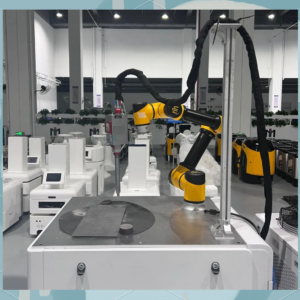
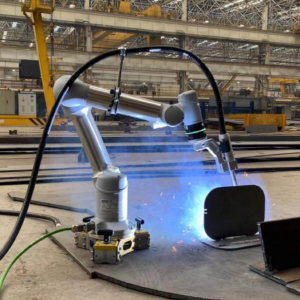
Industrial Application of Heavy-Duty Beam Laser
The hardware architecture of these machines involves high-performance resonators and cutting heads equipped with automated focus adjustment and piercing sensors. To withstand the voltage fluctuations and humidity levels often found in tropical industrial zones, the power supplies must be ruggedized, featuring integrated cooling circuits and surge protection that meets IEC standards. The mechanical frame of the machine must also provide the necessary vibration damping to maintain micron-level accuracy when the laser head moves at high acceleration speeds.
NR-12 Compliance: The Brazilian Regulatory Framework
NR-12 is the Brazilian Ministry of Labor’s regulation governing the safety of machinery and equipment. It is one of the most stringent safety standards globally, often exceeding the requirements of the European Machinery Directive in specific areas of documentation and physical intervention. For a Heavy-Duty Beam Laser to be legally operated in Joinville, it must undergo a comprehensive risk assessment (Análise de Risco) conducted by a legally qualified professional registered with the CREA (Regional Council of Engineering and Agronomy).
Key aspects of NR-12 Compliance include the implementation of fail-safe systems that prevent the machine from operating if any safety perimeter is breached. This involves the installation of physical barriers, safety light curtains, and interlocked access points. Unlike some international standards that allow for software-based overrides, NR-12 emphasizes hardware-level redundancy. Every safety function must achieve a specific Performance Level (PL) or Safety Integrity Level (SIL), ensuring that a single component failure does not lead to the loss of the safety function.
CE Marking vs. NR-12: Bridging the Gap
While CE marking indicates that a product meets EU safety, health, and environmental requirements, it is often viewed as a “self-declaration” process for many types of machinery. In contrast, NR-12 requires third-party validation and a localized Technical Responsibility Note (ART). For global manufacturers exporting to Joinville, a CE-compliant machine provides a strong foundation, but several modifications are typically required to meet Brazilian law.
One primary difference lies in the electrical documentation. NR-12 requires all technical manuals, warning signs, and Human-Machine Interface (HMI) software to be provided in Brazilian Portuguese. Furthermore, the electrical diagrams must strictly follow the ABNT (Brazilian Association of Technical Standards) conventions. The safety circuit architecture must also be “Category 4” under many laser applications, involving dual-channel monitoring and dedicated safety PLCs that are independent of the main operational PLC.
Safety Architecture for High-Power Laser Environments
The primary hazard associated with a Heavy-Duty Beam Laser is the invisible infrared radiation which can cause permanent ocular damage or skin burns instantaneously. To mitigate this, the enclosure must be light-tight, constructed from materials tested for laser radiation resistance according to EN 60825-1 or equivalent standards. In Joinville’s manufacturing plants, these enclosures are often integrated with high-speed Optoelectronic Protective Devices.
The safety system must include:
- Active Laser Guarding: Sensors within the cabin walls that detect stray beams and trigger an emergency stop in milliseconds.
- Redundant Emergency Stops: Strategically placed buttons that are hard-wired to the safety relay.
- Pressure-Sensitive Mats or Laser Scanners: To ensure no personnel are inside the processing zone during operation.
- Fume Extraction Interlocks: Ensuring the laser does not fire unless the filtration system is active, preventing the buildup of toxic particulates.
Implementation Challenges in the Joinville Industrial Hub
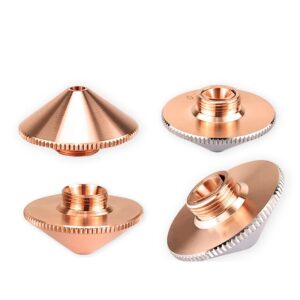
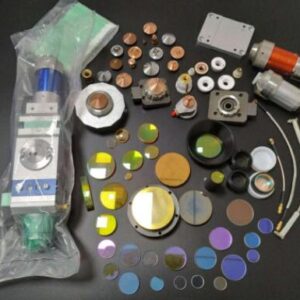
Deploying these systems in Joinville presents unique logistical and technical challenges. The local power grid and industrial infrastructure require specific grounding techniques to prevent electromagnetic interference (EMI) from affecting the sensitive laser electronics. Furthermore, the specialized nature of Heavy-Duty Beam Laser maintenance requires a local supply chain for consumables such as nozzles, protective windows, and specialized gases (Oxygen/Nitrogen).
Companies operating in Joinville must also invest in specialized training for their workforce. NR-12 specifically mandates that operators receive theoretical and practical training on the specific machine they are operating. This training must cover the risks identified in the risk assessment and the proper use of all safety devices. Documentation of this training must be kept on-site for inspection by labor authorities.
The Economic Impact of Compliance
While the initial cost of achieving full NR-12 and CE compliance can be significant—often adding 10% to 15% to the total investment of the machinery—the long-term benefits are substantial. Non-compliance in Brazil can lead to immediate shutdown of the production line by labor inspectors, heavy fines, and significant legal liability in the event of an accident. For Joinville’s exporters, having machines that meet both standards ensures that their production facility adheres to global Environmental, Social, and Governance (ESG) criteria, which is increasingly required by international partners in the automotive and aerospace sectors.
Concluding Industry Insight: The Future of Laser Safety and Global Trade
The industrial landscape in Joinville is indicative of a broader global trend: the convergence of high-output manufacturing and stringent safety regulation. As Heavy-Duty Beam Laser technology evolves toward higher power levels and greater autonomy, the reliance on passive safety measures is shifting toward “smart” safety systems. These systems utilize real-time monitoring and AI-driven diagnostics to predict component failure before it compromises safety or production quality.
The future of manufacturing in regions like Southern Brazil will depend on the ability of equipment providers to offer “compliance-ready” solutions. Machines that are designed from the ground up to satisfy both CE and NR-12 requirements reduce the “time-to-production” for local industries. Furthermore, as Brazil continues to align its technical standards with international ISO and IEC norms, the friction between localized regulations and global engineering standards is expected to decrease. For the B2B sector, the focus is shifting from simply purchasing a machine to investing in a compliant, high-availability production cell that secures both the workforce and the capital investment against regulatory and operational risks.
Industrial Expertise & Support
Are you looking for high-performance Heavy-Duty Beam Laser tailored for the Global market? Our engineering team provides comprehensive solutions for modern manufacturing.