Introduction: The Industrial Shift in the Buenos Aires Corridor
The industrial landscape of Buenos Aires, particularly within the strategic corridors of Pilar, Zárate, and Campana, is undergoing a rigorous technical transition. As the demand for structural steel fabrication in the automotive, energy, and civil infrastructure sectors increases, traditional methods such as plasma cutting and manual drilling are reaching their efficiency ceilings. The integration of the Heavy-Duty Beam Laser into these industrial parks represents a shift toward high-velocity precision engineering. This article examines the technical parameters and the quantifiable Return on Investment (ROI) associated with deploying high-wattage fiber laser systems for structural profiles in the Argentine market.
Technical Architecture of High-Wattage Beam Processing
The transition to a Heavy-Duty Beam Laser involves more than a simple upgrade in cutting speed; it is an overhaul of the structural fabrication workflow. These systems are typically engineered with a 3D 6-axis cutting head, allowing for complex geometries on I-beams, H-beams, channels, and angles in a single pass. Unlike traditional CO2 systems, modern fiber laser resonators operate at wavelengths (approximately 1.07 microns) that are highly absorbed by structural steels, resulting in significantly higher thermal efficiency.
A critical technical advantage is the reduction of the Heat-Affected Zone (HAZ). In heavy-duty applications, maintaining the metallurgical integrity of the steel is paramount. Plasma cutting often introduces excessive heat, which can alter the grain structure of the metal, necessitating secondary grinding or heat treatment. The concentrated energy density of a fiber laser minimizes the HAZ, ensuring that the mechanical properties of the beam remain within the design specifications of the original mill certificate. This precision is vital for the seismic-resistant construction projects currently being developed in the northern regions of Argentina, where structural reliability is non-negotiable.
Quantifying ROI: Throughput and Operational Expenditure
For industrial park operators in Buenos Aires, the ROI of a Heavy-Duty Beam Laser is calculated through three primary metrics: throughput acceleration, material utilization, and the elimination of secondary processes. In a standard structural steel workflow, a beam must be measured, marked, drilled, and then cut. A laser system consolidates these four steps into one automated cycle.
Data from local deployments indicate that the Fiber Laser Resonator efficiency reduces the cost per part by approximately 35 percent to 50 percent compared to mechanical drilling and sawing. The speed of a 12kW laser on a 12mm thick web of an H-beam is exponentially faster than any mechanical or plasma alternative. Furthermore, the integration of advanced nesting software ensures Kerf Width Optimization, minimizing the gap between parts and reducing scrap rates. In a region where raw material costs are subject to global commodity fluctuations and local import duties, a 5 percent reduction in material waste can equate to thousands of dollars in monthly savings.

Industrial Application of Heavy-Duty Beam Laser
Labor Dynamics and Automation in the Argentine Market
The Buenos Aires industrial sector faces specific challenges regarding skilled labor availability and rising operational costs. The implementation of automated beam processing reduces the reliance on manual layout and fit-up. By utilizing TEKLA or CAD/CAM direct-to-machine interfaces, the margin for human error is nearly eliminated. This is particularly relevant for the complex assemblies required by the Vaca Muerta energy projects, where dimensional tolerances are strict.
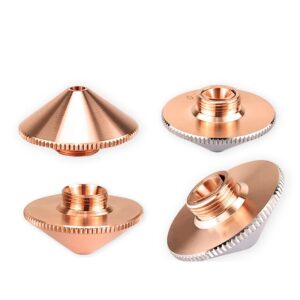
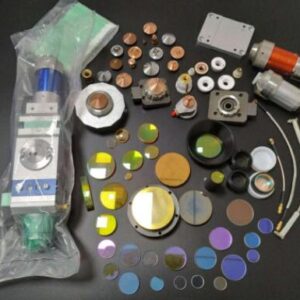
From a technical management perspective, the Mean Time Between Failures (MTBF) for fiber laser sources is rated at over 100,000 hours. For a facility operating in a triple-shift environment in an industrial park like Parque Industrial Pilar, this translates to years of consistent output with minimal maintenance intervention. The reduction in consumable costs—switching from expensive drill bits and plasma electrodes to simple protective windows and nozzles—further stabilizes the Operational Expenditure (OPEX) profile.
Energy Efficiency and Power Stability Considerations
Industrial parks in Argentina often face challenges regarding power grid stability and energy costs. A Heavy-Duty Beam Laser utilizing fiber technology is significantly more energy-efficient than its CO2 predecessors. Fiber lasers boast a wall-plug efficiency of approximately 30 percent to 40 percent, whereas CO2 systems struggle to reach 10 percent. This lower power draw allows facilities to operate high-capacity machinery without requiring massive upgrades to the local substation infrastructure.
Furthermore, the precision of the laser reduces the need for high-pressure secondary air or gas consumption in certain thicknesses. When cutting with nitrogen or oxygen, the flow rates are precisely controlled by proportional valves integrated into the CNC system, ensuring that gas consumption is optimized per millimeter of cut. This level of control is essential for maintaining a competitive edge in the global B2B manufacturing supply chain.
Strategic Integration within Local Industrial Ecosystems
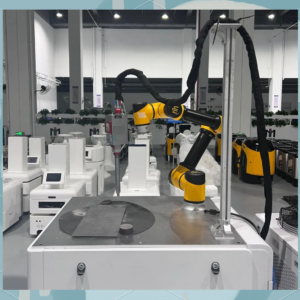
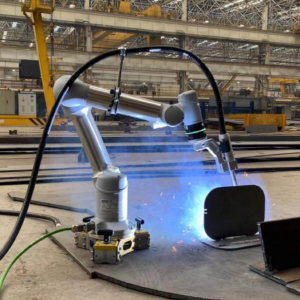
The concentration of automotive and heavy machinery manufacturers in Buenos Aires creates a symbiotic environment for laser technology. When a Tier 1 supplier adopts a Heavy-Duty Beam Laser, the entire local supply chain benefits from the increased precision. Parts are delivered “weld-ready,” meaning they require no beveling or cleaning before being moved to the robotic welding cell. This “just-in-time” capability is a requirement for modern global manufacturing standards and allows Argentine firms to compete for international contracts that were previously out of reach due to quality or lead-time constraints.
Concluding Industry Insight: The Global Context
The adoption of Heavy-Duty Beam Laser technology in Buenos Aires is not merely a local trend but a reflection of a global shift toward “Smart Fabrication.” As global supply chains continue to de-risk by diversifying manufacturing hubs, regions that invest in high-precision, automated infrastructure will capture the highest value-added segments of the market. The data suggests that the ROI for these systems in the Argentine industrial context is accelerated by the high cost of manual rework and the critical need for material conservation. Industry leaders who prioritize the transition from mechanical to photonic processing are positioning themselves to lead the next decade of structural engineering. The future of the Buenos Aires industrial corridor lies in its ability to marry its traditional manufacturing heritage with the uncompromising precision of fiber laser technology, ensuring long-term viability in an increasingly automated global economy.
Industrial Expertise & Support
Are you looking for high-performance Heavy-Duty Beam Laser tailored for the Global market? Our engineering team provides comprehensive solutions for modern manufacturing.