Precision Engineering in the Buenos Aires Manufacturing Sector: The Rise of Heavy-Duty Beam Laser Technology
The industrial landscape of Buenos Aires, Argentina, has undergone a significant transition toward high-precision automated manufacturing. As a primary hub for South American exports, the region’s furniture industry is increasingly reliant on sophisticated metal fabrication to meet the stringent quality requirements of the European and North American markets. Central to this transition is the deployment of the Heavy-Duty Beam Laser, a system engineered to process structural profiles with high dimensional accuracy and minimal thermal distortion. For furniture exporters, the shift from traditional mechanical sawing or plasma cutting to fiber laser technology represents a critical upgrade in production efficiency and edge quality.
In the context of global trade, furniture components—ranging from minimalist steel frames to complex architectural supports—must adhere to strict tolerances. The presence of burrs or dross on cut edges necessitates secondary finishing processes, which increase labor costs and extend lead times. By integrating high-wattage beam lasers into the production line, manufacturers in Buenos Aires are eliminating these bottlenecks, ensuring that every component is ready for immediate assembly or powder coating upon exiting the machine.
Technical Specifications of Heavy-Duty Beam Laser Systems
A Heavy-Duty Beam Laser is characterized by its ability to handle large-format structural sections, including I-beams, H-beams, square tubing, and C-channels. These systems typically utilize a Fiber Laser Resonator with power outputs ranging from 6kW to 12kW, depending on the material thickness and required throughput speeds. Unlike CO2 lasers, fiber-based systems offer a shorter wavelength (typically 1.06 microns), which results in higher absorption rates in metals such as carbon steel, stainless steel, and aluminum.
The motion control systems in these units are designed for multi-axis synchronization. For furniture manufacturing, where aesthetic geometry often intersects with structural necessity, 5-axis or 7-axis cutting heads allow for precise beveling and miter cuts. This capability is essential for creating seamless joints in metal furniture frames, where the fit-up must be perfect to ensure weld integrity and visual consistency. The integration of high-torque servo motors and precision rack-and-pinion drives ensures that the laser head maintains a constant standoff distance, even when navigating the complex radii of structural beams.
Achieving Burrs-Free Quality Through Gas Dynamics
The primary challenge in thermal cutting is the management of the Heat-Affected Zone (HAZ). When a laser melts the material, the molten metal must be efficiently ejected from the kerf to prevent it from re-solidifying on the underside of the cut, a phenomenon known as dross or burr formation. In the Buenos Aires export sector, achieving a burrs-free finish is a non-negotiable requirement for high-end furniture components.
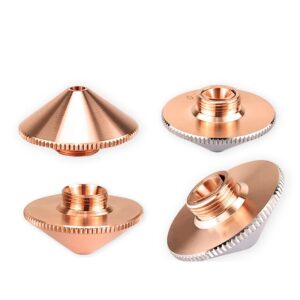
To achieve this, technical operators utilize High-Pressure Nitrogen Cutting (HPNC). Nitrogen acts as an inert shielding gas, preventing oxidation of the cut edge. Because nitrogen does not react exothermically with the metal, the temperature at the cut site is strictly controlled by the laser beam’s energy. This results in a “bright” finish that requires no grinding or descaling. Furthermore, advanced nozzle designs and beam oscillation (wobble) technology are employed to widen the kerf slightly, allowing for more efficient melt ejection and reducing the surface roughness of the cross-section.

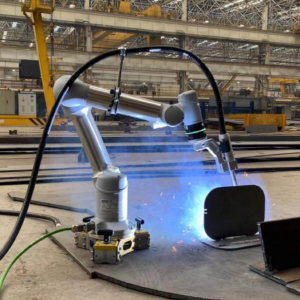
Industrial Application of Heavy-Duty Beam Laser
Impact on Furniture Export Logistics and Compliance
For exporters based in Argentina, the ability to produce components that meet International Organization for Standardization (ISO) requirements is vital. European furniture retailers, for instance, demand compliance with EN 1090-2 standards for steel structures, which include specific criteria for edge hardness and surface finish. A Heavy-Duty Beam Laser ensures that the mechanical properties of the steel are preserved by minimizing the Heat-Affected Zone (HAZ), thereby preventing embrittlement that could lead to structural failure under cyclic loading.
Moreover, the precision of laser cutting directly impacts the logistics of “Ready-to-Assemble” (RTA) furniture. Components processed with sub-millimeter tolerances ensure that bolt holes, slots, and interlocking tabs align perfectly during final assembly, regardless of where in the world the end-user is located. This reduction in assembly error rates enhances the brand reputation of Argentine exporters and reduces the costs associated with defective product returns.
Optimization of Material Utilization and Nesting
Material costs represent a significant portion of the overhead for furniture manufacturers. Heavy-duty systems are equipped with advanced CNC Motion Control software that features sophisticated nesting algorithms. These algorithms optimize the placement of parts on a single beam or tube, significantly reducing scrap rates. In a market where the price of raw steel is subject to global volatility, the ability to increase material yield by 15-20% through precise nesting provides a substantial competitive advantage.
The software also allows for “common line cutting,” where two parts share a single cut path. This not only saves material but also reduces the total processing time and gas consumption. For high-volume export orders, these incremental efficiencies aggregate into a lower Total Cost of Ownership (TCO) for the machinery and a lower per-unit cost for the international buyer.
Concluding Industry Insight: The Shift Toward Automated Precision
The integration of Heavy-Duty Beam Laser technology in Buenos Aires signifies a broader shift in the South American manufacturing philosophy. The industry is moving away from labor-intensive, manual finishing processes toward a “first-time-right” manufacturing model. As global supply chains continue to prioritize sustainability and efficiency, the elimination of secondary processing—such as grinding, deburring, and rework—becomes an environmental and economic imperative.
The future of the furniture export sector in Argentina will likely be defined by the convergence of CNC Motion Control and real-time sensor feedback. We are observing a trend where laser systems are equipped with optical sensors to monitor the cut quality in real-time, automatically adjusting parameters to compensate for variations in material grade. For exporters in Buenos Aires, investing in this level of technical rigor is no longer optional; it is the baseline for competing in a global market that values precision, durability, and flawless aesthetic execution.
Industrial Expertise & Support
Are you looking for high-performance Heavy-Duty Beam Laser tailored for the Global market? Our engineering team provides comprehensive solutions for modern manufacturing.