Precision Engineering in Subtropical Environments: Heavy-Duty Beam Laser Adaptation for Belo Horizonte’s Industrial Corridors
The industrial landscape of Belo Horizonte, Brazil, presents a unique set of challenges for precision optical instrumentation. As the capital of Minas Gerais and a central hub for the country’s mining, metallurgical, and automotive sectors, the city operates within a subtropical highland climate. This environment is characterized by significant seasonal rainfall and relative humidity levels that frequently exceed 80 percent during the summer months. For B2B stakeholders deploying high-precision alignment and measurement systems, these conditions necessitate hardware that transcends standard commercial specifications. The deployment of a Heavy-Duty Beam Laser in this region requires a specific focus on climate-resilient engineering, particularly concerning moisture ingress and thermal stabilization.
In high-humidity zones, the primary threat to laser longevity and accuracy is the degradation of internal electronic components and the fogging of optical apertures. Standard industrial lasers often fail when exposed to the persistent vapor pressure found in the Iron Quadrangle’s mining sites or the large-scale manufacturing plants of the Contagem industrial belt. To maintain operational continuity, the integration of an IP54+ ingress protection rating has become the baseline requirement for hardware procurement in the region. This technical analysis explores the architectural requirements and performance metrics of climate-adapted laser systems designed for high-humidity industrial applications.
The Physics of Moisture and Atmospheric Attenuation
In the context of laser measurement, humidity is not merely a threat to hardware integrity; it is a variable that affects the medium through which the light travels. High water vapor content in the air increases the refractive index volatility, which can lead to beam “shimmer” or displacement over long distances. While the laser source itself remains stable, the atmospheric path in Belo Horizonte’s humid environment can introduce measurement deviations if the beam intensity and wavelength are not optimized for penetration through dense air.
Heavy-duty systems utilize higher-grade diodes and specialized lenses to maintain a coherent beam profile. By employing optoelectronic stabilization, these units can compensate for minor atmospheric fluctuations. Furthermore, the internal environment of the laser housing must be strictly controlled. When warm, humid air meets a cooler optical surface—common during the rapid temperature shifts of a Minas Gerais evening—condensation occurs. Without sophisticated climate adaptation, this condensation renders the device useless until it is disassembled and cleaned, leading to significant downtime in time-sensitive construction or mining projects.
Engineering for IP54+ and Beyond
The IP (Ingress Protection) rating system is the international standard for defining the sealing effectiveness of electrical enclosures. An IP54 rating signifies that the device is protected against dust ingress sufficient to prevent interference with operation and protected against water splashing from any direction. However, for the specific demands of Belo Horizonte’s heavy industries, “IP54+” implies enhancements that often approach IP65 or IP66 standards in critical zones.
To achieve this, manufacturers utilize high-grade silicone gaskets and hermetically sealed compartments for the diode and control circuitry. The housing is typically constructed from die-cast aluminum or reinforced polymers that exhibit low thermal expansion coefficients. This ensures that the seals remain intact even as the exterior of the unit transitions between the intense midday sun and the cooler, moisture-heavy nights. Furthermore, advanced units incorporate desiccant packs or internal nitrogen purging to ensure that the internal atmosphere of the Heavy-Duty Beam Laser remains at zero percent humidity, regardless of external conditions.

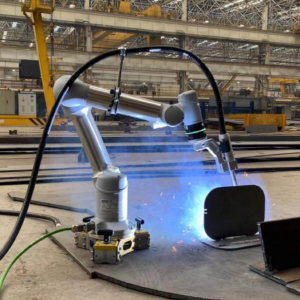
Industrial Application of Heavy-Duty Beam Laser
Thermal Management and Diode Longevity
Humidity often acts as an insulator, trapping heat within electronic enclosures. In a heavy-duty laser, the diode generates significant heat during continuous operation. If this heat is not dissipated efficiently, the diode’s lifespan is drastically reduced, and the beam wavelength may shift, affecting accuracy. Climate-adapted lasers for the Brazilian market feature integrated heat sinks and, in some high-output models, active cooling systems.
The challenge in Belo Horizonte is to dissipate heat without compromising the hermetic seal required for moisture protection. This is achieved through the use of external cooling fins and thermal interface materials that conduct heat from the internal components to the outer shell. By maintaining a stable internal operating temperature, the system prevents the “breathing” effect—where air is drawn into the unit as it cools—thereby further reducing the risk of atmospheric attenuation components entering the sensitive optical path.
Strategic Application in Mining and Heavy Infrastructure
The practical application of these lasers in the Belo Horizonte region is most visible in the massive open-pit mines and the expanding infrastructure of the metropolitan area. In mining, lasers are used for high-precision alignment of conveyor systems and the positioning of heavy machinery. A failure in these systems due to moisture ingress can result in millions of dollars in lost productivity.
In large-scale infrastructure projects, such as the expansion of the metro or the construction of industrial warehouses, the Heavy-Duty Beam Laser serves as the primary reference point for grading and structural alignment. The ability of an IP54+ rated device to withstand a sudden tropical downpour and immediately return to service once the rain stops is a critical competitive advantage. Procurement officers in the B2B sector increasingly prioritize “Total Cost of Ownership” (TCO) over initial purchase price, recognizing that climate-adapted hardware requires less frequent calibration and has a significantly longer mean time between failures (MTBF).
Maintenance Protocols for High-Humidity Zones
Even with superior engineering, the maintenance of precision optics in humid environments requires a disciplined approach. For units deployed in Belo Horizonte, technical protocols suggest regular inspection of seal integrity and the use of hydrophobic coatings on external lens surfaces. These coatings encourage water beads to roll off the aperture, preventing the drying of mineral-rich water spots that can permanently etch the glass over time.
Furthermore, data logging integrated into modern heavy-duty lasers allows site managers to monitor internal humidity sensors. If a seal begins to fail, the system provides an early warning before the moisture reaches critical electronic components. This proactive maintenance model is essential for the high-stakes industrial environments found throughout Minas Gerais.
Concluding Industry Insight: The Shift Toward Environmental Hardening
The industrial sector is witnessing a paradigm shift where “standard” equipment is no longer sufficient for global operations. As industrial activity expands into regions with volatile climates, the demand for environmental hardening is becoming a primary driver of innovation in the laser industry. The adaptation of Heavy-Duty Beam Laser technology for Belo Horizonte’s high-humidity zones is a microcosm of a larger global trend: the convergence of high-precision photonics with ruggedized mechanical engineering.
For B2B providers and end-users, the insight is clear: the environment is a functional component of the measurement system. Ignoring the atmospheric and moisture-related variables of a specific geography leads to systematic failure. Moving forward, we expect to see the “IP54+” standard evolve into even more robust “Climate-Specific” certifications, where hardware is not just protected against the elements but is optimized to perform with higher accuracy because of its ability to mitigate environmental interference. In the competitive landscape of global industry, the reliability of precision tools in adverse conditions is the ultimate metric of engineering excellence.
Industrial Expertise & Support
Are you looking for high-performance Heavy-Duty Beam Laser tailored for the Global market? Our engineering team provides comprehensive solutions for modern manufacturing.