The Industrial Evolution of Belo Horizonte: Integrating Heavy-Duty Beam Laser Systems
The industrial landscape of Belo Horizonte, Brazil, serves as a critical nexus for the South American mining, automotive, and heavy steel fabrication sectors. As these industries transition toward Industry 4.0 standards, the demand for high-precision, high-capacity cutting solutions has intensified. The implementation of the Heavy-Duty Beam Laser has emerged as a primary driver for throughput optimization in this region. Unlike standard laser systems, heavy-duty variants are engineered to withstand the rigorous duty cycles required by the Minas Gerais metallurgical complex, where downtime translates directly into significant capital loss.
The technical viability of these systems in the Brazilian market is largely dictated by two factors: structural rigidity and the reliability of the laser source. By utilizing premium oscillators from IPG Photonics or Raycus, manufacturers are ensuring that the equipment maintains high operational efficiency over a decade-long lifespan. This article examines the technical architecture of these systems and why the choice of laser source remains the most significant predictor of long-term residual value in the global B2B secondary market.
Structural Engineering and Thermal Stability
A Heavy-Duty Beam Laser is defined by its mechanical resistance to thermal deformation and vibration. In the heavy fabrication environments of Belo Horizonte, machines often process carbon steel plates exceeding 30mm in thickness. This requires a chassis capable of supporting massive static loads while maintaining micron-level precision during high-speed acceleration. Most premium systems utilize a High-Modulus Cast Iron Bed, which offers superior vibration damping compared to welded steel frames. The bed undergoes a strict stress-relieving annealing process to ensure that the internal molecular structure of the metal is stabilized, preventing geometric warping over years of thermal cycling.

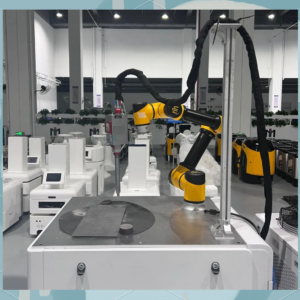
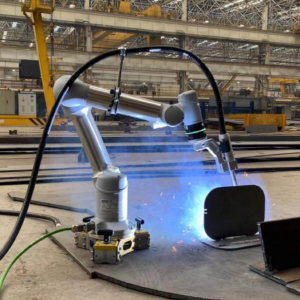
Industrial Application of Heavy-Duty Beam Laser
The motion system typically employs high-precision rack-and-pinion drives coupled with planetary gearboxes. In a heavy-duty context, the synchronization of the dual-drive gantry is critical. Even a slight deviation in the Y-axis alignment can lead to increased kerf width and reduced edge quality. By maintaining a rigid structural foundation, these machines preserve their mechanical accuracy, which is a primary metric used by appraisers when determining the machine’s resale value.
Laser Source Analysis: IPG vs. Raycus
The laser source is the most expensive and technologically sensitive component of the system. In the current market, the choice between IPG Photonics and Raycus represents a strategic decision between established global dominance and high-performance cost-efficiency.
IPG Photonics: The Gold Standard for Efficiency
IPG Photonics utilizes a proprietary fiber-to-fiber design that maximizes Photon Conversion Efficiency. For a facility in Belo Horizonte, where energy costs and grid stability can vary, the wall-plug efficiency of an IPG source (often exceeding 40%) provides a tangible reduction in operational overhead. Furthermore, IPG’s global service infrastructure ensures that replacement modules are readily available, a factor that significantly bolsters the residual value of the machine. An IPG-equipped laser is often viewed as a “liquid asset” in the used machinery market due to its predictable performance decay and ease of repair.
Raycus: High-Power Accessibility
Raycus has established itself as a formidable competitor, particularly in the 12kW to 30kW power brackets. Their sources are characterized by high stability and a competitive M2 Beam Quality Factor, which determines the focusability of the laser. For heavy-duty beam applications, Raycus sources offer a lower initial capital expenditure (CAPEX) while maintaining the power density required for high-speed nitrogen cutting of stainless steel and oxygen cutting of thick carbon steel. In the Brazilian market, Raycus has gained traction by providing robust localized support, making it a viable alternative for enterprises focused on rapid ROI.
Residual Value Dynamics in the Global Market
In the B2B sector, the total cost of ownership (TCO) is mitigated by the machine’s terminal value. A Heavy-Duty Beam Laser integrated with a premium source retains a higher percentage of its initial value for several technical reasons:
- Component Interchangeability: Machines using standardized IPG or Raycus configurations allow for modular upgrades. As laser technology advances, the source can be swapped or upgraded without replacing the entire mechanical structure.
- Durability of Optics: Heavy-duty systems often feature specialized cutting heads with automated focus adjustment and internal sensor arrays that protect against back-reflection. This protection preserves the integrity of the fiber delivery system.
- Market Demand: There is a persistent global demand for used high-power fiber lasers. A machine that has operated in a controlled industrial environment like those found in the high-tech sectors of Belo Horizonte is highly sought after in emerging markets.
Data indicates that machines equipped with 12kW+ sources and cast-iron beds retain up to 15-20% more residual value after five years compared to light-duty, fabricated-frame alternatives. This makes the “heavy-duty” designation not just a performance metric, but a financial hedge.
Operational Integration in Minas Gerais
The specific industrial requirements in Belo Horizonte demand machines that can handle high-duty cycles in ambient temperatures that may fluctuate. The cooling systems (chillers) integrated with these heavy-duty lasers must be oversized to maintain the laser source and optics at a constant 22-25 degrees Celsius. Failure to maintain thermal equilibrium leads to “mode hopping” in the laser beam, which degrades cut quality. Therefore, the integration of high-end dual-circuit chillers is a standard requirement for these installations, further contributing to the system’s longevity and performance consistency.
Concluding Industry Insight
The shift toward high-power fiber laser technology in the Brazilian metallurgical sector is no longer a luxury but a competitive necessity. As Belo Horizonte continues to solidify its role as a regional leader in heavy manufacturing, the emphasis is shifting from “lowest initial cost” to “highest lifecycle value.” The convergence of robust mechanical engineering and high-efficiency laser sources like IPG and Raycus is creating a new standard for industrial assets.
The critical insight for global stakeholders is the realization that the Heavy-Duty Beam Laser is moving toward a modular, “future-proof” architecture. In the coming decade, the secondary market will prioritize machines with documented maintenance logs and premium oscillators, as these units can be easily integrated into automated smart factories. For businesses in Belo Horizonte and beyond, investing in heavy-duty specifications today is a strategic move that secures both immediate production capacity and long-term capital preservation.
Industrial Expertise & Support
Are you looking for high-performance Heavy-Duty Beam Laser tailored for the Global market? Our engineering team provides comprehensive solutions for modern manufacturing.