Advancing Structural Steel Fabrication: The Implementation of H-Beam Plasma Cutting in Valencia, Venezuela
The industrial landscape of Valencia, Venezuela, long recognized as the nation’s manufacturing heartland, is currently undergoing a technical transition within its heavy metal and structural steel sectors. As global demand for precision-engineered steel components rises, local fabricators are moving away from manual layout and mechanical drilling toward integrated CNC solutions. Central to this shift is the deployment of the H-Beam Plasma Cutter, a system engineered to automate the processing of structural profiles including I-beams, H-beams, channels, and angles. By integrating advanced robotics with high-definition plasma power sources, these systems address the critical need for dimensional accuracy and high throughput in large-scale infrastructure projects.
The adoption of this technology in the Carabobo region is driven by the necessity to optimize operational expenditures. In a market where raw material costs are subject to global fluctuations, the ability to extract maximum value from every linear meter of steel is a primary competitive advantage. The transition to automated plasma cutting allows for the consolidation of multiple fabrication steps—marking, cutting, holing, and beveling—into a single workstation, significantly reducing the footprint and labor requirements of the production line.
Technical Mechanics of Zero-Tailing Technology
One of the most significant advancements in structural steel processing is the development of Zero-tailing technology. Traditional CNC beam lines often require a “buffer” or “tail” of material—typically ranging from 300mm to 600mm—to remain within the feeding rollers or chucks to maintain stability during the final cuts. This leads to substantial material waste, as the tailing becomes unusable scrap. Zero-tailing systems utilize a dual-chuck or a specialized “pass-through” feeding mechanism that allows the plasma torch to maintain its focal point even at the extreme ends of the workpiece.
In the context of the H-Beam Plasma Cutter, this technology relies on synchronized movement between the material feeding system and the robotic arm. Sensors detect the exact position of the beam’s trailing edge, allowing the software to adjust the cutting path in real-time. This ensures that the structural integrity of the cut is maintained without the need for a sacrificial lead-out section. For fabricators in Valencia, this means the ability to process shorter remnants and minimize the “drop” length, directly impacting the bottom line of high-volume projects.
Achieving a 95% Material Utilization Rate
Material utilization is a critical metric in B2B steel fabrication. Conventional methods involving band saws and magnetic drills typically yield a Material utilization rate of 80% to 85% when accounting for kerf loss, tailing waste, and layout errors. The integration of high-definition plasma cutting with sophisticated nesting software elevates this rate to 95% or higher. This 10% to 15% increase in yield represents a massive reduction in scrap handling costs and raw material procurement needs.
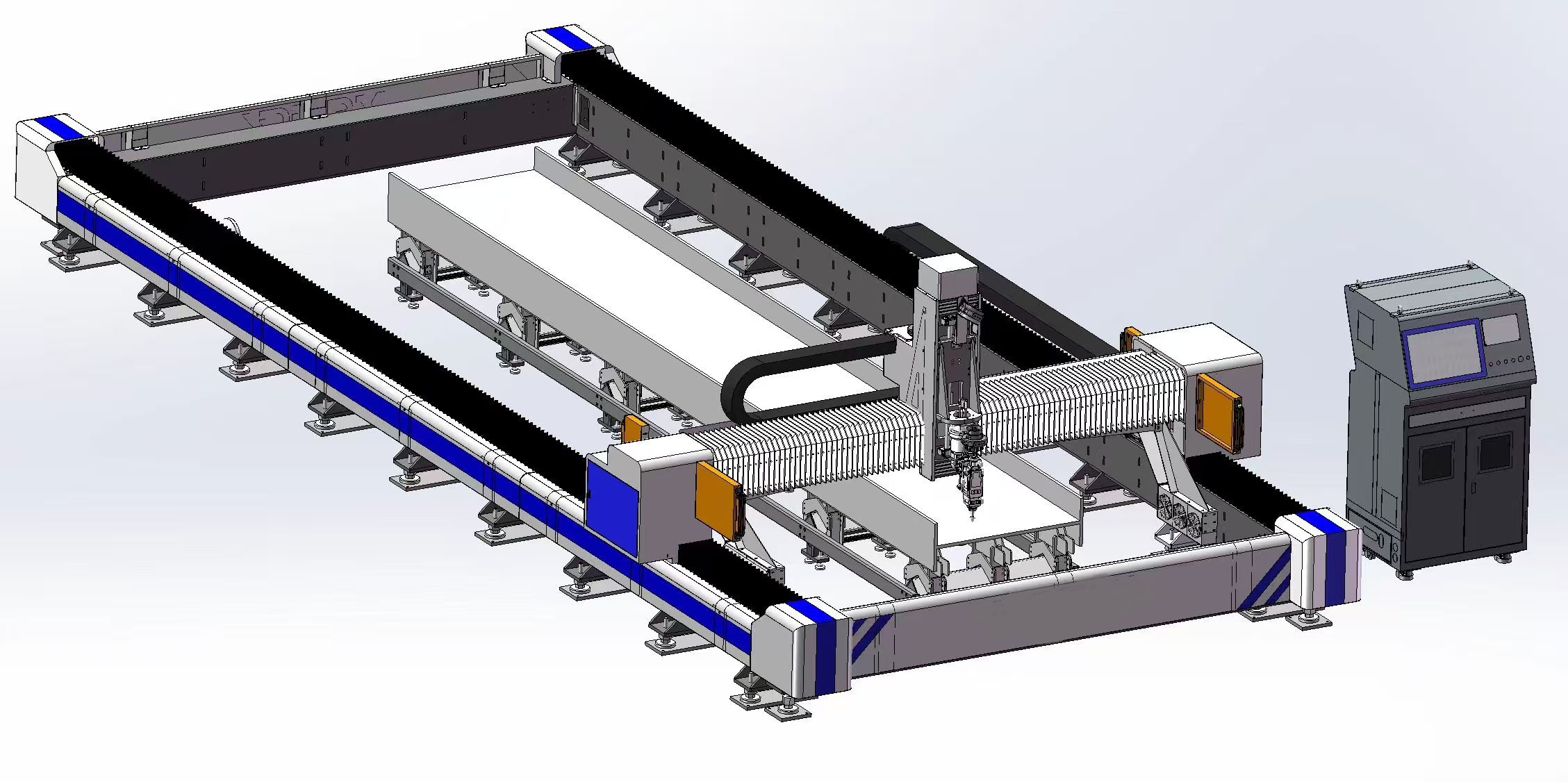
Industrial Application of H-Beam Plasma Cutter
The 95% utilization rate is achieved through three primary technical factors:
1. Advanced Nesting Algorithms
Modern CNC software allows for multi-part nesting across a single beam length. The software calculates the most efficient arrangement of different components, including complex bevels and notches, to ensure that the space between parts is minimized to the width of the plasma kerf.
2. Kerf Compensation and Precision
High-definition plasma systems provide a narrow, focused arc. The CNC controller applies automatic kerf compensation based on the material thickness and gas pressure, ensuring that the finished part matches the CAD model within tolerances of +/- 0.5mm. This precision eliminates the need for secondary grinding or trimming, which often consumes additional material.
3. Minimal Lead-in/Lead-out Requirements
By optimizing the plasma arc ignition and extinguishing parameters, the system reduces the length of lead-ins and lead-outs. In a zero-tailing configuration, these entries are placed strategically to avoid encroaching on the usable geometry of the next part on the beam.
Robotic Kinematics and 8-Axis Movement
The efficiency of the H-Beam Plasma Cutter is largely dependent on its 8-axis robotic kinematics. Unlike standard 3-axis machines that are limited to planar cuts, an 8-axis system provides the torch with the freedom to move around all four sides of a beam and perform complex internal geometries. This includes cope cuts, weld preparations (V, Y, K, and X bevels), and bolt hole slots in the web and flanges simultaneously.
In Valencia’s industrial applications, such as the construction of oil and gas refinery components or heavy-duty automotive assembly plants, the ability to produce ready-to-weld parts is vital. The robotic arm can rotate 360 degrees around the profile, ensuring that the torch angle is always optimized for the specific thickness of the flange or web. This eliminates the need to flip or rotate the beam manually, which is a major source of downtime and potential safety hazards in traditional shops.
Integration with Industry 4.0 and BIM
The modern H-beam cutter is not a standalone tool but an integrated node within a digital manufacturing ecosystem. Through the use of Building Information Modeling (BIM) data, engineering designs are exported directly to the machine in formats such as TEKLA or DSTV. This digital thread ensures that the exact specifications of the structural engineer are translated to the physical steel without manual data entry, which is the leading cause of fabrication errors.
For operations in Venezuela looking to export fabricated steel to international markets, adherence to these digital standards is mandatory. The ability to provide full traceability—from the heat number of the raw steel to the specific CNC program used for the cut—positions local fabricators as reliable partners in the global supply chain. Furthermore, real-time monitoring of gas consumption, electrode wear, and cutting time allows management to calculate the precise cost per ton, facilitating more accurate bidding on international tenders.
Concluding Industry Insight: The Shift Toward Autonomous Fabrication
The implementation of zero-tailing H-beam plasma cutting in Valencia, Venezuela, reflects a broader global trend: the decoupling of production capacity from manual labor availability. As structural designs become more complex and lead times more compressed, the industry is moving toward a model of “lights-out” manufacturing where the primary role of the technician is system oversight rather than manual operation.
The real value of achieving a 95% material utilization rate extends beyond immediate cost savings. It represents a fundamental shift toward sustainable manufacturing. By drastically reducing scrap, fabricators reduce the energy overhead associated with recycling steel and the logistics costs of waste management. In the coming decade, we expect to see the integration of AI-driven predictive maintenance and autonomous loading/unloading systems become the standard. For industrial hubs like Valencia, early adoption of these high-efficiency plasma systems is not merely an upgrade; it is a prerequisite for survival in a globalized, precision-oriented market. The focus will continue to shift from “how much steel can we cut?” to “how much value can we extract from every millimeter of steel?”
Industrial Expertise & Support
Are you looking for high-performance H-Beam Plasma Cutter tailored for the Global market? Our engineering team provides comprehensive solutions for modern manufacturing.





