Industrial Infrastructure and the Humidity Challenge in São Paulo
São Paulo remains the primary industrial engine of South America, hosting a massive concentration of heavy structural steel fabrication and civil engineering projects. However, the geographic location of the state, characterized by a humid subtropical climate, presents significant engineering hurdles for high-precision CNC machinery. With average relative humidity levels frequently exceeding 75% and reaching saturation during the rainy seasons, standard industrial electronics are susceptible to accelerated degradation. For facilities operating an H-Beam Plasma Cutter, these environmental variables are not merely atmospheric concerns but direct threats to operational uptime and component longevity.
The intersection of high humidity and high-voltage plasma cutting creates a volatile environment for sensitive logic controllers and power supplies. In São Paulo’s industrial districts, such as Guarulhos or the ABCD region, the combination of moisture and airborne particulates from heavy manufacturing can lead to conductive bridges on circuit boards. This necessitates a transition from standard NEMA 12 or IP50 enclosures to more robust, climate-adapted solutions specifically engineered for ingress protection and thermal stability.
Technical Specifications of IP54+ Ingress Protection
The International Protection (IP) rating system defines the effectiveness of electrical enclosures against intrusion. For an H-Beam Plasma Cutter deployed in high-humidity zones, an Ingress Protection (IP54) rating is the baseline requirement for the control cabinet and critical drive systems. The “5” signifies protection against dust deposits that could interfere with the operation of the equipment, while the “4” indicates protection against water splashes from any direction.
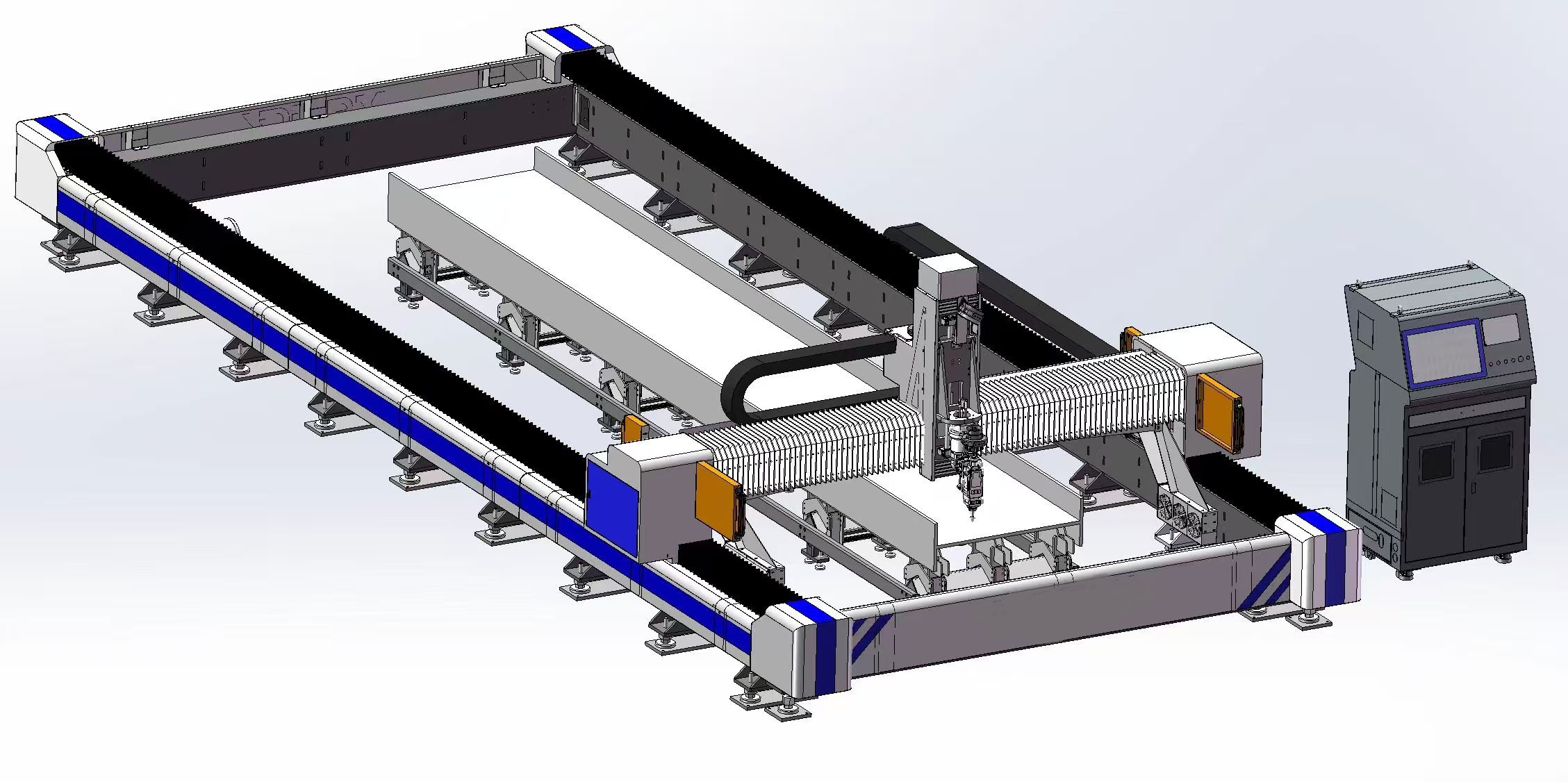
Industrial Application of H-Beam Plasma Cutter
In the context of São Paulo’s manufacturing environment, IP54+ adaptation involves several specific engineering modifications:
- Hermetically sealed control cabinets utilizing high-density synthetic gaskets to prevent the entry of moisture-laden air.
- Positive pressure systems within the electronics bay to ensure that internal air pressure remains slightly higher than the ambient atmosphere, naturally repelling contaminants.
- Conformal coating on all Printed Circuit Boards (PCBs) to provide a dielectric barrier against moisture-induced short circuits and Galvanic Corrosion.
By implementing these standards, manufacturers can significantly mitigate the risk of dielectric breakdown in the high-frequency starting circuits of the plasma torch, which is often the first point of failure in humid environments.
Thermal Management and Dehumidification Strategies
A significant challenge in sealing an enclosure to IP54 standards is the management of internal heat. High-performance CNC Motion Control systems generate substantial thermal energy during 3D profile cutting of heavy H-beams. In a standard environment, simple fan cooling is sufficient; however, in São Paulo’s humidity, drawing in ambient air introduces moisture directly onto the heat-generating components.
To solve this, advanced H-beam plasma systems utilize air-to-air heat exchangers or closed-loop air conditioning units. These systems allow for the transfer of heat away from the internal components without exchanging the internal air with the humid external atmosphere. This maintains a dry internal environment, preventing condensation that occurs when the machine cools down after a high-intensity shift. Integrated hygroscopes can also be installed to monitor internal humidity levels, triggering internal heaters if the dew point is approached, thus ensuring the electronics remain within their optimal operating parameters regardless of external weather shifts.
Mechanical Durability and Material Science in Humid Zones
The structural integrity of the H-Beam Plasma Cutter gantry and rail system must also be adapted for high-humidity zones. While the focus is often on electronics, the mechanical precision of the 5-axis or 6-axis robotic arm—essential for flange and web cutting—relies on the absence of surface oxidation. In São Paulo, the high humidity can lead to “flash rusting” on untreated carbon steel components within hours of a production halt.
Engineered solutions include the use of hard-chromed linear guides and stainless steel fasteners. Lubrication systems must be upgraded to automated centralized units that provide a constant film of moisture-repellent grease to the racks and pinions. This not only prevents corrosion but also ensures that the friction coefficients remain constant, maintaining the ±0.5mm accuracy required for structural steel connections in high-rise construction and infrastructure projects.
Optimizing Plasma Gas Quality in Subtropical Climates
The quality of the plasma arc is directly influenced by the purity of the compressed air used as the plasma gas. In high-humidity zones, the moisture content in compressed air lines is significantly higher. If this moisture reaches the plasma torch, it results in arc instability, increased dross formation, and rapid consumption of electrodes and nozzles. For an H-Beam Plasma Cutter in Brazil, a multi-stage air treatment system is mandatory. This typically includes a refrigerated air dryer followed by a series of coalescing filters and a desiccant dryer to ensure the air reaches a pressure dew point of -40°C. This level of dry air is critical for maintaining the high Duty Cycle required for large-scale industrial fabrication.
Operational ROI and Maintenance Cycles
Investing in IP54+ climate adaptation for plasma cutting systems yields a measurable return on investment through reduced Mean Time Between Failures (MTBF). In São Paulo’s heavy industry sector, the cost of downtime can exceed several thousand dollars per hour when considering labor and project delays. Machines that lack climate adaptation often require monthly cleaning of electrical cabinets and frequent replacement of corroded sensors.
In contrast, an IP54-rated system reduces the maintenance burden to quarterly inspections and filter changes. The longevity of the power source is also extended; by keeping the internal transformers and inverters dry, the risk of insulation aging is minimized. For B2B stakeholders, the total cost of ownership (TCO) is lower despite the higher initial capital expenditure for a climate-hardened machine.
Concluding Industry Insight: The Shift Toward Environmental Resilience
As global manufacturing shifts toward more localized production hubs in emerging markets, the “one-size-fits-all” approach to industrial machinery is becoming obsolete. The demand for an H-Beam Plasma Cutter in São Paulo demonstrates a broader industry trend: the integration of environmental resilience into the core design of CNC equipment. In the coming decade, we expect to see a surge in “Smart Enclosures” that utilize IoT sensors to dynamically adjust internal climates based on real-time atmospheric data.
For the structural steel industry, the ability to maintain high-precision output in humid, tropical, or coastal environments is no longer an optional feature but a competitive necessity. Engineering firms that prioritize IP54+ standards and advanced thermal management will not only survive the harsh climates of regions like São Paulo but will set the benchmark for global industrial reliability. The focus is shifting from pure cutting speed to “sustained uptime,” where the machine’s ability to resist its environment is as critical as its ability to cut through steel.
Industrial Expertise & Support
Are you looking for high-performance H-Beam Plasma Cutter tailored for the Global market? Our engineering team provides comprehensive solutions for modern manufacturing.





