Integrating H-Beam Plasma Cutting Systems in the Chilean Industrial Sector through Remote Cloud Diagnostics
The industrial landscape of Chile, characterized by its unique longitudinal geography stretching over 4,000 kilometers, presents significant logistical challenges for the maintenance and calibration of heavy machinery. In Santiago, the nation’s primary industrial and distribution hub, the adoption of the H-Beam Plasma Cutter has revolutionized structural steel fabrication. However, the operational efficiency of these high-precision systems is heavily dependent on technical support and uptime. To mitigate the risks associated with geographical isolation and the scarcity of localized expert technicians in remote mining or construction sites, the integration of remote cloud diagnostics has emerged as a critical technical requirement for modern fabrication facilities.
Technical Architecture of the H-Beam Plasma Cutter
A modern H-Beam Plasma Cutter utilizes complex 6-axis robotic kinematic profiling to execute precise cuts on structural members, including I-beams, H-beams, channels, and square tubing. These systems are engineered to manage multi-dimensional movements, allowing for the creation of bolt holes, copes, notches, and weld preparations in a single pass. The integration of high-definition plasma power sources ensures that dross formation is minimized, and the heat-affected zone (HAZ) is kept within strict metallurgical tolerances.
The mechanical precision of these machines relies on synchronized servo motors and absolute encoders that communicate via high-speed industrial protocols such as EtherCAT or PROFINET. In the context of the Chilean market, where structural steel must meet rigorous seismic standards (NCh433), the accuracy of these cuts is not merely a matter of aesthetic quality but of structural integrity. Any deviation in the cutting path or thermal output can lead to stress concentrations in the steel, necessitating a robust diagnostic framework to ensure the machine remains within factory-specified calibration parameters.
The Role of Internet of Things (IoT) Telemetry
In regions such as the Atacama Desert to the north or the Magallanes Region to the south, the physical deployment of a specialized technician from Santiago can result in downtime exceeding 48 to 72 hours. To address this, manufacturers have implemented Internet of Things (IoT) telemetry within the control architecture of the plasma systems. This involves the installation of industrial gateways that aggregate data from the machine’s sensors, including gas pressure, arc voltage, coolant temperature, and drive motor torque.
This data is transmitted via secure VPN tunnels to cloud-based servers, where it is analyzed against baseline performance models. By utilizing cloud diagnostics, engineers in Santiago or at global headquarters can monitor the health of the H-Beam Plasma Cutter in real-time. This allows for the identification of anomalies, such as fluctuating arc stability or premature consumable wear, before they escalate into catastrophic component failure. The transition from reactive to proactive maintenance is facilitated by this continuous stream of high-fidelity operational data.
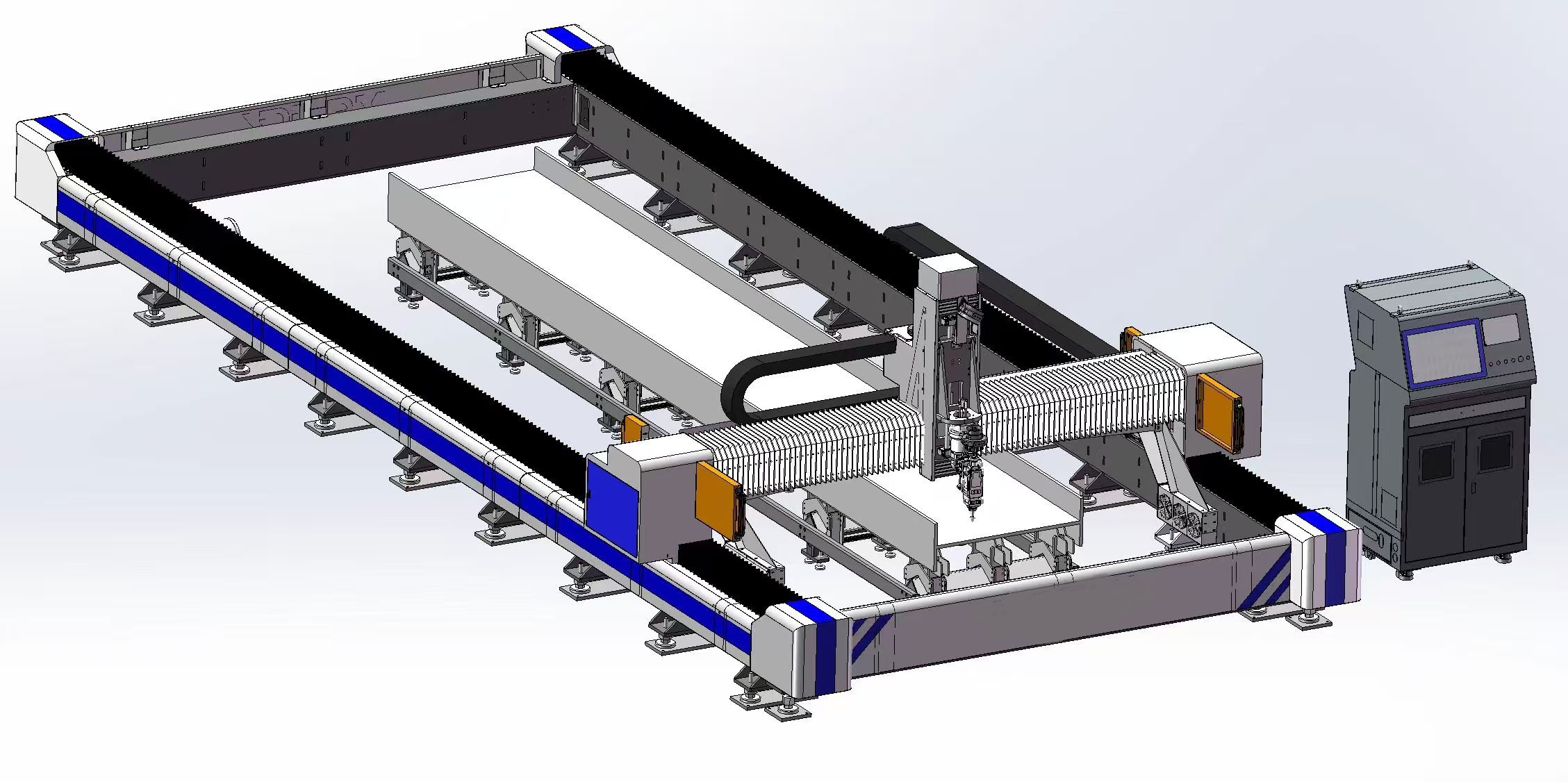
Industrial Application of H-Beam Plasma Cutter
Programmable Logic Controller (PLC) Synchronization and Remote Troubleshooting
The core of remote diagnostic capability lies in Programmable Logic Controller (PLC) synchronization. When a fault occurs on a job site in Antofagasta or Concepción, the local operator can grant remote access to the machine’s internal logic. Technical support teams can then perform deep-packet inspection of the PLC code, monitor I/O states, and force variables to isolate the root cause of the malfunction. This level of access extends to the CNC controller, enabling the remote adjustment of cutting parameters or the updating of firmware without requiring a physical presence on-site.
Remote diagnostics also encompass the optimization of nesting software and G-code execution. If the H-Beam Plasma Cutter encounters errors during the interpretation of complex geometries, the cloud interface allows for the immediate review and correction of the part programs. This ensures that the fabrication workflow remains uninterrupted, maintaining the high throughput required for large-scale infrastructure projects such as bridges, high-rise buildings, and mining processing plants.
Data Security and Latency in Remote Connectivity
Implementing remote diagnostics across vast regions requires a robust telecommunications infrastructure. In Chile, the proliferation of fiber-optic networks and satellite-based internet (such as Starlink for remote mining camps) has reduced latency issues that previously hindered remote machine control. Security is maintained through multi-layer authentication and end-to-end encryption, ensuring that proprietary fabrication data and machine configurations are protected from unauthorized access. The diagnostic modules are typically isolated from the factory’s general IT network to prevent cross-contamination of cyber threats, adhering to ISO/IEC 27001 standards for information security management.
Economic Impact on Mean Time to Repair (MTTR)
For Chilean steel fabricators, the primary metric of success is the reduction of Mean Time to Repair (MTTR). Traditional service models involving physical travel are inherently inefficient in a country with Chile’s dimensions. By leveraging cloud-based diagnostics, the initial phase of troubleshooting—diagnosis—is reduced from hours to minutes. In many instances, the issue can be resolved through software recalibration or by guiding the local operator through a specific hardware adjustment.
Even in scenarios where a physical part replacement is necessary, remote diagnostics allow the service team to identify the exact component required before departing for the site. This eliminates the “diagnostic trip” and ensures that the technician arrives with the correct tools and spare parts, significantly increasing the first-time fix rate. The resulting increase in Overall Equipment Effectiveness (OEE) directly correlates to improved profit margins for the fabricator, as the capital-intensive H-Beam Plasma Cutter maintains a higher duty cycle.
Concluding Industry Insight
The integration of remote cloud diagnostics into the operation of H-beam plasma cutting systems represents a fundamental shift in industrial asset management. For a country like Chile, where the concentration of technical expertise in Santiago often contrasts with the remote location of heavy industry, this technology acts as a bridge, neutralizing the disadvantages of distance. As the global manufacturing sector moves toward Industry 4.0, the “Service-as-a-Product” model will become the standard. Fabricators will no longer evaluate machinery solely on its mechanical specifications but on the robustness of its digital twin and the accessibility of its remote support ecosystem. In the structural steel industry, the ability to maintain precision and uptime through the cloud is no longer an optional feature; it is a prerequisite for competing in a high-stakes, time-sensitive global market. The future of heavy machinery maintenance lies in the seamless synchronization of local mechanical excellence and global digital intelligence.
Industrial Expertise & Support
Are you looking for high-performance H-Beam Plasma Cutter tailored for the Global market? Our engineering team provides comprehensive solutions for modern manufacturing.





