Technical Analysis of H-Beam Plasma Cutting Systems in Santa Cruz, Bolivia: Addressing Grid Volatility through Integrated Voltage Regulation
The industrial landscape of Santa Cruz, Bolivia, has undergone a rapid transformation, positioning itself as a primary hub for heavy manufacturing, petroleum infrastructure, and large-scale agricultural construction. As structural steel requirements escalate, the deployment of automated fabrication machinery has become a prerequisite for maintaining competitive output. However, the geographic and infrastructural realities of the region present specific electrical challenges. For global manufacturers and local contractors, the integration of an H-Beam Plasma Cutter equipped with built-in voltage regulation is no longer an optional feature but a technical necessity for operational continuity.
This article examines the intersection of high-precision structural steel fabrication and power quality management. We analyze how integrated stabilization systems mitigate the risks associated with grid instability, ensuring that CNC-driven plasma processes maintain dimensional accuracy and metallurgical integrity under fluctuating electrical loads.
The Industrial Power Profile of Santa Cruz
Santa Cruz de la Sierra and its surrounding industrial parks represent the highest concentration of heavy industry in Bolivia. Despite significant investment in energy infrastructure, the local grid often experiences transient voltage surges and sags. These fluctuations are frequently caused by the simultaneous activation of high-inductive loads—such as large motors in soy processing plants or heavy pumps in oil refineries—which share the regional distribution network.
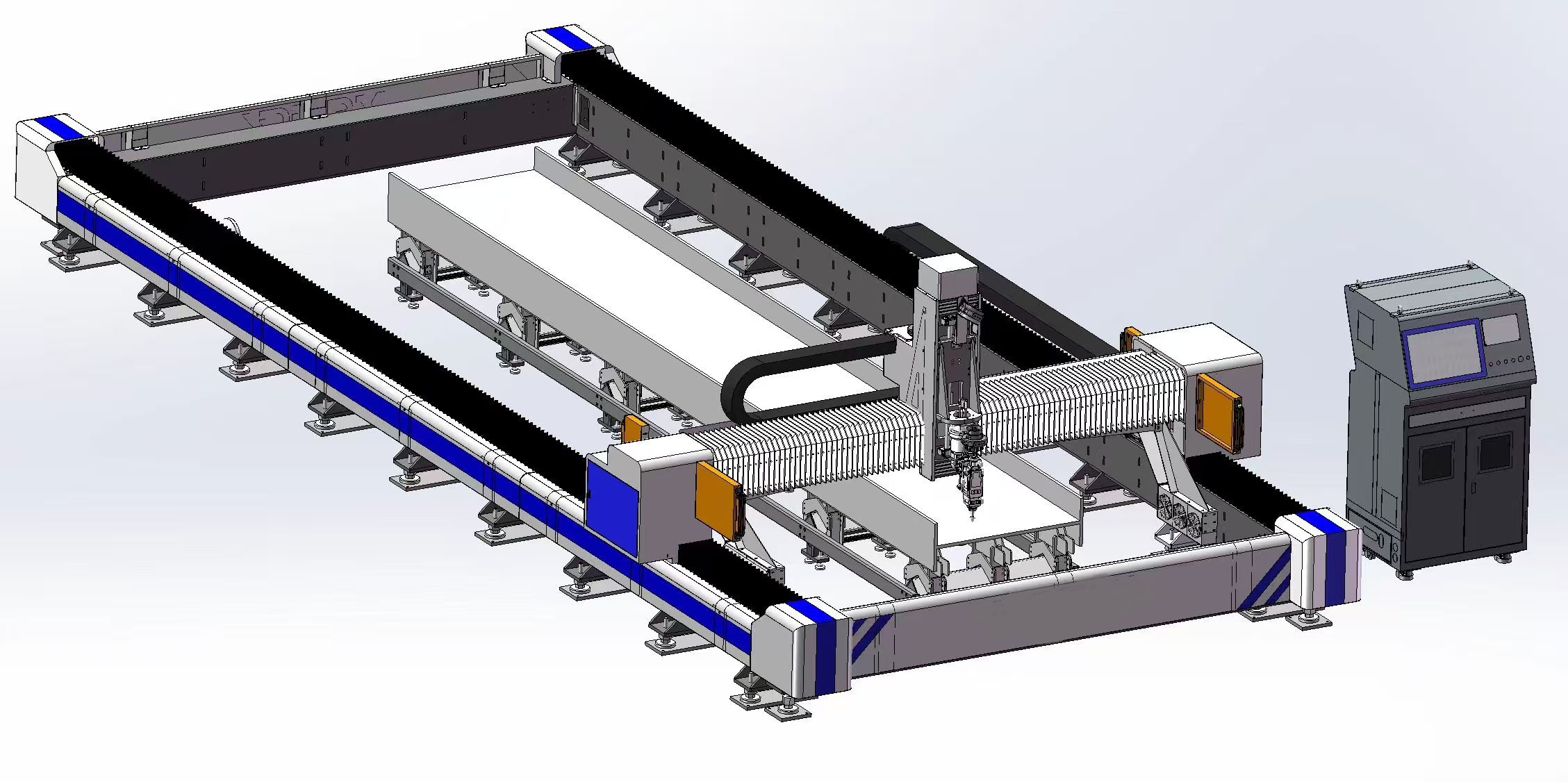
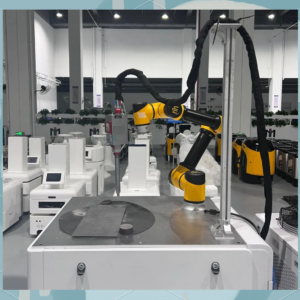
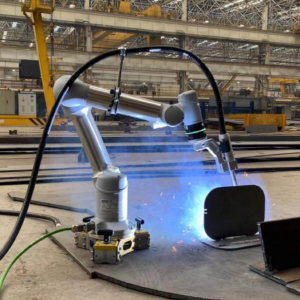
Industrial Application of H-Beam Plasma Cutter
For sensitive electronics, these fluctuations are catastrophic. A standard CNC system requires a stable input to manage multi-axis synchronization. When an H-Beam Plasma Cutter operates without specialized regulation, voltage drops can lead to logic errors in the controller, while voltage spikes can puncture the insulation of high-frequency transformers or damage the power semiconductor modules. In the context of Santa Cruz, where specialized repair services may involve significant lead times, hardware resilience is the primary metric of machine value.
Voltage Regulation Mechanics in Plasma Systems
To counter grid instability, modern industrial plasma systems utilize IGBT Inverter Technology. The Insulated-Gate Bipolar Transistor acts as a high-speed switch that converts raw AC input into a stable, high-frequency DC output. However, the inclusion of built-in voltage regulation takes this a step further by incorporating a dedicated feedback loop between the input stage and the central processing unit.
The regulation system employs a series of capacitors and inductors that act as a buffer. When the input voltage deviates from the nominal 380V or 440V standard (common in Bolivian industrial sectors), the system automatically adjusts the pulse-width modulation (PWM) duty cycle. This ensures that the arc voltage remains constant. In structural steel fabrication, even a 5% variance in arc voltage can result in significant dross formation or an inconsistent kerf width, which compromises the fit-up of H-beam joints in complex assemblies.
Impact on CNC Motion Control and Accuracy
An H-Beam Plasma Cutter operates on a multi-axis plane, often requiring 5-axis or 6-axis movement to execute coping, mitering, and bolt-hole piercing on the flanges and webs of structural profiles. This movement is governed by CNC Motion Control systems that rely on precise encoder feedback. Voltage instability can introduce “noise” into the signal lines, leading to micro-stuttering in the servo motors.
By integrating voltage regulation directly into the machine’s power cabinet, manufacturers isolate the control logic from the raw mains. This isolation ensures that the spatial coordinates of the plasma torch remain synchronized with the physical position of the H-beam. In Santa Cruz’s high-temperature environment, where thermal expansion already affects material behavior, eliminating electrical variables is critical for maintaining tolerances within the +/- 0.5mm range required by international structural codes like AISC or Eurocode 3.
Arc Voltage Height Control and Consumable Longevity
One of the most sensitive components of a plasma system is the Arc Voltage Height Control (AVHC). The AVHC monitors the voltage between the torch electrode and the workpiece to maintain the optimal standoff distance. If the supply voltage is unstable, the AVHC may receive false readings, causing the torch to “dive” into the metal or retract too far, extinguishing the arc.
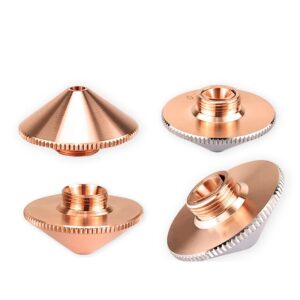
Built-in regulation stabilizes the reference voltage, allowing the AVHC to function with high precision. This has a direct correlation with consumable life. In Santa Cruz, where the logistics of importing specialized electrodes and nozzles can add to operational costs, extending consumable life by 20-30% through stable arc dynamics represents a significant reduction in Total Cost of Ownership (TCO). Stable voltage prevents “double-arcing” and premature orifice erosion, which are common symptoms of poor power quality.
Thermal Management and Duty Cycle Considerations
The climate in Santa Cruz is characterized by high humidity and ambient temperatures often exceeding 30 degrees Celsius. Electrical resistance increases with temperature, and voltage drops exacerbate this issue by forcing the machine to draw higher current to maintain the required wattage. This increased current draw generates excess heat within the power source.
A regulated H-Beam Plasma Cutter is designed with a robust thermal management system that accounts for these variables. By maintaining a steady voltage, the system operates within its optimal efficiency curve, reducing the thermal stress on the internal components. This allows for a 100% duty cycle at maximum output, which is essential for high-volume fabrication shops working on the “Planta de Urea” expansions or large-scale warehouse frames in the Warnes industrial zone.
The Economic Argument for Integrated Regulation
From a B2B procurement perspective, the initial capital expenditure for a machine with built-in Transient Voltage Surge Suppression (TVSS) and active regulation is higher than for basic models. However, the ROI is realized through three specific channels:
- Reduced Downtime: Elimination of “phantom” errors and controller reboots caused by brownouts.
- Hardware Protection: Prevention of catastrophic failure in the inverter bridge and control boards, which are expensive to replace and require specialized technicians.
- Quality Assurance: Consistent cut quality reduces the need for secondary grinding or rework, accelerating the project timeline.
For global contractors operating in Bolivia, these factors are vital for meeting project deadlines in the energy and infrastructure sectors where liquidated damages for delays are common.
Concluding Industry Insight
As the global structural steel industry moves toward “Industry 4.0” and increased automation, the dependency on high-quality power becomes a bottleneck for developing industrial regions. The situation in Santa Cruz, Bolivia, serves as a case study for the necessity of “ruggedized” electronics in heavy machinery. The future of B2B manufacturing exports lies not just in the precision of the cut, but in the resilience of the system to its environment. We anticipate a shift where integrated power conditioning becomes a standard specification for all CNC plasma equipment destined for emerging markets. For the fabricator, investing in an H-Beam Plasma Cutter with sophisticated voltage regulation is an investment in operational sovereignty, decoupling production capacity from the inconsistencies of the local electrical grid.
Industrial Expertise & Support
Are you looking for high-performance H-Beam Plasma Cutter tailored for the Global market? Our engineering team provides comprehensive solutions for modern manufacturing.