Optimizing Structural Steel Fabrication: The Implementation of Zero-Tailing H-Beam Plasma Cutting in Rosario
The industrial corridor of Rosario, Argentina, situated along the Paraná River, has long served as the epicenter for South American agro-industrial engineering and structural steel production. As global demand for precision-engineered steel frames increases, local manufacturers are transitioning from traditional mechanical sawing and drilling to advanced automated solutions. The introduction of the H-Beam Plasma Cutter equipped with zero-tailing technology represents a significant shift in production efficiency, specifically addressing the historical challenge of material waste in heavy-section profiling.
In high-volume structural fabrication, the primary metric for operational success is the material utilization rate. Conventional plasma systems often require a significant “clamping zone” at the end of a beam, resulting in scrap lengths ranging from 600mm to 1000mm. By implementing Zero-Tailing Technology, facilities in Rosario are now achieving a 95% material utilization rate. This advancement is not merely a marginal improvement but a fundamental reconfiguration of the nesting and feeding logic used in CNC steel processing.
The Mechanics of Zero-Tailing and Material Utilization
To understand the 95% utilization rate, one must examine the mechanical constraints of standard beam processing. Typically, a beam must be held by a carriage or a set of pinch rollers to maintain stability during the cutting process. When the cutting head reaches the final section of the beam, the lack of physical support usually necessitates a “tail” that is discarded. Zero-tailing systems circumvent this by utilizing a synchronized dual-chuck system or an auxiliary feeding mechanism that maintains a rigid grip on the workpiece even as the cut occurs at the extreme edge of the material.
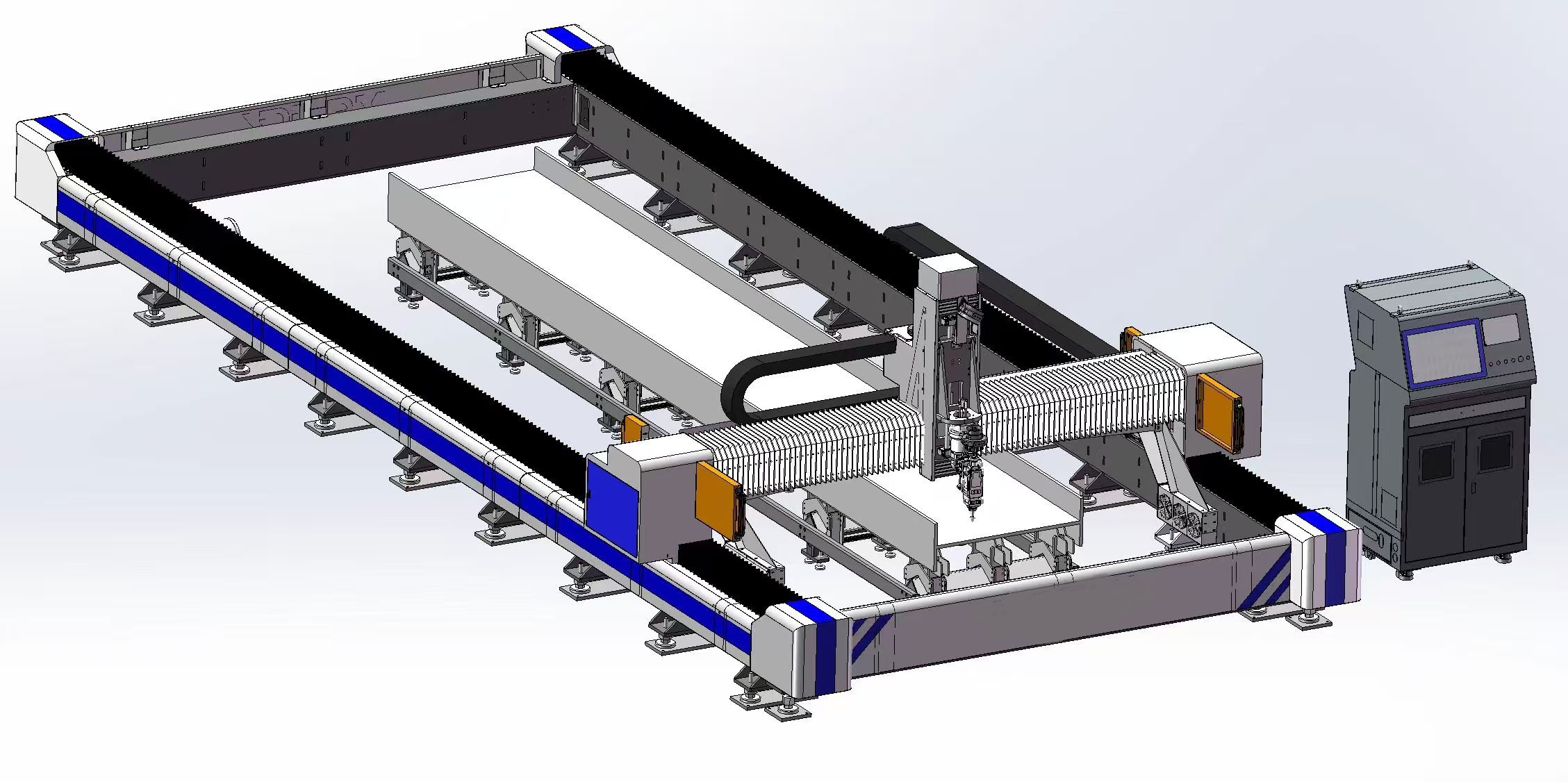
Industrial Application of H-Beam Plasma Cutter
In the context of Rosario’s heavy industry, where H-beams (IPN or HEB standards) are frequently used for large-scale grain storage facilities and port infrastructure, the reduction of scrap has a direct impact on the bottom line. A 5% to 8% increase in material yield across a project involving thousands of tons of steel translates to substantial cost savings. The CNC Robotic Profiling software calculates the optimal pathing to ensure that the plasma torch can access the entirety of the beam length without compromising the structural integrity of the machine’s positioning system.
Technical Specifications of Plasma Integration
The systems currently deployed in the Santa Fe province utilize high-definition plasma power sources capable of piercing thicknesses up to 50mm and edge-starting on even thicker sections. The technical performance is defined by several critical parameters:
- Arc Voltage Control (AVC): Maintains a constant distance between the torch nozzle and the beam surface, compensating for any slight structural deviations or bowing in the H-beam.
- Multi-Axis Robotic Manipulation: Most units feature a 6-axis or 7-axis robotic arm that allows for beveling, coping, and hole-cutting on all four sides of the beam (flanges and web) in a single pass.
- Thermal Kerf Compensation: The CNC control system automatically adjusts the cutting path to account for the width of the plasma arc, ensuring dimensional tolerances within +/- 0.5mm.
The integration of these systems allows for the execution of complex geometries, such as weld prep bevels and bolt holes, without the need for secondary handling. This “one-pass” philosophy is essential for the high-throughput environments found in Rosario’s industrial parks.
Software Synchronization and Nesting Efficiency
The hardware capabilities of an H-Beam Plasma Cutter are maximized through sophisticated software integration. Modern systems utilize DSTV files exported directly from BIM (Building Information Modeling) software like Tekla Structures or Autodesk Revit. The nesting algorithms prioritize the reduction of the “remnant” or tail. By analyzing the entire production queue, the software can interleave smaller components within the gaps of larger structural members, further pushing the utilization rate toward the 95% threshold.
In Rosario, where logistics and material costs are sensitive to global market fluctuations, the ability to predict exact material requirements through software simulation provides a competitive edge. The zero-tailing feature allows the operator to use “remnant” pieces from previous jobs that would otherwise be classified as scrap, effectively re-incorporating them into the production cycle.
Environmental and Economic Impact in the Argentine Market
The shift toward 95% utilization is also driven by the increasing cost of raw steel imports and the local drive for sustainable manufacturing. Reducing waste by 10% or more per beam significantly lowers the carbon footprint of the fabrication process. Furthermore, the reduction in manual labor—specifically the elimination of manual layout and manual grinding of cut edges—enhances shop floor safety and reduces the overall lead time for structural projects.
The adoption of H-Beam Plasma Cutter technology in Rosario reflects a broader trend in the Southern Cone’s manufacturing sector: the move toward “Lean Steel Fabrication.” By minimizing the physical footprint of the machine and maximizing the output of the raw material, local firms are positioning themselves as high-efficiency partners for international infrastructure projects.
Conclusion and Industry Insight
The deployment of zero-tailing plasma technology in Rosario is a microcosm of the global evolution in structural steel processing. As we look toward the next decade of industrial development, the focus is shifting from raw cutting speed to total process efficiency. The traditional tolerance for “acceptable waste” is disappearing as digital twin technology and robotic precision become the standard.
The true value of achieving 95% material utilization lies in the decoupling of production volume from proportional waste growth. In the future, we expect to see further integration of Artificial Intelligence in Thermal Kerf Compensation and real-time sensor feedback, which will likely push utilization rates even closer to the theoretical maximum. For fabricators in Argentina and beyond, the investment in zero-tailing technology is no longer an optional upgrade; it is a fundamental requirement for remaining viable in a globalized, high-precision structural market. The success seen in Rosario serves as a technical benchmark for other emerging industrial hubs seeking to modernize their heavy manufacturing capabilities.
Industrial Expertise & Support
Are you looking for high-performance H-Beam Plasma Cutter tailored for the Global market? Our engineering team provides comprehensive solutions for modern manufacturing.