Precision Structural Steel Fabrication: The Rise of H-Beam Plasma Cutting in Mendoza
The industrial landscape of Mendoza, Argentina, has undergone a significant technological shift in the metalworking sector. Historically recognized for its agricultural and viticulture machinery, the region is now positioning itself as a strategic hub for heavy structural steel fabrication, particularly for the mining and energy sectors in the Andean corridor. Central to this evolution is the deployment of the H-Beam Plasma Cutter, a sophisticated CNC system designed to automate the complex geometries required in structural engineering. By integrating multi-axis robotic or gantry-based plasma systems, fabricators in Mendoza are achieving tolerances and weld preparations that were previously unattainable through manual oxy-fuel methods.
The primary driver for this adoption is the demand for high-integrity structural joints. In high-seismic zones like the Cuyo region, structural steel must adhere to rigorous international standards, such as those set by the American Welding Society (AWS). The ability to perform precise 45-degree beveling on H-beam flanges and webs is no longer a luxury but a technical necessity for ensuring deep weld penetration and structural reliability under dynamic loads.
Technical Architecture of the H-Beam Plasma Cutter
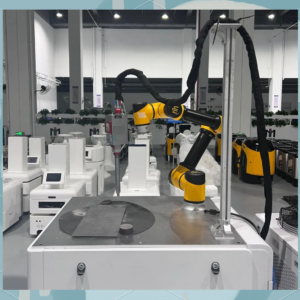
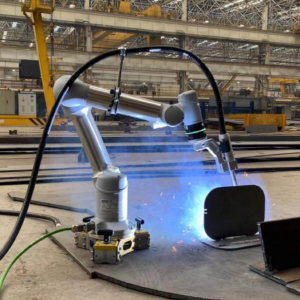
The H-Beam Plasma Cutter utilized in high-output facilities typically employs a 6-axis robotic arm or a specialized 5-axis gantry head. Unlike standard plate cutters, these systems must account for the three-dimensional profile of the beam. The system utilizes laser profiling or mechanical probing to map the actual dimensions of the H-beam, accounting for mill tolerances such as web off-center or flange tilt before the cutting sequence begins.
From a technical standpoint, the plasma power source is critical. High-definition plasma systems provide a constricted arc with higher energy density. This results in a narrower kerf and a significantly reduced Heat Affected Zone (HAZ). For Mendoza-based fabricators, maintaining a minimal HAZ is vital to preserve the metallurgical properties of the ASTM A36 or A572 Grade 50 steel commonly used in regional infrastructure projects. The integration of sophisticated Torch Height Control (THC) ensures that the distance between the nozzle and the contoured surface of the H-beam remains constant, which is essential for maintaining a consistent 45-degree bevel angle across the entire cross-section.
The Mechanics of 45-Degree Beveling for Weld Preparation
The 45-degree bevel is the standard geometry for V-groove and J-groove weld preparations. When two structural members meet, the bevel creates a reservoir for the filler metal, allowing for Full Penetration (CJP) welding. In the context of H-beams, beveling is often required on both the flanges and the web to ensure the joint can transfer the full design load of the members.
Automated plasma beveling offers several advantages over traditional grinding or mechanical milling:
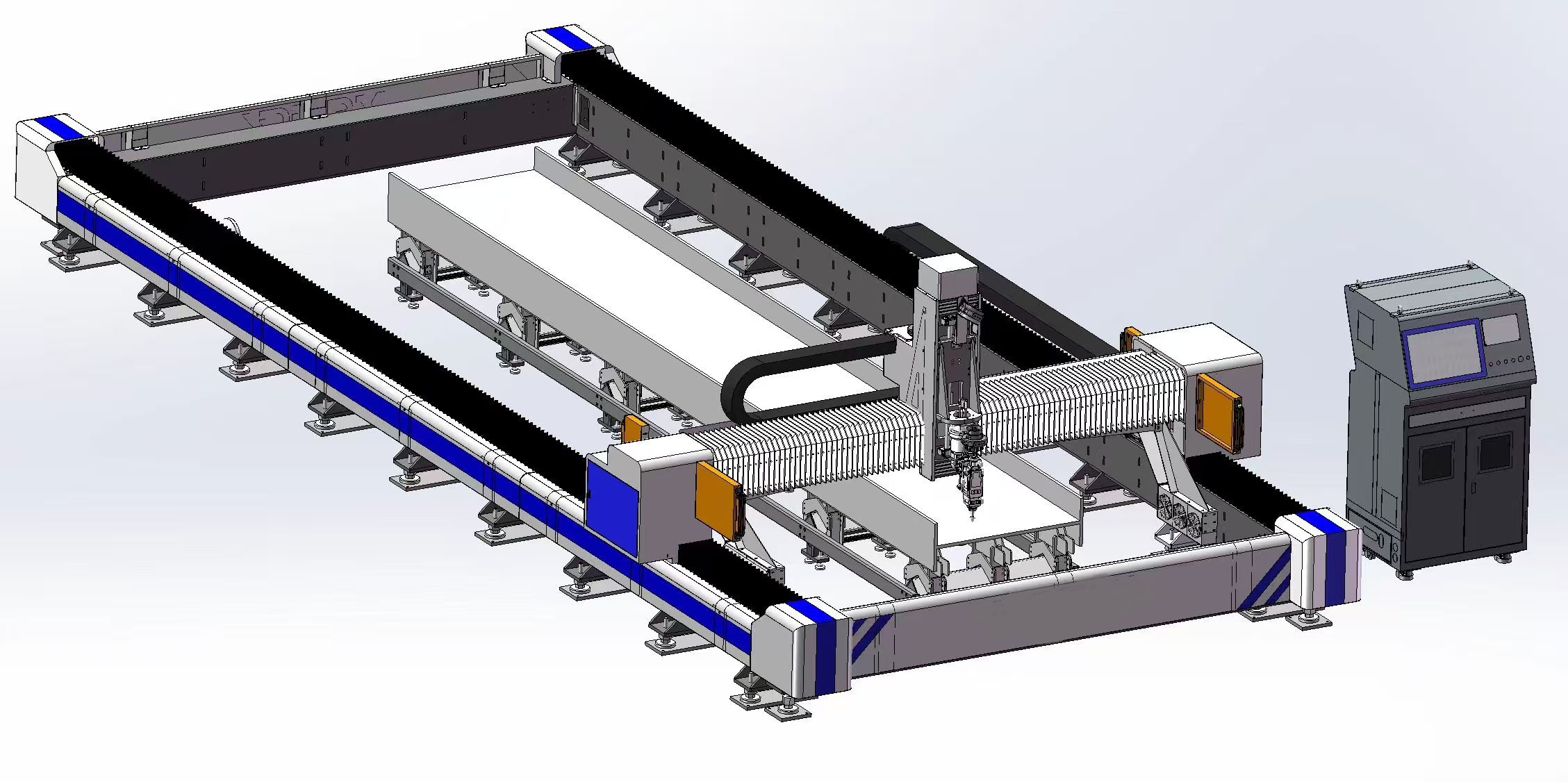
Industrial Application of H-Beam Plasma Cutter
- Consistency: The CNC interface ensures that the 45-degree angle is uniform across the entire length of the cut, eliminating the human error associated with manual torch manipulation.
- Speed: A plasma system can execute a beveled cut at speeds exceeding 1,500 mm/min depending on the material thickness, which is significantly faster than mechanical beveling.
- Complex Geometries: Modern software allows for “coping” where the beam is not only beveled but also notched to fit flush against another structural member, such as a column or a girder.
By achieving a precise 45-degree bevel, the subsequent welding process becomes “seamless.” This does not imply the absence of a weld seam, but rather a weld that is so well-integrated into the base metal that the joint achieves 100% strength efficiency, effectively making the two beams a single monolithic structure.
Optimizing Kinematics and Gas Dynamics
The efficiency of an H-Beam Plasma Cutter in a professional B2B environment is measured by its duty cycle and the quality of the cut edge. In Mendoza’s industrial plants, the choice of plasma gas is dictated by the material type and thickness. For carbon steel H-beams, O2 (Oxygen) plasma with air or O2 shield gas is standard to achieve a dross-free finish. When beveling at 45 degrees, the effective thickness of the material increases (the hypotenuse of the cut), requiring the CNC system to automatically adjust the amperage and gas flow rates in real-time.
Furthermore, Multi-axis CNC kinematics are required to rotate the torch head while maintaining the focal point of the arc at the material surface. This prevents the “rounding” of the top edge of the bevel, which is a common failure point in lower-quality plasma systems. A sharp, clean top edge is necessary for accurate fit-up during the assembly phase of the project.
Economic Impact on Mendoza’s Industrial Supply Chain
The implementation of these systems has shifted the economic calculus for construction firms in Argentina. By reducing the man-hours required for secondary finishing—such as manual grinding of bevels—fabricators can offer more competitive bidding for international mining projects in the Andes. The reduction in labor-intensive prep work also enhances workplace safety by minimizing the use of hand-held grinders, which are a leading cause of industrial injuries in steel shops.
Moreover, the digital nature of the H-Beam Plasma Cutter allows for direct integration with Building Information Modeling (BIM) software. Engineering firms in Mendoza can now export DSTV or STEP files directly to the cutting machine, ensuring that the physical component matches the digital twin with sub-millimeter accuracy. This digital workflow reduces material waste, an essential factor given the fluctuating costs of raw steel in the global market.
Concluding Industry Insight: The Future of Structural Fabrication
As the global demand for sustainable and resilient infrastructure increases, the role of automated plasma technology will expand beyond simple cutting. The industry is moving toward “intelligent fabrication,” where the H-Beam Plasma Cutter is part of a connected ecosystem. In the near future, we expect to see the integration of real-time weld-path sensing where the plasma cutter not only bevels the edge but also etches unique tracking codes and weld instructions directly onto the steel. For Mendoza, staying at the forefront of this technological curve is vital. The ability to produce high-precision, beveled structural components locally reduces the reliance on imported pre-fabricated steel and strengthens the regional value chain. The focus on 45-degree beveling for seamless welding is more than a technical preference; it is a commitment to engineering excellence that positions Argentinian steel fabrication as a formidable competitor on the global stage. Precision in the primary cut is the most effective way to ensure longevity and safety in the final structure.
Industrial Expertise & Support
Are you looking for high-performance H-Beam Plasma Cutter tailored for the Global market? Our engineering team provides comprehensive solutions for modern manufacturing.