Introduction: The Industrial Evolution of Medellín in Global Manufacturing
Medellín, Colombia, has transitioned from a regional manufacturing center into a sophisticated hub for high-precision metallurgical engineering. This shift is driven by the integration of advanced automation, specifically in the processing of structural steel for the global agricultural machinery sector. As the demand for durable, high-capacity farming equipment increases, the focus has moved toward the structural integrity of the primary chassis and support frames. Central to this advancement is the deployment of the H-Beam Plasma Cutter, a system designed to handle complex geometries with minimal thermal distortion. By leveraging high-definition plasma technology, manufacturers in Medellín are addressing the critical requirement for structural longevity in environments characterized by high vibration and corrosive exposure.
The Technical Significance of the Heat Affected Zone (HAZ)
In structural steel fabrication, the Heat Affected Zone (HAZ) refers to the area of the base metal that has not been melted but has had its microstructure and mechanical properties altered by the intense heat of the cutting process. For agricultural machinery, which is subjected to constant cyclic loading and mechanical stress, a large HAZ is a precursor to fatigue failure. When steel is subjected to excessive thermal input, the grain structure coarsens, leading to localized embrittlement.
The application of small HAZ technology via high-definition plasma systems ensures that the metallurgical properties of the H-beams remain consistent with the original mill specifications. By narrowing the thermal footprint, the H-Beam Plasma Cutter preserves the yield strength and ductility of the steel. This is particularly vital for agricultural implements such as heavy-duty grain carts, tillage equipment, and chassis for self-propelled sprayers, where weld integrity at the junctions of H-beams determines the overall lifespan of the machine.
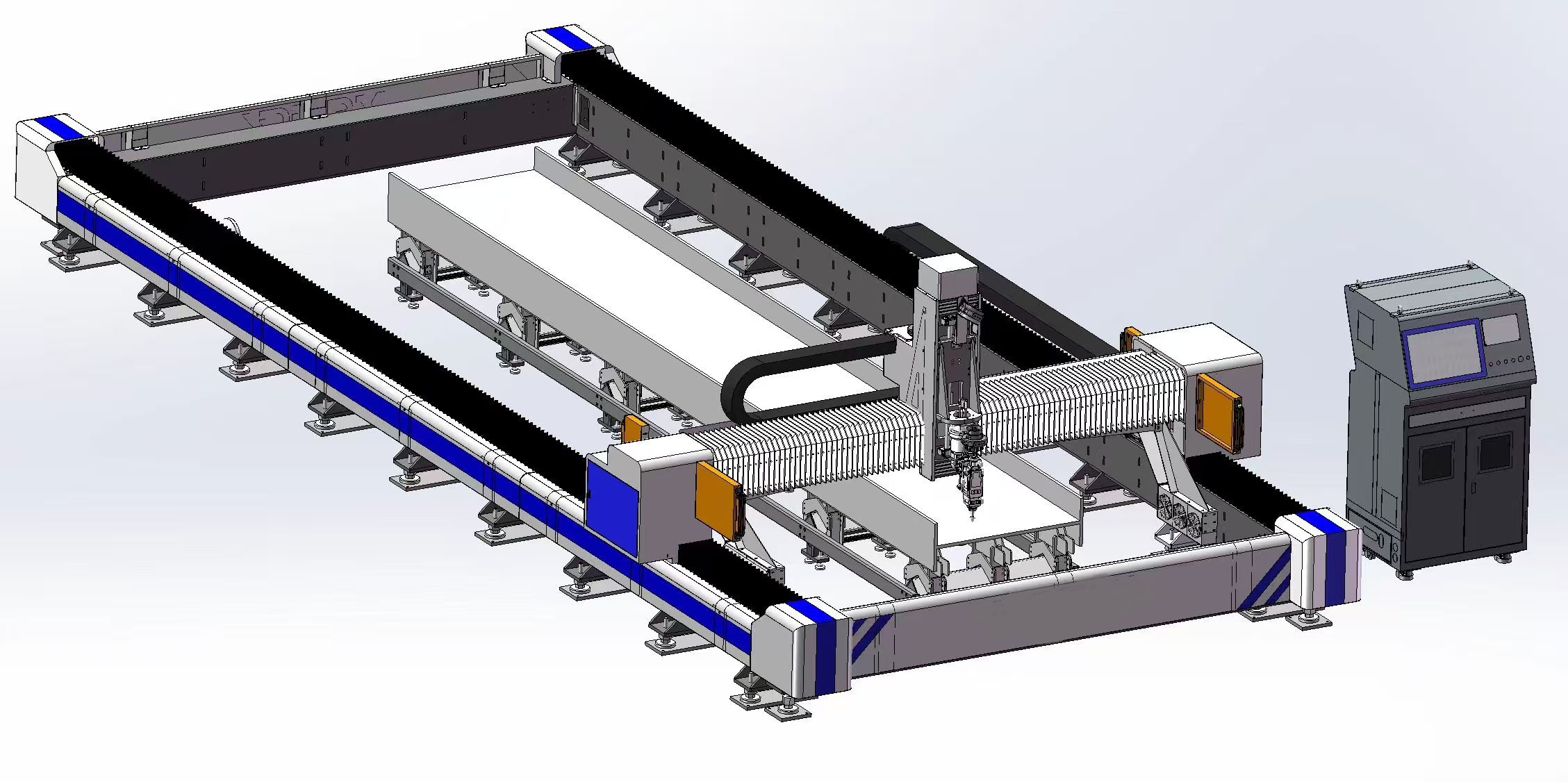
Industrial Application of H-Beam Plasma Cutter
Precision Engineering with 6-Axis Robotic Kinematics
The technical superiority of the systems currently utilized in Medellín’s industrial sector stems from the integration of 6-axis robotic kinematics. Unlike traditional linear cutting tables, a 6-axis system allows the plasma torch to manipulate angles across the flange and web of the H-beam simultaneously. This capability is essential for creating complex weld preparations, including rat holes, miter cuts, and bolt holes, in a single pass.
The precision of these movements ensures that the tolerances for fit-up are kept within sub-millimeter ranges. In the context of agricultural machinery, tight tolerances translate to superior weld penetration and reduced filler metal consumption. Furthermore, the robotic control systems utilize advanced algorithms to adjust the torch height and angle in real-time, compensating for any dimensional deviations in the raw structural steel. This level of automation eliminates the human error associated with manual layout and oxy-fuel cutting, resulting in a standardized output that meets international ISO standards for structural fabrication.
Optimizing Agricultural Machinery Longevity through Material Integrity
Agricultural equipment operates in some of the most demanding environments on earth. The soil-engaging components and structural frames must withstand multi-axial stresses and environmental degradation. When an H-Beam Plasma Cutter is used with high-definition power sources, the resulting cut surface is nearly square with minimal dross. This clean edge is critical for the subsequent coating and painting processes.
Traditional cutting methods often leave a hardened layer of oxides on the cut edge, which can lead to coating delamination and eventual subsurface corrosion. High-definition plasma cutting in Medellín utilizes specific gas mixtures—often involving oxygen or nitrogen depending on the material thickness—to produce a chemically clean surface. By maintaining the metallurgical grain structure at the edge of the cut, the equipment manufacturer ensures that the structural components can withstand the torsional forces of uneven field terrain without developing stress fractures at the cut sites.
Operational Efficiency and Global Export Standards
For the global B2B market, the cost-effectiveness of sourcing from Medellín is bolstered by the operational efficiency of automated H-beam processing. The integration of CAD/CAM software directly with the plasma system allows for the seamless transition from design to production. This “direct-to-fabrication” workflow reduces lead times significantly compared to traditional methods.
Key technical advantages include:
- Reduction in secondary grinding: The small HAZ and high-definition arc produce edges that require zero to minimal post-process treatment.
- Nesting optimization: Advanced software ensures maximum material utilization of the H-beams, reducing scrap rates in high-volume agricultural equipment runs.
- Consolidated processing: Operations such as marking, hole-drilling (plasma-piercing), and beveling are performed in a single station, maintaining the geometric relationship between all features of the beam.
These efficiencies allow Medellín-based fabricators to provide high-quality components that meet the rigorous standards of North American and European agricultural OEMs (Original Equipment Manufacturers). The ability to document the thermal input and precision of each cut provides a layer of quality assurance that is mandatory for heavy-duty structural applications.
Concluding Industry Insight: The Shift Toward Localized High-Tech Hubs
The industrial landscape is witnessing a significant shift where localized manufacturing hubs, such as Medellín, are leveraging high-tier technology to compete on a global scale. The adoption of the H-Beam Plasma Cutter with a focus on minimizing the Heat Affected Zone (HAZ) is not merely a process improvement; it is a strategic alignment with the needs of the modern agricultural sector. As machinery grows in size and complexity, the margin for error in structural fabrication narrows.
The industry insight here is that the longevity of heavy machinery is increasingly determined at the primary cutting stage rather than the final assembly. By prioritizing metallurgical stability and robotic precision, manufacturers are effectively “building in” durability. For global procurement officers and engineering firms, the technical capabilities found in Medellín represent a blueprint for the future of decentralized, high-precision manufacturing. The focus on reducing thermal damage during the fabrication of structural members will remain a primary differentiator in the quest for equipment that can survive decades of field service under grueling conditions.
Industrial Expertise & Support
Are you looking for high-performance H-Beam Plasma Cutter tailored for the Global market? Our engineering team provides comprehensive solutions for modern manufacturing.





