Introduction to Structural Steel Fabrication in Medellín
The industrial landscape of Medellín, Colombia, has undergone a significant transformation, evolving from traditional manufacturing into a sophisticated hub for high-precision structural engineering. Central to this evolution is the implementation of automated thermal cutting systems designed to handle complex geometries. For global stakeholders in the construction and infrastructure sectors, the ability to source precision-cut structural components from this region offers a strategic advantage. The integration of the H-Beam Plasma Cutter into local fabrication workflows has standardized the production of heavy-duty steel frameworks, ensuring that components meet rigorous international quality metrics. This article examines the technical specifications and operational advantages of utilizing 45-degree beveling technology for seamless welding applications within the Medellín industrial corridor.
Technical Specifications of the H-Beam Plasma Cutter
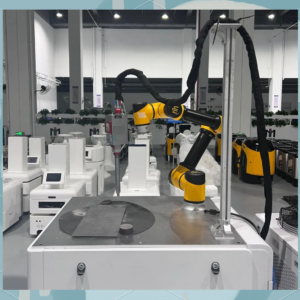
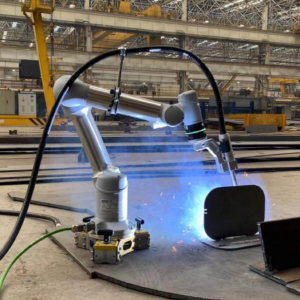
The H-Beam Plasma Cutter utilized in high-output environments is a multi-axis CNC system engineered specifically for the spatial demands of structural profiles. Unlike standard plate cutters, these machines feature a robotic arm or a rotating gantry capable of maneuvering around the flanges and webs of an H-beam. The primary technical advantage lies in the 5-axis or 6-axis motion control, which allows the plasma torch to maintain a perpendicular or specific angular relationship to the workpiece surface at all times.
Power sources typically range from 130 to 400 amps, depending on the thickness of the steel. In Medellín’s advanced facilities, high-definition plasma systems are the standard, utilizing narrow-constriction nozzles to increase energy density. This results in a cleaner cut with a significantly reduced Heat Affected Zone (HAZ). By minimizing the HAZ, the metallurgical properties of the ASTM A36 or A572 grade steel commonly used in H-beams remain intact, preventing brittleness at the edges where structural integrity is most critical.
The Mechanics of 45-Degree Beveling for Welding Optimization
In structural welding, the preparation of the joint is as critical as the weld itself. A 45-degree beveling process is required to create a V-groove or J-groove joint configuration, which facilitates full-penetration welding. This is essential for H-beams that will be subjected to high dynamic loads or seismic stresses. When a plasma cutter executes a 45-degree bevel, it removes a precise volume of material from the edge of the flange or web, allowing the welding electrode to reach the root of the joint.
The precision of this bevel is governed by Computer Numerical Control (CNC) algorithms that calculate real-time torch height and tilt. In Medellín’s fabrication centers, the use of automated beveling eliminates the manual grinding processes that were historically prone to human error and inconsistency. A consistent 45-degree angle ensures that the weld volume remains constant across the entire length of the beam, which optimizes the consumption of filler wire and reduces the time required for non-destructive testing (NDT) such as ultrasonic or radiographic inspections.
Software Integration and Digital Twin Modeling
Modern H-beam processing in Medellín relies heavily on the integration of Building Information Modeling (BIM) software with the plasma cutting hardware. Files generated in platforms such as Tekla Structures or Autodesk Revit are exported as DSTV or NC files directly to the cutter’s control unit. This end-to-end digital workflow ensures that every hole, notch, and bevel is executed according to the exact specifications of the structural engineer.
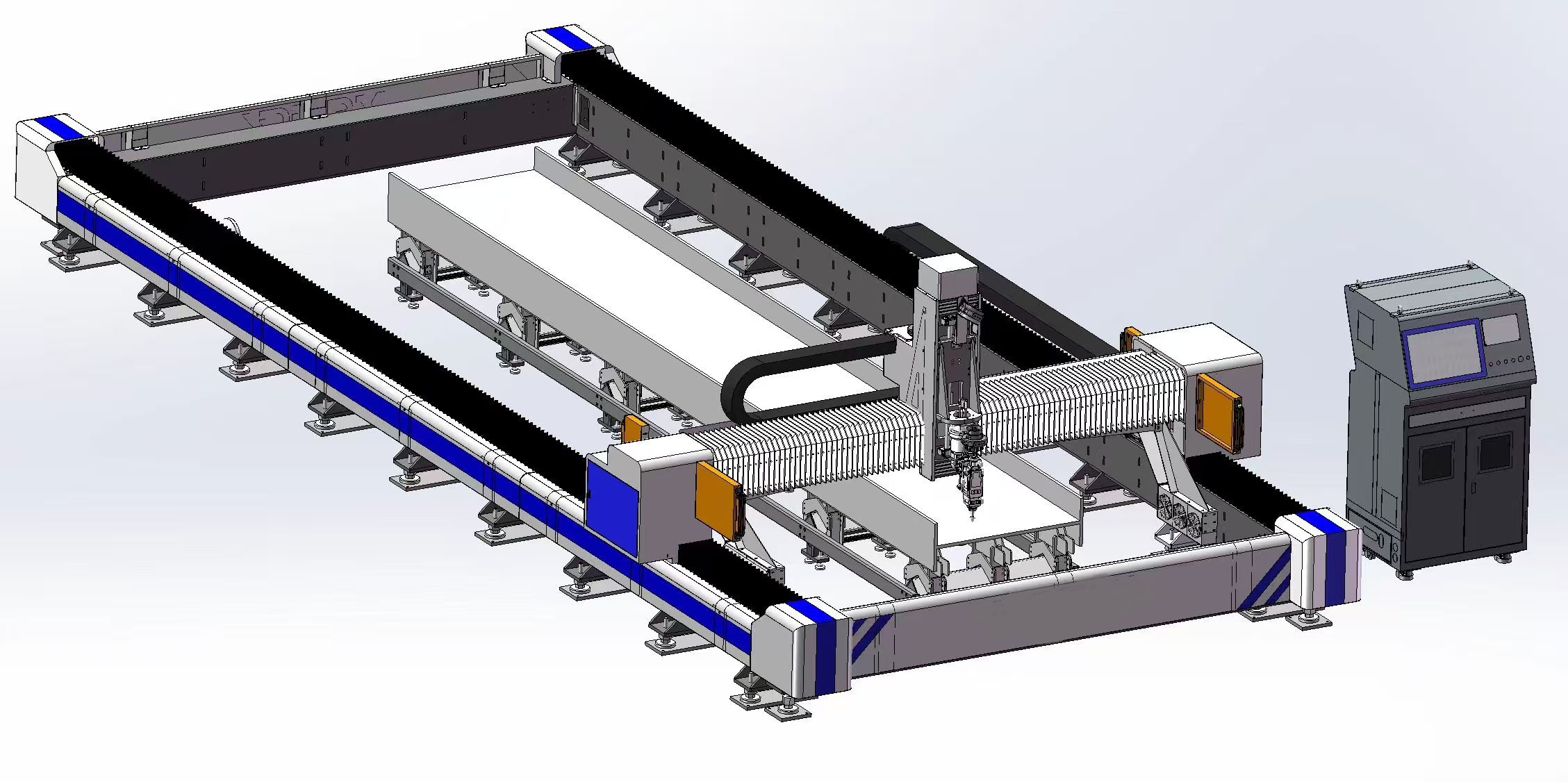
Industrial Application of H-Beam Plasma Cutter
The software calculates Kerf compensation, which is the width of the material removed during the plasma cutting process. Because the plasma arc is not a solid tool, its width varies based on the cutting speed and gas pressure. Advanced CNC systems in Medellín utilize sensor feedback to adjust the torch path in real-time, maintaining dimensional tolerances within +/- 0.5mm. This level of accuracy is vital for seamless welding, as it ensures that when two H-beams are brought together for assembly, the fit-up is perfect, requiring no additional field modifications.
Operational Efficiency and Global Competitiveness
Medellín has positioned itself as a cost-effective alternative for global B2B procurement due to its optimized operational costs and skilled technical workforce. The use of automated H-Beam Plasma Cutter systems significantly reduces the man-hours required for structural steel preparation. For instance, a process that would take several hours of manual layout, sawing, and grinding can be completed in under twenty minutes with an automated plasma system.
Furthermore, the geographic location of Medellín allows for efficient logistics through the ports of Cartagena and Buenaventura, linking the Andean industrial base to North American and European markets. Local fabricators adhere to international standards such as those set by the American Institute of Steel Construction (AISC) and the American Welding Society (AWS). By leveraging high-speed plasma technology, these facilities can maintain high throughput without compromising the strict tolerances required for global infrastructure projects.
Mitigating Material Distortion through Thermal Control
One of the technical challenges in plasma cutting H-beams is managing the thermal expansion and subsequent contraction of the steel. The intense heat of the plasma arc can cause “camber” or twisting in long structural members. To mitigate this, the cutting systems used in Medellín employ sophisticated sequencing. Instead of cutting a single flange from start to finish, the CNC program may jump between different sections of the beam to distribute the heat input more evenly.
Additionally, the gas mixtures used in the plasma process—typically a combination of Oxygen, Nitrogen, or H35 (35 percent hydrogen, 65 percent argon)—are calibrated to the specific thickness of the H-beam. This calibration ensures that the 45-degree bevel is smooth and free of dross (solidified metal slag). A dross-free cut is essential for “seamless” welding, as any impurities left on the bevel surface can lead to inclusions or porosity in the final weld bead, compromising the structural safety of the assembly.
Concluding Industry Insight
The shift toward automated, high-precision structural steel fabrication is no longer an optional upgrade but a fundamental requirement for remaining competitive in the global B2B market. As urban centers like Medellín continue to integrate advanced H-Beam Plasma Cutter technology, the industry is moving toward a future where “zero-error” fabrication is the standard. The ability to execute complex 45-degree bevels with robotic precision allows for the design of more complex, lighter, and stronger steel structures. For procurement officers and structural engineers, the focus must remain on the synergy between digital modeling and physical execution. The facilities in Medellín demonstrate that by combining sophisticated CNC control with localized engineering expertise, it is possible to achieve a level of welding readiness that significantly reduces project timelines and total cost of ownership. The future of structural steel lies in this convergence of thermal precision and automated workflow, ensuring that every joint is prepared for maximum load-bearing capacity and long-term durability.
Industrial Expertise & Support
Are you looking for high-performance H-Beam Plasma Cutter tailored for the Global market? Our engineering team provides comprehensive solutions for modern manufacturing.