Introduction: The Industrial Frontier in Equatorial Climates
The Manaus Free Trade Zone (Polo Industrial de Manaus) represents one of the most significant industrial hubs in South America, serving as a critical node for electronics, automotive, and heavy structural steel fabrication. However, the geographical location of Manaus within the Amazon basin presents a formidable set of challenges for precision CNC machinery. With average relative humidity levels frequently exceeding 80% and peak levels reaching 95%, the atmospheric conditions are corrosive to standard industrial electronics and mechanical components. For structural steel fabricators operating in this region, the deployment of a standard H-Beam Plasma Cutter is insufficient. To maintain operational uptime and geometric precision, machinery must undergo specific climate adaptation, primarily centered around Ingress Protection (IP54) standards and advanced thermal management. This article examines the technical requirements for plasma profile cutting systems operating in high-humidity equatorial zones.
Atmospheric Variables and Electronic Degradation
In high-humidity environments like Manaus, the primary threat to CNC machinery is not merely the presence of moisture, but the transition of that moisture from a gaseous to a liquid state—condensation. When the ambient temperature fluctuates, moisture settles on internal electronic components, leading to galvanic corrosion and short-circuiting of high-voltage boards. In an H-Beam Plasma Cutter, the power supply units (PSUs) and motor drives generate significant heat. When the machine is powered down, the cooling cycle can draw moist air into the cabinets. Without proper sealing, this leads to the oxidation of PCB traces and connector pins.
Furthermore, the high concentration of particulate matter from the plasma cutting process itself, when mixed with high humidity, creates a conductive sludge. This sludge can bypass standard filters and settle on the high-frequency ignition circuits of the plasma torch, resulting in arc instability or catastrophic failure of the pilot arc assembly. Therefore, the integration of an IP54+ Climate Adaptation strategy is a prerequisite for any B2B procurement in the region.
Engineering Specifications for IP54+ Protection
The IP54 rating signifies that the equipment is protected against dust ingress that could interfere with operation and is protected against splashing water from any direction. For a H-Beam Plasma Cutter in Manaus, the “plus” in IP54+ refers to additional measures such as internal climate control and over-pressurization. The following technical modifications are essential:
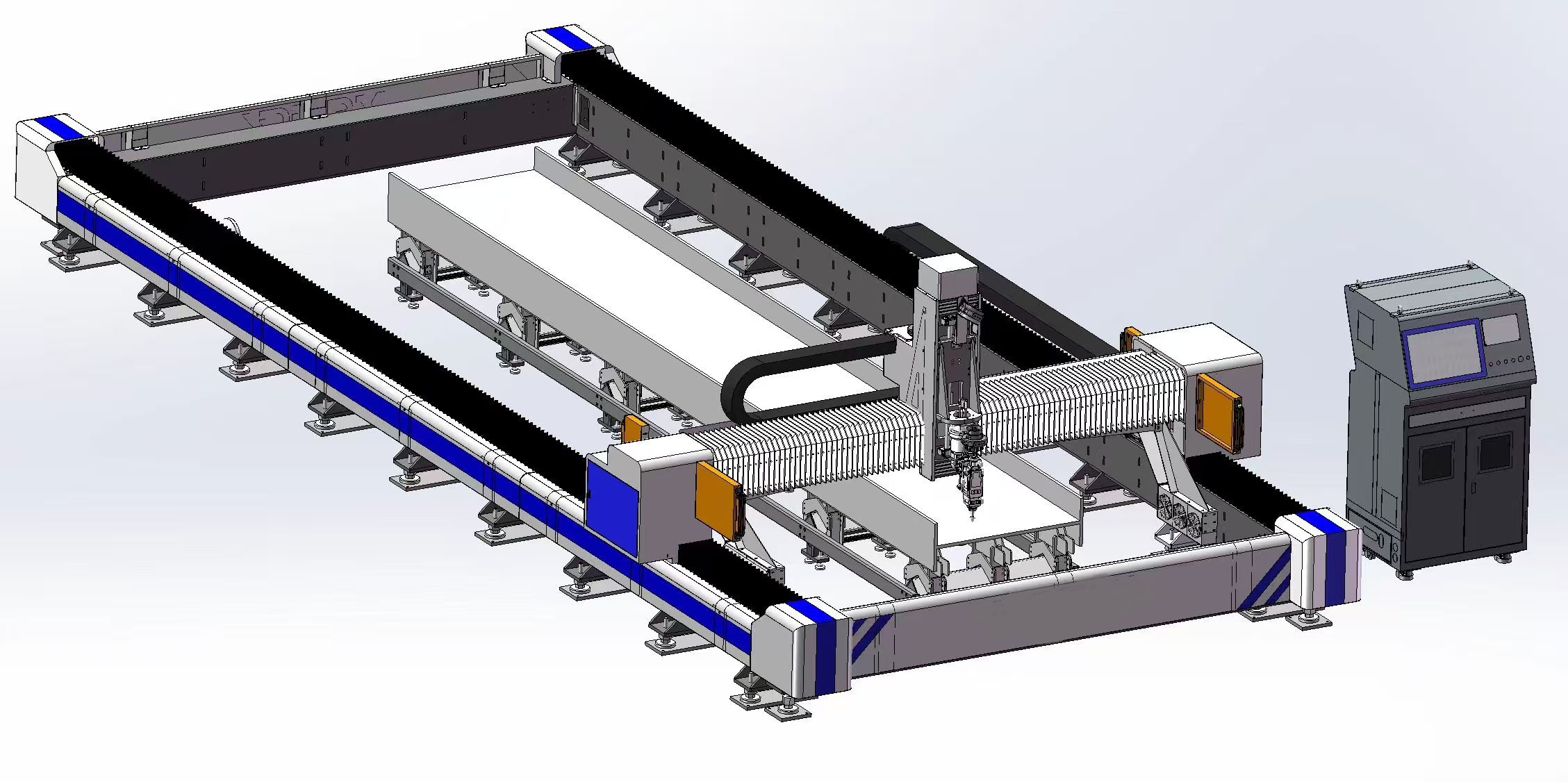
Industrial Application of H-Beam Plasma Cutter
1. Hermetically Sealed Control Cabinets
Standard ventilated cabinets are replaced with sealed enclosures featuring industrial-grade gaskets. These cabinets utilize air-to-air heat exchangers or specialized CNC air conditioning units. By maintaining a constant internal temperature slightly above the ambient dew point, the system prevents the formation of condensation on the CNC controller and servo drives.
2. Conformal Coating of Circuitries
All printed circuit boards within the plasma power source and the CNC console are treated with a hydrophobic conformal coating. This polymer film conforms to the board’s topography, providing a barrier against moisture, salt spray, and chemical contaminants common in industrial equatorial zones.
3. Positive Pressure Systems
To prevent the ingress of humid, dust-laden air, the electronic enclosures are maintained at a positive pressure relative to the factory floor. A clean, dry air supply is pumped into the cabinet, ensuring that any microscopic leaks result in air flowing out of the cabinet rather than moisture-laden air flowing in.
Optimizing the Plasma Arc in High-Humidity Environments
The quality of a plasma cut is directly proportional to the purity of the plasma gas and the stability of the electric arc. In Manaus, the compressed air used as the plasma gas often carries a high moisture content, which can be detrimental. Moisture in the gas line causes the plasma arc to become turbulent, leading to increased dross formation, excessive electrode wear, and “green” oxidation on the cut surface of the H-beam.
To mitigate this, the H-Beam Plasma Cutter must be equipped with a multi-stage filtration and desiccant drying system. This typically includes a refrigerated air dryer that lowers the compressed air temperature to condense and remove water, followed by a series of coalescing filters to remove oil aerosols. Finally, a desiccant dryer ensures the air reaches a pressure dew point of at least -40 degrees Celsius. This level of gas preparation is critical for maintaining the tight tolerances required in structural steel engineering.
Structural Integrity and Mechanical Adaptation
The mechanical structure of an H-beam cutting system—the gantry, the rails, and the beam rotation units—is also subject to accelerated wear in high-humidity zones. The Thermal Management Systems must extend to the mechanical lubricants used on the linear guides. Standard greases may emulsify when exposed to constant high humidity, losing their lubricity and leading to mechanical binding.
High-performance synthetic lubricants with high water resistance are required for the rack-and-pinion systems. Additionally, the cable carriers (drag chains) are constructed from UV-stabilized and moisture-resistant polymers to prevent brittleness and cracking, which are common issues in tropical industrial settings where ambient temperatures and humidity levels fluctuate between shift cycles.
Operational Efficiency and Maintenance Protocols
Implementing an H-Beam Plasma Cutter with IP54+ adaptation in Manaus allows for a shift from reactive to predictive maintenance. In a standard machine configuration, the mean time between failures (MTBF) in equatorial climates is significantly lower than in temperate zones. With climate-adapted systems, the focus shifts to monitoring the integrity of seals and the performance of the cabinet cooling systems.
B2B operators must implement a rigorous schedule for checking the desiccant saturation levels and the drainage of water traps in the pneumatic system. By isolating the sensitive CNC electronics from the external environment, the lifespan of the machine is extended by an estimated 40% compared to non-adapted models, significantly improving the Total Cost of Ownership (TCO) for the fabricator.
Concluding Industry Insight
As global manufacturing continues to decentralize into equatorial regions, the “one-size-fits-all” approach to CNC machinery procurement is becoming obsolete. The Manaus model demonstrates that environmental adaptation is not a luxury but a fundamental technical requirement. The evolution of the H-Beam Plasma Cutter into a climate-resilient system highlights a broader trend in the industrial sector: the convergence of robust mechanical engineering with advanced environmental shielding. For global manufacturers, the investment in IP54+ and specialized gas management systems is the only viable path to achieving the precision and reliability demanded by modern structural steel standards in the world’s most challenging climates. Future developments will likely see the integration of IoT-based humidity sensors within the machine’s own logic, allowing the CNC system to automatically adjust its cooling and drying parameters in real-time response to atmospheric shifts.
Industrial Expertise & Support
Are you looking for high-performance H-Beam Plasma Cutter tailored for the Global market? Our engineering team provides comprehensive solutions for modern manufacturing.





