Introduction: The Structural Steel Landscape in Lima
The industrial infrastructure of Lima, Peru, has undergone a significant transformation driven by large-scale mining projects, port expansions, and urban development. Central to this growth is the fabrication of structural steel, specifically H-beams, which serve as the skeletal framework for modern industrial architecture. However, the deployment of high-precision CNC machinery in this region faces a specific technical hurdle: electrical grid volatility. In industrial corridors such as Lurín and Callao, heavy machinery operation often leads to transient voltage surges and sags. To maintain operational efficiency, the implementation of an H-Beam Plasma Cutter equipped with integrated voltage regulation has become a technical necessity rather than an optional feature. This article examines the engineering requirements for stabilizing plasma arc performance in environments with inconsistent power supply.
The Impact of Grid Instability on Plasma Cutting Precision
Plasma cutting technology relies on the ionization of gas to create a high-temperature plasma arc. This process is highly sensitive to the consistency of the input power supply. In Lima’s industrial zones, the simultaneous startup of high-kilowatt motors in neighboring facilities can cause significant voltage drops. Conversely, the sudden shedding of inductive loads can result in voltage spikes. For an H-Beam Plasma Cutter, these fluctuations directly affect the duty cycle and the stability of the pilot arc.
Without internal regulation, a drop in voltage leads to a decrease in arc pressure, resulting in incomplete penetration of the steel flange or web. This necessitates secondary grinding or, in worst-case scenarios, the scrapping of the structural component. Furthermore, voltage spikes can penetrate the primary side of the power source, leading to the catastrophic failure of sensitive electronic components. For B2B operations where margins are dictated by throughput and consumable longevity, the absence of voltage stabilization is a significant financial risk.
Integrated Automatic Voltage Regulation (AVR) Engineering
To mitigate these risks, modern H-beam processing units utilize Automatic Voltage Regulation (AVR) systems integrated directly into the power source. Unlike external stabilizers which can have slow response times, integrated AVR systems are designed to communicate with the CNC controller in real-time. These systems typically employ a series of high-capacity capacitors and solid-state switching components that can compensate for fluctuations within a range of plus or minus 15 percent of the nominal input voltage.
The engineering behind this involves a feedback loop where the input voltage is constantly monitored. When a deviation is detected, the system adjusts the pulse width modulation (PWM) of the inverter circuit to maintain a constant output current. This ensures that the energy density of the plasma stream remains uniform, regardless of what is happening on the primary side of the transformer. For fabricators in Lima, this means that the H-Beam Plasma Cutter can maintain a clean kerf and minimize the heat-affected zone (HAZ) even during peak industrial hours when the grid is most stressed.
Protection of IGBT Inverter Technology
The core of high-efficiency plasma power supplies is IGBT Inverter Technology. Insulated-Gate Bipolar Transistors allow for high-frequency switching, which reduces the weight of the transformer and increases the precision of the arc control. However, IGBTs are notoriously sensitive to over-voltage conditions. In the context of Lima’s grid, a built-in regulation system acts as a protective barrier for these components.
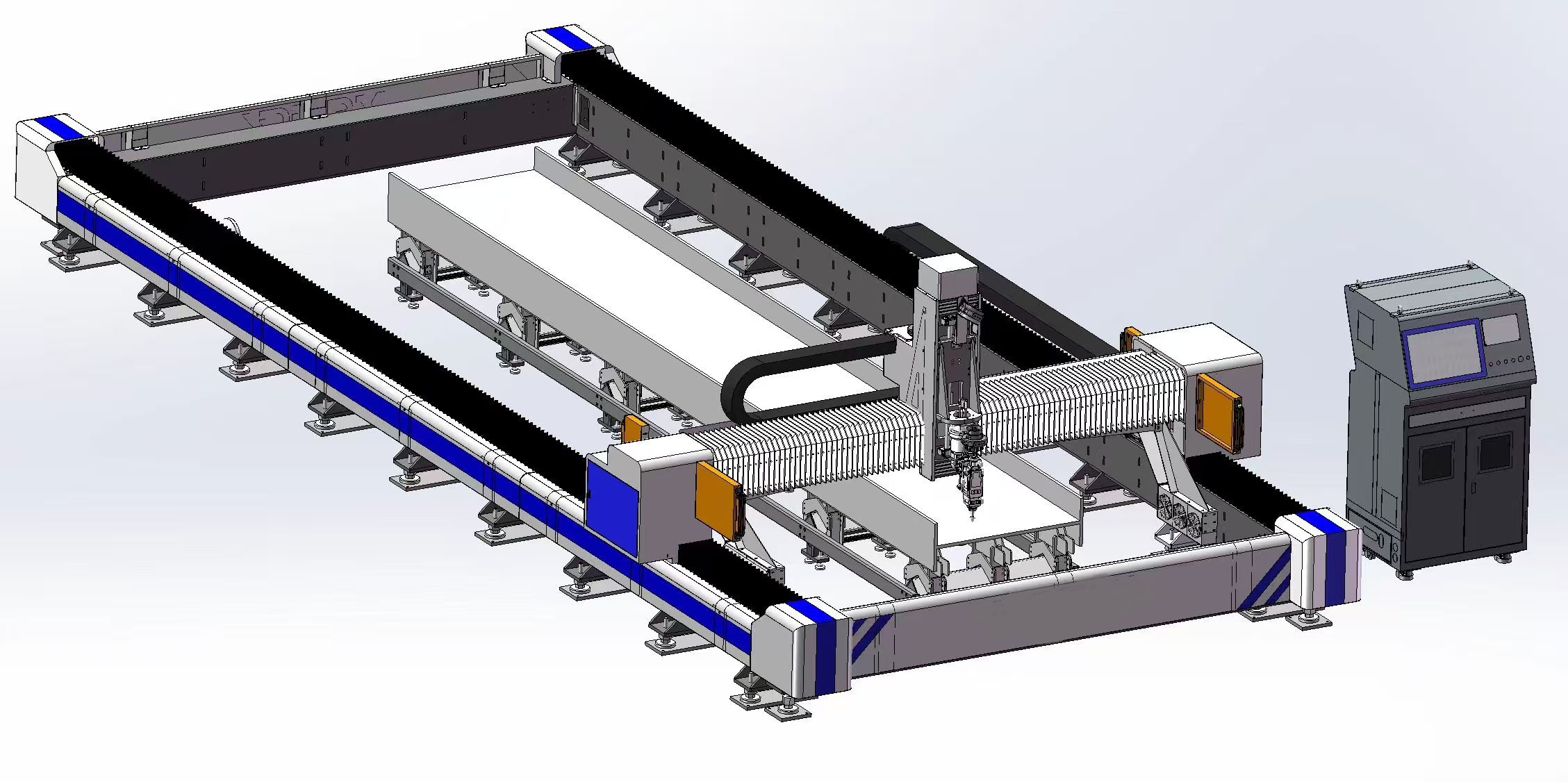
Industrial Application of H-Beam Plasma Cutter
By utilizing metal-oxide varistors (MOVs) and transient voltage suppression (TVS) diodes in conjunction with the regulation circuitry, the machine can shunt excess energy away from the inverter boards. This architectural choice significantly extends the Mean Time Between Failures (MTBF) for the equipment. In a global B2B context, the durability of the inverter board is a primary metric for Total Cost of Ownership (TCO), making built-in regulation a critical specification for procurement officers.
Synergy Between Voltage Regulation and Torch Height Control
Voltage stability is also intrinsically linked to the performance of the THC (Torch Height Control) system. Most CNC plasma cutters use arc voltage to determine the distance between the torch nozzle and the workpiece. If the input voltage to the machine is fluctuating, the reference voltage used by the THC can become skewed. This causes the torch to “dive” into the H-beam or rise too high, extinguishing the arc or damaging the consumables.
By stabilizing the internal operating voltage, the regulation system provides a clean reference signal to the THC. This allows for precise 5-axis or 6-axis movement around the H-beam’s geometry, including the difficult transitions between the web and the flange. In Lima’s heavy industry sector, where H-beams often feature varying thicknesses and surface scales, the combination of a stabilized power source and accurate THC ensures that the beveling and coping cuts meet AISC (American Institute of Steel Construction) standards for structural integrity.
Operational Efficiency and Consumable Life
Beyond protecting the machine, voltage regulation has a direct impact on the consumption of electrodes and nozzles. An unstable arc causes “arc sputtering,” which accelerates the erosion of the hafnium insert in the electrode. In a high-volume fabrication facility, the cost of consumables can represent a significant portion of the operational budget.
Data from industrial implementations in South America indicate that machines with built-in regulation see a 20 to 30 percent increase in consumable life compared to unregulated units operating on the same grid. This is due to the reduction in “misfires” and the maintenance of a laminar flow in the plasma gas, which is only possible when the electrical current is perfectly controlled. For B2B partners, this translates to fewer machine stops and higher daily tonnage processing.
Conclusion: Industry Insight on Grid-Resilient Manufacturing
As global manufacturing shifts toward more decentralized and localized production hubs, the ability of high-end machinery to operate in “non-ideal” electrical environments is becoming a decisive competitive factor. The case of Lima, Peru, illustrates a broader trend in emerging industrial markets: the convergence of high-precision CNC requirements with legacy infrastructure challenges.
The industry insight for the coming decade suggests that “smart” power management will be as vital as the cutting speed or the software interface of an H-Beam Plasma Cutter. Manufacturers who prioritize internal voltage regulation and robust electrical shielding are not merely selling a cutting tool; they are providing operational insurance. For the global structural steel industry, the focus must remain on building resilience into the hardware to ensure that geographic location does not dictate the quality of the engineering output. Moving forward, expect to see further integration of AI-driven predictive power management that anticipates grid failures before they impact the mechanical cut, further bridging the gap between volatile infrastructure and precision fabrication.
Industrial Expertise & Support
Are you looking for high-performance H-Beam Plasma Cutter tailored for the Global market? Our engineering team provides comprehensive solutions for modern manufacturing.





