The Industrial Evolution of Joinville: Integrating Advanced Structural Fabrication
Joinville, located in the state of Santa Catarina, stands as the largest industrial hub in southern Brazil. The city’s economy is heavily anchored in the metal-mechanical, automotive, and plastic sectors. As global supply chains demand higher precision and faster turnaround times, local industrial parks are transitioning from traditional manual fabrication to automated systems. The introduction of the H-Beam Plasma Cutter into these facilities represents a significant shift in how structural steel is processed, moving away from labor-intensive drilling and sawing toward integrated robotic thermal cutting.
The industrial landscape in Joinville is characterized by a high concentration of fabrication shops that supply the construction and heavy machinery industries. For these entities, the primary challenge has always been the bottleneck created by multi-step processing. Traditional workflows require moving a heavy H-beam through several stations: layout marking, drilling, sawing, and coping. By consolidating these operations into a single automated cell, manufacturers in Joinville are optimizing floor space and reducing the total cost of ownership for heavy machinery.
Technical Architecture and 6-Axis Robotic Plasma Cutting
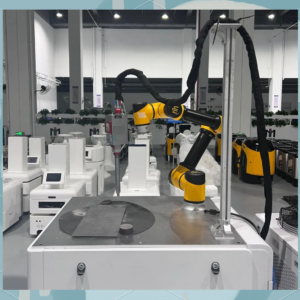
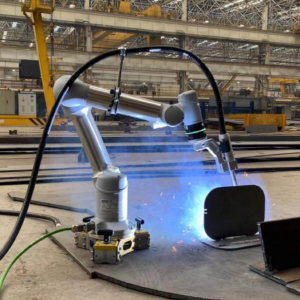
The core of modern structural fabrication is 6-Axis Robotic Plasma Cutting technology. Unlike 2D plasma tables, these systems utilize a robotic arm capable of articulating around the flanges and webs of an H-beam. This allows for complex geometries, including bolt holes, notches, miters, and weld preparations, to be executed in a single pass. The integration of high-definition plasma power sources ensures that the heat-affected zone is minimized, which is critical for maintaining the structural integrity of the steel according to international building codes.
In the context of Joinville’s industrial parks, such as the Perini Business Park, the technical requirements for these machines involve high-torque servo motors and sophisticated sensing systems. Laser profiling sensors are frequently employed to detect the actual dimensions of the beam, accounting for any mill tolerances or slight deformations in the raw material. This real-time adjustment ensures that every cut remains within a sub-millimeter tolerance, a requirement that is increasingly mandated by global engineering firms sourcing components from Brazilian manufacturers.
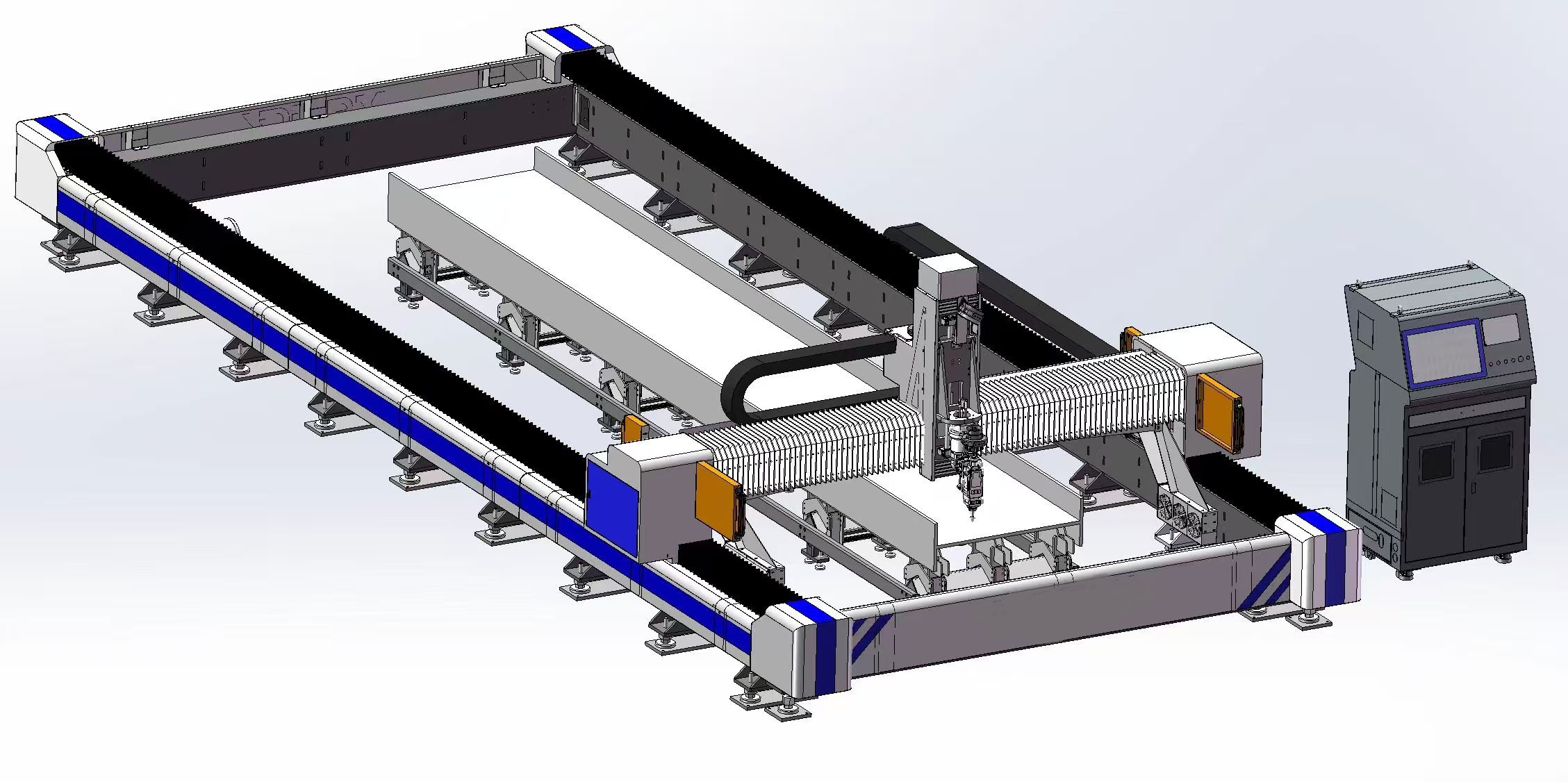
Industrial Application of H-Beam Plasma Cutter
Quantifying Return on Investment for Local Industrial Parks
The Return on Investment (ROI) for an H-Beam Plasma Cutter in the Joinville region is calculated through three primary metrics: labor reduction, material utilization, and throughput acceleration. In traditional fabrication, a standard H-beam might require four to six man-hours to process manually. With automated plasma technology, this time is often reduced to under twenty minutes. For a mid-sized fabrication plant in Santa Catarina, this represents a productivity increase of over 800 percent per work shift.
Furthermore, Automated Nesting Algorithms play a vital role in the financial viability of these machines. By optimizing the placement of cuts across a standard length of steel, the software reduces scrap rates significantly. In an environment where raw material costs fluctuate globally, the ability to extract more finished parts from a single ton of steel directly impacts the bottom line. Most industrial parks in Joinville report that the capital expenditure for such a system is recouped within 18 to 24 months, depending on the volume of structural steel processed.
Digital Integration with CNC Structural Steel Fabrication
The transition to CNC Structural Steel Fabrication allows Joinville-based companies to participate in the global Building Information Modeling (BIM) ecosystem. Modern H-beam cutters interface directly with industry-standard software like Tekla Structures or SDS/2. This digital continuity eliminates the risk of human error during the transcription of blueprints to the workshop floor. The machine reads the DSTV or STEP files directly, ensuring that the physical output is a perfect replica of the digital twin designed by the engineers.
This level of integration is essential for Joinville’s export-oriented manufacturers. When shipping structural components to North America or Europe, the components must fit perfectly upon arrival at the construction site. The precision of robotic plasma cutting ensures that field welding and re-work are virtually eliminated. This reliability enhances the reputation of Brazilian fabrication on the international stage, fostering long-term B2B partnerships and consistent order flow.
Operational Sustainability and Maintenance in Santa Catarina
From a maintenance perspective, the industrial infrastructure in Joinville is well-equipped to support high-tech machinery. Local technical colleges and the presence of specialized engineering firms ensure that a skilled workforce is available to operate and maintain these systems. The use of long-life consumables in high-definition plasma torches further reduces operational costs. Modern systems are designed with dust extraction and filtration units, which are essential for complying with Brazilian environmental regulations (NR-12 and others) regarding air quality in industrial workplaces.
Sustainability is also achieved through energy efficiency. Modern inverter-based plasma power supplies consume significantly less power than older transformer-based models. In a region where energy costs are a major factor in manufacturing overhead, the high electrical efficiency of a new H-Beam Plasma Cutter contributes to a lower cost per cut, reinforcing the competitive advantage of local industrial parks.
Concluding Industry Insight
The deployment of H-beam plasma cutting technology in Joinville is more than a localized upgrade; it is a reflection of a broader global trend toward autonomous manufacturing. As structural requirements become more complex and delivery timelines compress, the margin for error in manual fabrication has effectively disappeared. For industrial parks in Brazil to maintain their competitive edge against global counterparts, the adoption of multi-axis robotic systems is no longer optional but a baseline requirement for market participation.
The strategic advantage for Joinville lies in its ability to marry its deep-rooted metallurgical expertise with advanced CNC automation. By investing in high-throughput plasma systems, local manufacturers are transforming from regional suppliers into global contenders. The future of structural steel fabrication will be defined by the seamless movement of data from the design office to the robotic torch, ensuring that every beam processed in Santa Catarina meets the most rigorous international standards for precision and structural performance.
Industrial Expertise & Support
Are you looking for high-performance H-Beam Plasma Cutter tailored for the Global market? Our engineering team provides comprehensive solutions for modern manufacturing.