Engineering Resilience: High-Humidity Adaptation for H-Beam Plasma Cutters in Joinville
Joinville, located in the state of Santa Catarina, stands as one of Brazil’s primary industrial powerhouses, particularly in the sectors of metallurgy and structural steel fabrication. However, the region’s humid subtropical climate (Cfa) presents a significant engineering challenge for high-precision CNC machinery. With average relative humidity levels frequently exceeding 80% and significant annual precipitation, standard industrial equipment often suffers from accelerated degradation. For global manufacturers deploying an H-Beam Plasma Cutter in this environment, standard specifications are insufficient. The requirement for IP54+ climate adaptation is not merely a preference but a technical necessity to ensure operational longevity and precision.
The intersection of high-precision thermal cutting and high-moisture environments necessitates a specialized approach to machine architecture. When processing structural steel profiles, such as I-beams, H-beams, and channels, the equipment must maintain tight tolerances while exposed to atmospheric conditions that promote rapid oxidation and electrical failure. This article examines the technical implementation of IP54+ standards and auxiliary climate control systems required for successful structural steel fabrication in high-humidity zones like Joinville.
The Impact of Atmospheric Moisture on CNC Plasma Systems
In a high-humidity environment, the primary threat to an H-Beam Plasma Cutter is electrolytic corrosion. When moisture condenses on sensitive electronic components, it creates conductive bridges that lead to short circuits or intermittent signal noise. In CNC systems, where millisecond-level communication between the motion controller and the servo drives is critical, even minor signal interference can result in catastrophic positioning errors or jagged cut faces.
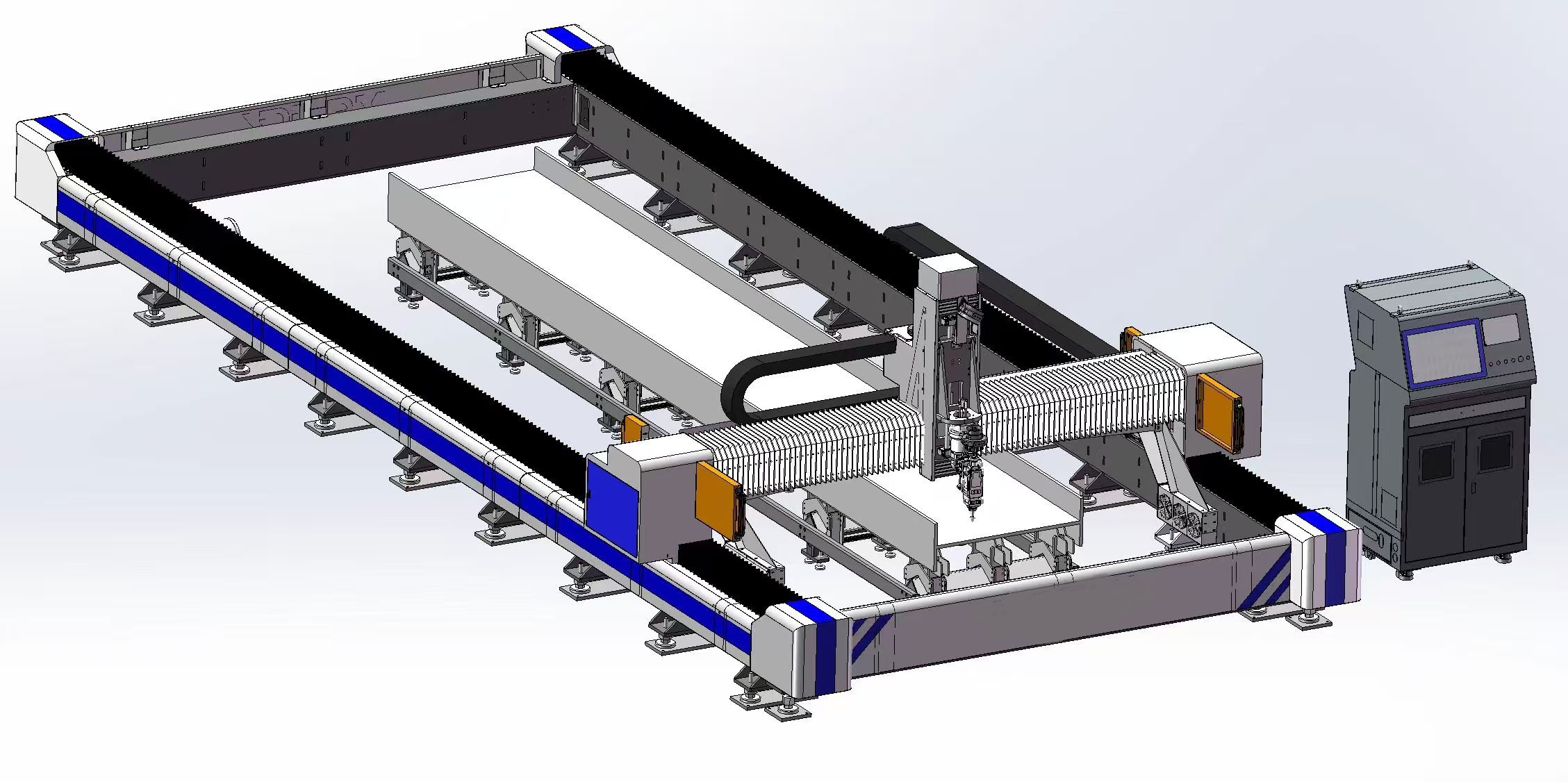
Industrial Application of H-Beam Plasma Cutter
Furthermore, the plasma arc itself is sensitive to the dielectric properties of the surrounding air. High water vapor content in the ambient atmosphere can affect the ionization process within the plasma torch. Without adequate mitigation, this results in increased dross formation and a wider heat-affected zone (HAZ), compromising the structural integrity of the H-beam. Therefore, adaptation must occur at two levels: the protection of the internal electronics and the conditioning of the process gases.
Implementing IP54+ Ingress Protection Standards
The Ingress Protection (IP) rating system defines the level of sealing effectiveness of electrical enclosures. An IP54 rating indicates protection against dust ingress (5) and protection against splashing water from any direction (4). In the context of Joinville’s industrial landscape, the “plus” designation refers to additional climate-active measures that go beyond static sealing.
To achieve IP54+ compliance, the electrical cabinets of the plasma cutter are engineered with high-density synthetic gaskets and pressurized enclosures. By maintaining a slight positive pressure inside the cabinet using filtered, dry air, the system prevents moist ambient air from entering through microscopic gaps. This is coupled with the application of Conformal Coating on all printed circuit boards (PCBs). This thin polymeric film conforms to the board’s components, providing a barrier against moisture, salt spray, and chemical contaminants common in heavy manufacturing zones.
Active Thermal Management and Dehumidification
Static protection is rarely enough in tropical climates. An IP54+ adapted machine incorporates integrated thermoelectric coolers (Peltier modules) or industrial-grade heat exchangers. Unlike standard fans that pull humid air across components, these closed-loop cooling systems circulate internal air through a heat exchanger, keeping the electronics at a stable temperature and below the dew point. This prevents internal condensation during the rapid temperature shifts common in Joinville’s afternoon rain cycles.
Mechanical Durability and Material Selection
The mechanical structure of an H-Beam Plasma Cutter must also be hardened against humidity. Standard carbon steel components are susceptible to Electrolytic Corrosion and surface oxidation, which can increase friction on the linear guides and rack-and-pinion drive systems. Adaptation involves the use of hard-chromed rails and stainless steel fasteners to prevent “seizing” of adjustable components.
The multi-axis robotic arm or gantry system, responsible for the 3D manipulation of the torch around the H-beam, utilizes sealed bearings with high-viscosity, moisture-displacing lubricants. These lubricants are specifically formulated to maintain their rheological properties in high-heat, high-moisture environments, ensuring that the machine’s five or six axes of motion remain fluid and precise over thousands of duty cycles.
Multi-Stage Air Filtration and Drying
The quality of the plasma gas is paramount. In Joinville, the compressed air used for plasma cutting often carries a high moisture load. An IP54+ adapted system includes an integrated multi-stage filtration array. This typically consists of a refrigerated air dryer, followed by coalescing filters and a desiccant stage. By reducing the pressure dew point of the supply air, the system ensures that the plasma arc remains stable and that the consumables—nozzles and electrodes—do not suffer from premature failure caused by water-induced arcing.
Operational Benefits and Maintenance Cycles
For a B2B operation, the return on investment for an IP54+ adapted machine is realized through reduced downtime. Standard machines in Joinville often require monthly interventions for sensor cleaning or electrical contact maintenance. In contrast, an adapted H-Beam Plasma Cutter can operate on a standard quarterly or bi-annual maintenance schedule. The stability of the internal environment protects the CNC’s logic controllers from the “creeping” failures associated with humidity-induced oxidation.
Furthermore, the precision of the cuts remains consistent. In structural steel fabrication, particularly for large-scale infrastructure projects in Brazil, the fit-up of beams is critical. A machine that maintains its calibration despite atmospheric swings ensures that the bolted or welded connections of the H-beams meet stringent engineering tolerances, reducing the need for secondary grinding or rework on the shop floor.
Concluding Industry Insight: The Future of Climate-Resilient Manufacturing
As global manufacturing shifts toward more geographically diverse regions, the “one-size-fits-all” approach to industrial machinery is becoming obsolete. The case of Joinville illustrates a broader trend in the B2B sector: the necessity of climate-specific engineering. We are moving toward a period where environmental data—such as humidity profiles, ambient particulate matter, and temperature fluctuations—will be as critical to machine specification as the mechanical load or cutting speed.
For the structural steel industry, the adoption of IP54+ standards represents a transition from reactive maintenance to proactive resilience. Future developments will likely see the integration of IoT-enabled humidity sensors within the machine’s own diagnostics, allowing for real-time adjustment of cooling and drying cycles. For manufacturers in high-humidity zones, investing in climate-adapted technology is no longer an optional upgrade; it is the baseline for maintaining a competitive edge in an increasingly demanding global supply chain.
Industrial Expertise & Support
Are you looking for high-performance H-Beam Plasma Cutter tailored for the Global market? Our engineering team provides comprehensive solutions for modern manufacturing.





