Introduction to Advanced Structural Fabrication in Joinville
Joinville, located in the state of Santa Catarina, stands as Brazil’s premier industrial hub, particularly within the metallurgical and mechanical engineering sectors. As the global demand for structural steel increases, the integration of high-precision machinery has become a prerequisite for maintaining competitive export standards. The implementation of the H-Beam Plasma Cutter within this region represents a significant shift from traditional mechanical sawing and drilling toward automated, multi-axis thermal cutting. This transition is driven by the necessity for tighter tolerances in large-scale infrastructure projects and the industrial push toward sustainable manufacturing through Energy-Efficient Fiber Source Technology.
The Technical Architecture of H-Beam Plasma Systems
Modern H-beam processing requires the simultaneous management of multiple geometric planes. Unlike flat-bed plasma systems, an H-Beam Plasma Cutter utilizes a 6-axis robotic arm or a multi-torch rotatable gantry to navigate the flanges and webs of structural profiles. The technical complexity lies in the software’s ability to compensate for structural deviations in the raw material. In Joinville’s fabrication facilities, these machines are integrated with sophisticated laser measuring systems that scan the beam’s profile before the first arc is struck. This ensures that the plasma torch maintains a constant standoff distance, which is critical for achieving a uniform kerf width and minimizing the Heat-Affected Zone (HAZ).
Kinematics and Precision Engineering
The kinematics of these systems involve high-speed interpolation between the longitudinal travel of the beam (X-axis) and the multi-directional movement of the cutting head (Y, Z, A, B, and C axes). By utilizing high-torque servomotors and zero-backlash planetary gearboxes, the equipment can execute complex bevel cuts, bolt holes, and coping notches with a positional accuracy of +/- 0.5mm. This level of precision is essential for the “bolt-up” assembly method favored in modern skyscraper and bridge construction, where manual field adjustments are economically non-viable.
Energy-Efficient Fiber Source Technology: A Paradigm Shift
The most significant advancement in recent years is the transition to fiber-based power sources. Historically, plasma cutting relied on heavy transformer-rectifier units that suffered from significant energy loss through heat dissipation. The introduction of Fiber Source Technology in the Joinville industrial sector has redefined the “wall-plug efficiency” of thermal cutting. Fiber sources utilize solid-state diodes to pump light through optical fibers, resulting in a beam density that allows for faster cutting speeds with significantly lower power consumption.
Comparative Energy Metrics
When analyzing the electrical overhead of a fabrication facility, the fiber source offers a conversion efficiency of approximately 40-50%, compared to the 10-15% seen in traditional CO2 laser systems or older high-definition plasma units. For a Joinville-based exporter, this translates to a reduction in kilowatt-hour (kWh) consumption per linear meter of cut. Furthermore, the Wall-Plug Efficiency of these modern fiber sources reduces the cooling requirements of the system, further lowering the secondary energy draw from industrial chillers. This synergy between the power source and the mechanical delivery system ensures that the carbon footprint of the structural component is minimized at the point of origin.
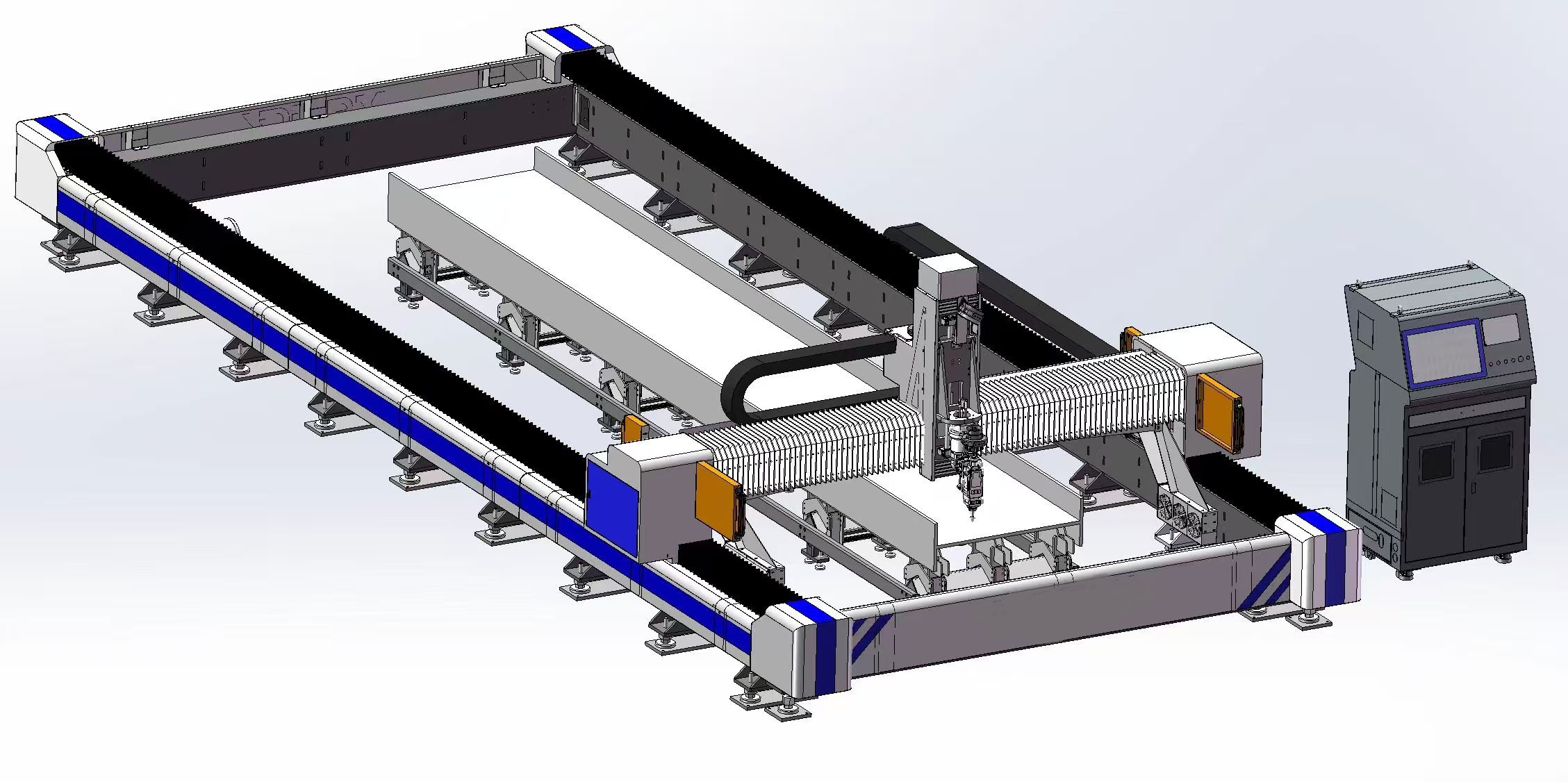
Industrial Application of H-Beam Plasma Cutter
Integration of CAD/CAM and BIM Data
Technical efficiency in Joinville’s H-beam processing is not limited to hardware. The synchronization between Building Information Modeling (BIM) software and the plasma cutter’s CNC controller is vital. Industry-standard files, such as DSTV or STEP, are fed directly into the machine’s processing queue. The software automatically calculates the optimal nesting patterns to reduce material waste, a critical factor when dealing with high-grade ASTM A36 or S355 structural steel. The H-Beam Plasma Cutter then executes the program, including marking for secondary attachments, which eliminates the need for manual layout and reduces the margin of human error to near zero.
Maintaining Metallurgical Integrity
A primary concern in structural engineering is the maintenance of the steel’s metallurgical properties during thermal cutting. High-definition plasma sources, particularly those utilizing nitrogen-water injection or oxygen-based shielding, produce a cleaner cut with less dross. The high-speed capability of fiber-enhanced systems ensures that the heat input into the flange of the H-beam is localized. This prevents warping and ensures that the tensile strength of the beam remains within the specified parameters for seismic and load-bearing applications.
Operational Reliability in the Brazilian Industrial Climate
Joinville’s climate and industrial grid require machinery that is resilient to fluctuations in ambient temperature and power stability. Modern plasma systems installed in this region are equipped with advanced filtration systems for compressed air and heavy-duty voltage stabilizers. The fiber source technology is particularly advantageous here as it lacks the complex internal optics of gas lasers, which are sensitive to vibration and dust. This leads to higher “up-time” and lower maintenance intervals, allowing Joinville manufacturers to meet the stringent delivery schedules of global construction firms.
Concluding Industry Insight: The Future of Automated Structural Steel
The convergence of robotic automation and Energy-Efficient Fiber Source Technology is not merely a localized trend in Joinville; it is a blueprint for the future of global heavy industry. As carbon taxes and energy audits become standard components of international trade agreements, the ability to produce high-precision structural components with minimal energy expenditure will become the primary differentiator between regional fabricators and global leaders. The H-beam processing sector is moving toward a “lights-out” manufacturing model where the H-Beam Plasma Cutter operates as an autonomous node within a larger digital supply chain. For stakeholders, the investment in fiber-based plasma technology represents a strategic hedge against rising energy costs and a commitment to the precision required by the next generation of smart infrastructure. The technical expertise currently concentrating in Joinville serves as a testament to how regional hubs can leverage specific technological adoptions to command a significant presence in the global B2B marketplace.
Industrial Expertise & Support
Are you looking for high-performance H-Beam Plasma Cutter tailored for the Global market? Our engineering team provides comprehensive solutions for modern manufacturing.





