Advanced Structural Fabrication: The Rise of Precision H-Beam Processing in Joinville
The industrial landscape of Joinville, Brazil, has evolved into a sophisticated hub for metallurgical engineering and heavy machinery manufacturing. As a primary node in the Latin American manufacturing sector, Joinville now hosts high-tier facilities dedicated to the development and deployment of specialized CNC solutions. Among these, the H-Beam Plasma Cutter stands as a critical asset for structural steel fabricators and industrial contractors. While traditional plasma systems have long focused on carbon steel processing, the modern requirements of the global market demand the ability to process non-ferrous, highly reflective materials such as copper and aluminum with the same level of precision and safety.
The transition toward multi-material structural components is driven by the aerospace, renewable energy, and specialized architectural sectors. However, the physics of cutting copper and aluminum presents unique challenges that standard plasma systems are not equipped to handle. Specifically, the high thermal conductivity and optical reflectivity of these metals can lead to equipment failure and inconsistent kerf quality. In Joinville’s manufacturing ecosystem, the integration of anti-reflection technology into plasma systems has addressed these barriers, allowing for high-speed, automated processing of complex H-beam geometries.
The Technical Challenge of Reflective Metallurgy
Copper and aluminum are characterized by high Thermal Conductivity and low absorption rates for standard beam energy. When a plasma arc or high-density energy source strikes the surface of these metals, a significant portion of the energy is not absorbed into the material to facilitate a melt. Instead, the energy is reflected back toward the torch head or the resonator. In structural H-beam processing, where the geometry involves multiple planes and interior flanges, this reflection is intensified by the surrounding metal surfaces, creating a “chambering” effect of reflected energy.
For the H-beam plasma cutter, back-reflection poses a dual threat. First, it causes rapid degradation of the nozzle and electrode, significantly increasing the cost per cut. Second, it can destabilize the plasma arc, leading to dross accumulation and a loss of dimensional accuracy. In Joinville’s high-output fabrication shops, downtime is a critical metric; therefore, the implementation of Back-Reflection Mitigation systems is not merely an upgrade but a operational necessity for processing non-ferrous beams.
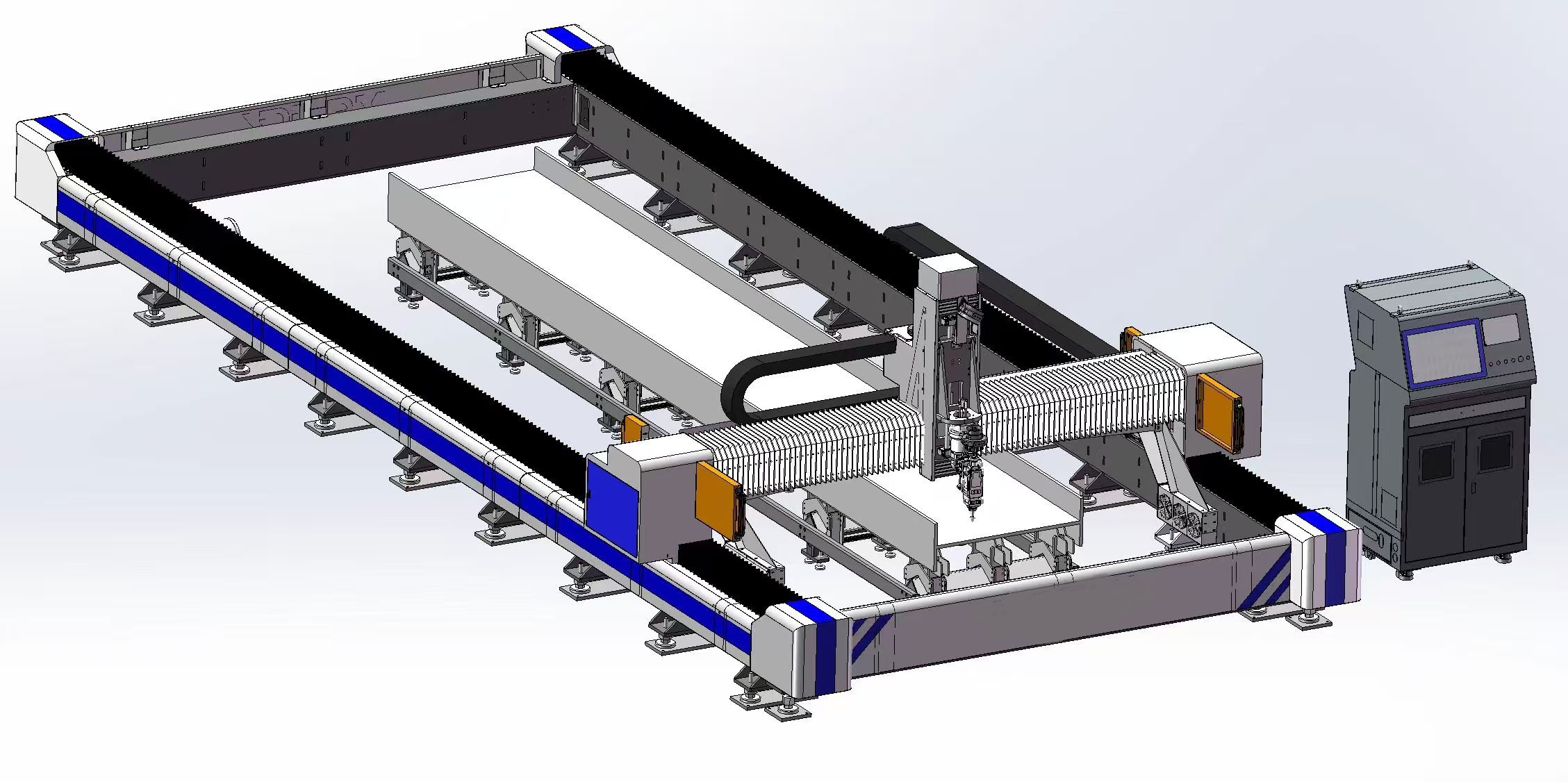
Industrial Application of H-Beam Plasma Cutter
Anti-Reflection Technology and Sensor Integration
The anti-reflection technology deployed in Joinville-based H-beam systems utilizes a multi-stage approach to protect the hardware and ensure cut integrity. The primary mechanism involves advanced sensor arrays located within the torch assembly. These sensors monitor the wavelength and intensity of energy returning from the workpiece in real-time. If the system detects a spike in reflected energy that exceeds pre-defined safety thresholds, the CNC controller modulates the power output within milliseconds to prevent damage.
Furthermore, these systems utilize specialized gas delivery techniques to stabilize the arc. By employing specific secondary gas mixtures—often involving nitrogen or argon-hydrogen blends—the system creates a more focused plasma column. This focus increases the energy density at the point of contact, improving the absorption rate of the copper or aluminum and reducing the percentage of energy available for reflection. The integration of High-Frequency Piercing protocols further assists in this process, allowing the beam to break the surface tension of the reflective metal quickly, establishing a stable keyhole before the reflection can damage the optics or the torch body.
Joinville as a Global Strategic Sourcing Point
Joinville’s emergence as a center for this technology is supported by a robust supply chain and a workforce trained in ISO-compliant manufacturing standards. Global B2B partners look to this region because it combines competitive production costs with high-level technical expertise. The H-beam plasma cutters produced or operated in this region are designed to meet international structural standards, including Eurocode 3 and AISC requirements. This ensures that the H-beams processed—whether they are for large-scale electrical busbars in copper or lightweight structural frames in aluminum—meet the rigorous mechanical tolerances required for global infrastructure projects.
The local engineering firms in Joinville have also focused on the software side of the H-beam cutter. Managing the six-axis or seven-axis movement required to cut around the flanges and webs of an H-beam requires sophisticated nesting and pathing algorithms. When cutting reflective materials, the pathing must also account for heat distribution to prevent warping, a common issue in aluminum due to its high coefficient of thermal expansion.
Operational Efficiency and ROI in Non-Ferrous Cutting
From a B2B perspective, the return on investment for an H-Beam Plasma Cutter equipped with anti-reflection tech is measured through consumable longevity and post-process reduction. Traditional cutters attempting to process copper often see a 50% reduction in nozzle life due to back-heat and reflection. Anti-reflection systems normalize this wear, bringing the cost-per-meter of copper and aluminum cutting closer to that of stainless steel.
Additionally, the precision of these machines eliminates the need for secondary grinding or edge treatment. In structural applications, the “as-cut” quality must be sufficient for immediate welding or bolting. The Joinville systems achieve this by maintaining a narrow heat-affected zone (HAZ), which is particularly difficult in aluminum. By controlling the arc characteristics and utilizing anti-reflection feedback loops, the system ensures that the structural integrity of the H-beam is not compromised by excessive thermal input.
Concluding Industry Insight: The Shift Toward Hybrid Structural Materials
The global industrial sector is witnessing a decisive shift toward hybrid structural designs where traditional steel is augmented by copper for electrical conductivity and aluminum for weight reduction. As this trend accelerates, the capability to process these materials on a single H-beam platform becomes a significant competitive advantage. The advancements currently being integrated into the Joinville manufacturing corridor represent the future of structural fabrication: a future where material reflectivity is no longer a barrier to automated precision.
Industry leaders should recognize that the value of an H-beam plasma system is increasingly defined by its sensor intelligence rather than its raw power. The ability to mitigate back-reflection and manage the thermal properties of non-ferrous metals allows for a level of architectural and industrial flexibility that was previously cost-prohibitive. As Joinville continues to refine these technologies, it solidifies its position as a vital partner in the global supply chain for complex, high-performance structural components. Companies investing in these capabilities are not just buying a cutter; they are investing in the ability to handle the next generation of industrial materials with technical certainty.
Industrial Expertise & Support
Are you looking for high-performance H-Beam Plasma Cutter tailored for the Global market? Our engineering team provides comprehensive solutions for modern manufacturing.





