Industrial Evolution in Guayaquil: The Role of H-Beam Plasma Technology
Guayaquil, Ecuador, serves as a critical maritime and industrial gateway for the South American Pacific coast. As the city’s structural steel fabrication sector expands to meet the demands of infrastructure, shipbuilding, and heavy manufacturing, the integration of advanced automated systems has become a technical necessity. Among these innovations, the H-Beam Plasma Cutter stands out as a primary driver of efficiency. However, the modern industrial landscape in Guayaquil is no longer defined solely by throughput speeds. Stringent Environment, Health, and Safety (EHS) standards now dictate the adoption of technologies that mitigate the inherent risks of thermal cutting processes, specifically the management of metallic dust and toxic fumes.
The transition toward dust-free operation in plasma cutting is not merely a preference but a response to international regulatory pressures and local labor safety requirements. For engineering firms operating in the Guayas province, the implementation of high-precision robotic plasma systems equipped with integrated filtration represents a significant shift from traditional, high-pollution manual methods. This article examines the technical architecture of these systems and how they align with global EHS benchmarks while maintaining high operational uptime.
Technical Architecture of Modern H-Beam Processing
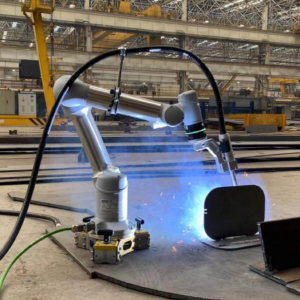
The H-Beam Plasma Cutter utilizes multi-axis CNC Robotic Kinematics to execute complex geometries on structural profiles, including H-beams, I-beams, and channels. Unlike traditional plate cutting, H-beam processing requires the torch to navigate around the flanges and web of the beam, often involving 6-axis or 8-axis movements. This complexity increases the surface area of the thermal reaction, which in turn increases the volume of byproduct generated during the ionization process.
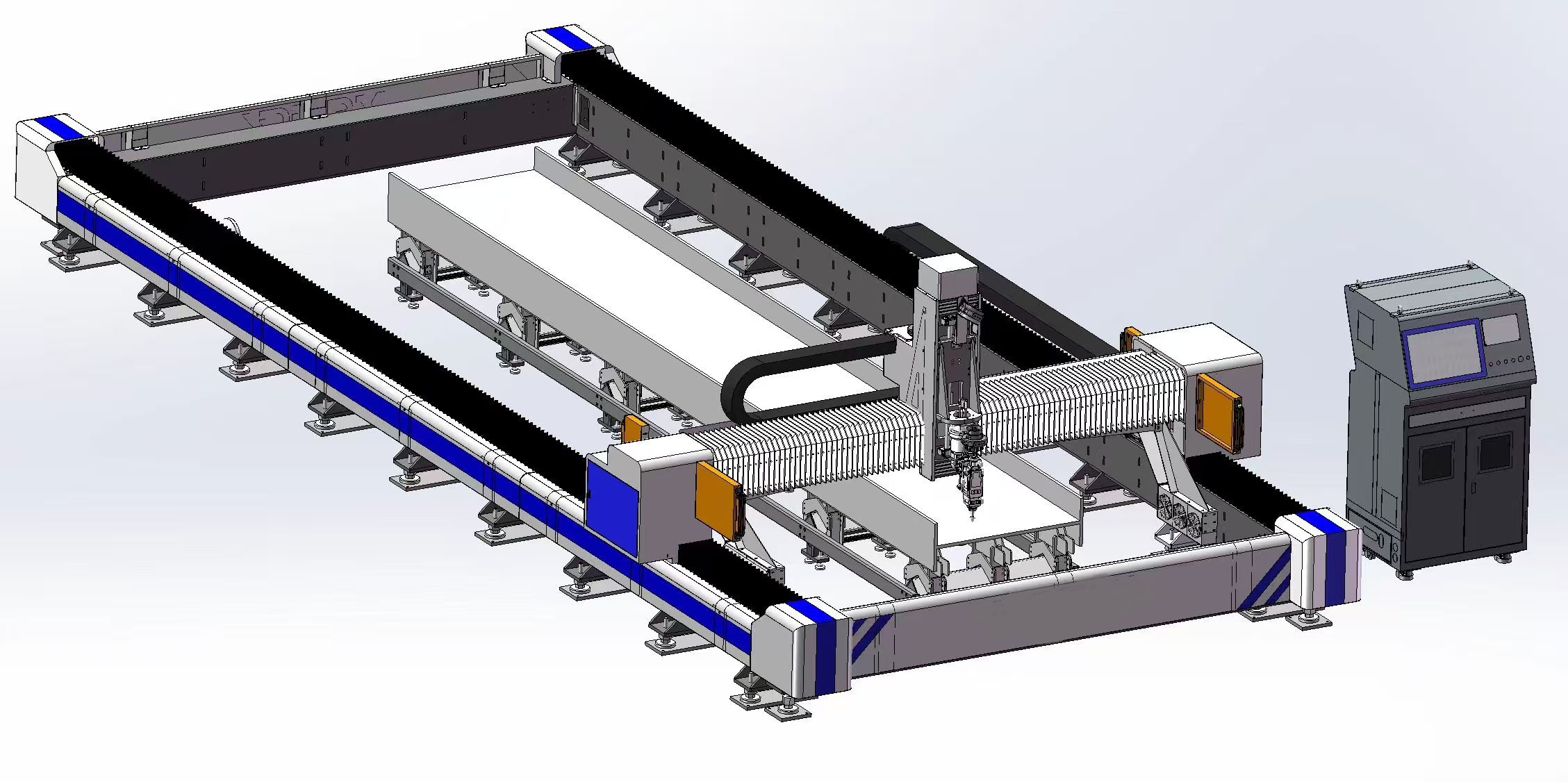
Industrial Application of H-Beam Plasma Cutter
To achieve a dust-free environment, the system must integrate a high-capacity Fume Extraction System directly into the cutting zone. In Guayaquil’s humid tropical climate, the behavior of metallic particulates changes; moisture can cause dust to clump, potentially clogging standard filtration units. Modern machines exported to this region utilize pulse-jet cleaning systems and specialized hydrophobic filter media to ensure that the extraction remains consistent regardless of ambient humidity levels. The synchronization between the plasma arc ignition and the extraction fan speed is controlled via the CNC interface, ensuring that the vacuum pressure is optimized the moment the arc strikes the metal.
Mitigating Particulate Matter and EHS Compliance
Thermal cutting of carbon steel and stainless steel generates significant quantities of Particulate Matter (PM), specifically PM2.5 and PM10. These particles are small enough to penetrate deep into the respiratory system, posing long-term health risks to operators. In the context of Guayaquil’s industrial zones, where facilities are often located near dense urban or logistics hubs, the control of these emissions is critical for maintaining an ISO 14001 or ISO 45001 certification.
The “dust-free” designation in modern H-Beam cutters is achieved through a combination of downdraft tables and localized extraction hoods. As the plasma torch severs the steel, a high-velocity air stream pulls the molten dross and fine dust downward through the machine’s internal ducting. This air is then passed through a series of cartridge filters that capture up to 99.9% of particles larger than 0.5 microns. By containing the waste at the source, the facility avoids the accumulation of combustible dust on overhead surfaces, which is a leading cause of industrial fires and explosions in structural steel shops.
Operational Efficiency and Maintenance in Tropical Environments
Beyond safety, the technical benefit of dust-free operation extends to the longevity of the machinery itself. Metallic dust is conductive and abrasive. In an unmitigated environment, these particles settle on linear guides, rack-and-pinion drives, and electronic components. In Guayaquil, the combination of salt-laden air from the Guayas River and fine metallic dust can accelerate galvanic corrosion and mechanical wear.
By utilizing an enclosed or highly directed extraction system, the H-Beam Plasma Cutter protects its own precision components. This leads to a measurable reduction in Mean Time Between Failures (MTBF). Furthermore, the automated dross collection systems allow for easier waste management. Instead of manual sweeping and shoveling, which re-suspends dust into the breathing zone, the waste is collected in sealed bins that can be removed and emptied with minimal exposure to the workforce. This streamlined approach to maintenance ensures that the high-speed processing capabilities of the plasma system are not offset by excessive cleaning downtime.
Precision Cutting Parameters and Gas Management
The quality of the cut is directly influenced by the stability of the plasma arc, which is in turn affected by the efficiency of the fume extraction. If smoke is allowed to accumulate around the torch head, it can interfere with the optical sensors used for seam tracking and height control. Modern systems in Guayaquil utilize high-definition plasma power sources that modulate gas flow—typically oxygen, nitrogen, or shop air—based on the thickness of the beam’s web or flange.
The dust-free operation ensures that the laser or capacitive sensors remain clear of debris, allowing for tolerances within +/- 0.5mm. This level of precision is vital for the “bolt-up” construction methods favored in modern Ecuadorian infrastructure projects, where on-site welding is minimized in favor of shop-fabricated, bolted connections. The integration of CAD/CAM software allows for the seamless transition from structural models to finished parts, with the extraction system adjusting its parameters dynamically based on the intensity of the cut required for different steel grades.
Industry Insight: The Future of Green Steel Fabrication
The industrial sector in Guayaquil is at a crossroads where economic competitiveness meets environmental stewardship. The adoption of dust-free H-Beam Plasma Cutter technology is symptomatic of a larger trend: the “greening” of heavy industry. As global supply chains increasingly demand transparency regarding the carbon footprint and safety standards of their subcontractors, Ecuadorian fabricators who invest in EHS-compliant automation will find themselves at a distinct advantage.
The industry insight for the coming decade points toward a convergence of IoT (Internet of Things) and environmental monitoring. We anticipate that future plasma systems will not only extract dust but also provide real-time data on air quality and filter efficiency directly to cloud-based EHS management platforms. For Guayaquil, this means a transition from being a traditional manufacturing hub to a sophisticated center for high-tech, clean steel processing. The investment in dust-free technology is no longer an optional “extra” but a core requirement for any firm looking to participate in the globalized economy of structural engineering. Ensuring operator safety through advanced filtration is the most direct path to sustainable profitability in the high-stakes world of structural steel fabrication.
Industrial Expertise & Support
Are you looking for high-performance H-Beam Plasma Cutter tailored for the Global market? Our engineering team provides comprehensive solutions for modern manufacturing.