Precision Structural Fabrication: The Role of H-Beam Plasma Cutting in Guayaquil’s Export Sector
The manufacturing landscape in Guayaquil, Ecuador, has undergone a significant technical transition, specifically within the high-end industrial furniture export sector. As global demand for structural steel furniture—characterized by exposed H-beams, I-beams, and heavy-gauge channels—increases, the requirement for precision machining has become a critical operational threshold. For exporters targeting North American and European markets, the traditional manual oxy-fuel cutting methods are no longer viable due to the high secondary processing costs associated with thermal distortion and slag removal. The implementation of the H-Beam Plasma Cutter has emerged as the standard for achieving the dimensional tolerances and surface finish required for international furniture distribution.
Technical Specifications of Plasma Arc Cutting for Structural Steel
The core of burr-free production lies in the stabilization of the plasma arc and the precision of the CNC interface. In Guayaquil’s specialized fabrication facilities, high-definition plasma systems utilize a constricted ionized gas stream to melt and blow away molten metal with high kinetic energy. Unlike standard plasma units, the systems used for furniture-grade H-beams employ a dual-gas strategy—typically utilizing oxygen as the plasma gas and air or nitrogen as the shield gas. This configuration optimizes the energy density of the arc, resulting in a narrower kerf width and a significantly reduced Heat-Affected Zone (HAZ).
For furniture exporters, the HAZ is a critical metric. Excessive heat input alters the metallurgical properties of the steel, leading to localized hardening that can complicate subsequent drilling or tapping processes. By maintaining a high travel speed and precise voltage control, the H-Beam Plasma Cutter ensures that the structural integrity of the S235 or S355 grade steel remains intact, while providing a surface roughness (Ra) that often requires no further grinding before powder coating or galvanization.
Eliminating Secondary Operations through Dross-Free Cutting
In the context of B2B manufacturing, “burrs” or dross represent a failure in process optimization. Dross is the re-solidified oxidized metal that adheres to the bottom edge of the cut. For furniture components where aesthetics are as vital as structural load-bearing capacity, dross removal is a labor-intensive process that increases the cost per unit. Technical advancements in CNC Motion Control allow Guayaquil-based operators to synchronize torch height control (THC) with real-time feedback loops. This synchronization ensures that the standoff distance between the nozzle and the beam flange remains constant, even if the beam exhibits slight mill-induced warping.
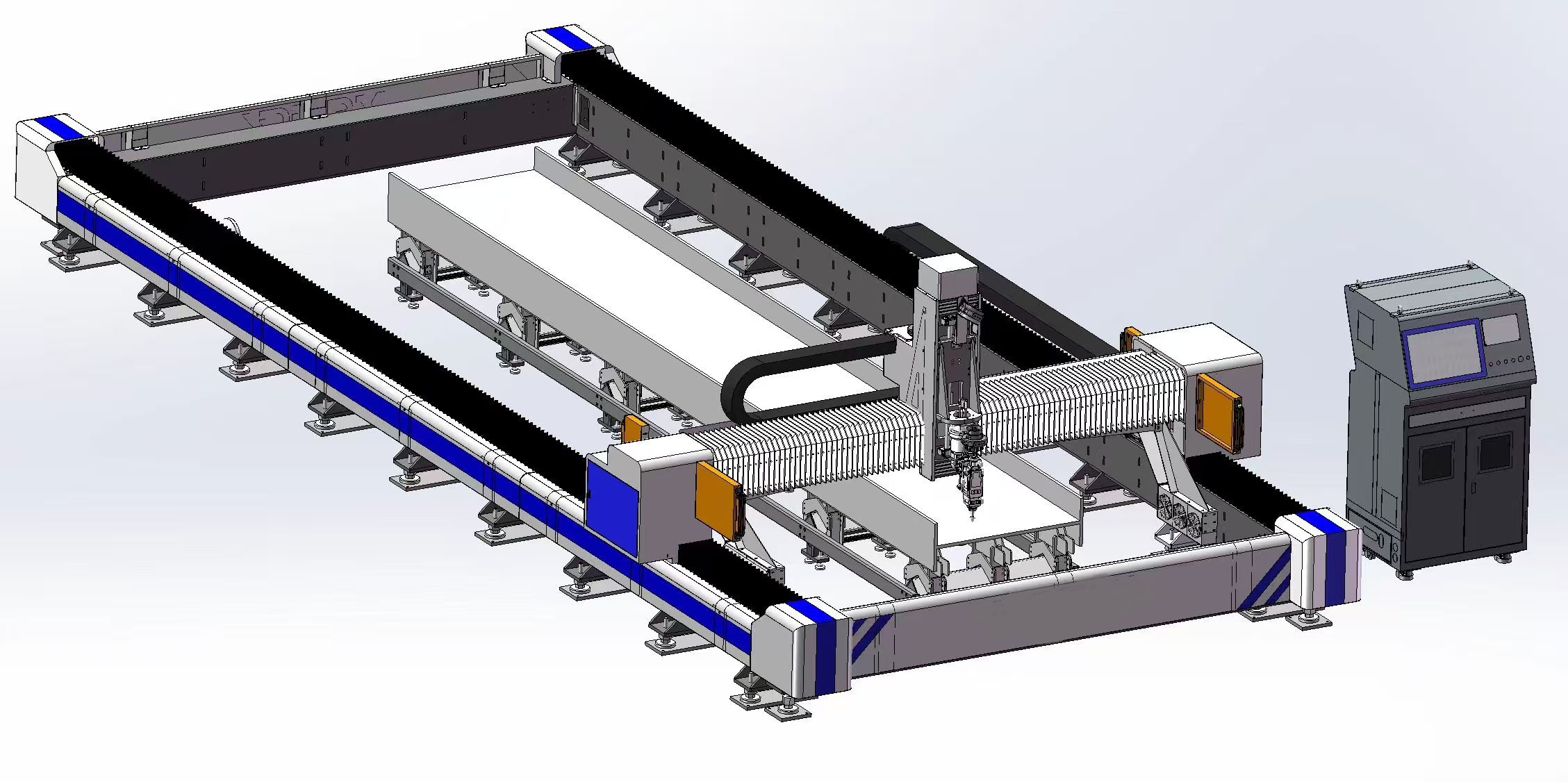
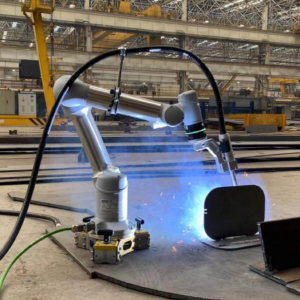
Industrial Application of H-Beam Plasma Cutter
By achieving Dross-free cutting, manufacturers can move components directly from the cutting bed to the assembly or welding station. This leap in efficiency is particularly relevant for Guayaquil’s exporters who must compete on lead times. The elimination of manual de-burring reduces the production cycle by approximately 15 to 20 percent, allowing for higher throughput without an increase in floor-space requirements or labor overhead.
Multi-Axis Capability and Complex Geometries
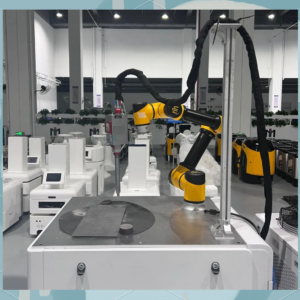
Modern furniture design often requires complex intersections, such as miter cuts, cope cuts, and bolt-hole patterns across the web and flanges of the H-beam. Traditional 2D plasma tables are insufficient for these tasks. The 6-axis robotic H-Beam Plasma Cutter systems currently integrated into the Guayaquil industrial corridor allow for the processing of all four sides of a beam in a single pass. This multi-axis capability ensures that the geometric relationship between a hole on the flange and a notch on the web is maintained within a tolerance of plus or minus 0.5mm.
This level of precision is mandatory for furniture that is shipped as “Ready-to-Assemble” (RTA) for global retailers. When components are exported from Ecuador to international markets, there is zero margin for error in hole alignment. The use of automated plasma systems guarantees that the end-user can assemble heavy-duty shelving or architectural desks without the need for field modifications, which is a key selling point for Guayaquil’s manufacturing hubs.
Logistical Advantages of Guayaquil as a Fabrication Hub
The choice of Guayaquil as a center for high-precision H-beam processing is strategically grounded in logistics. As Ecuador’s primary port city, it provides immediate access to the Pacific trade routes. Furniture exporters benefit from reduced inland transit costs for raw steel imports and finished product exports. Furthermore, the local industrial sector has invested heavily in technical training, ensuring that the technicians operating these sophisticated CNC plasma systems are proficient in CAD/CAM integration.
The integration of software like Tekla or specialized nesting programs allows Guayaquil exporters to minimize material waste. In the furniture industry, where margins are often dictated by material utilization rates, the ability to nest complex parts within a single H-beam length using automated software is a significant competitive advantage. The plasma cutter’s ability to execute these nests with high repeatability ensures consistent quality across large-scale production runs.
Industry Insight: The Shift Toward Automated Quality Assurance
The transition toward high-definition plasma cutting in the Guayaquil furniture sector reflects a broader global trend: the move from “manual correction” to “automated prevention.” In the past, quality was checked at the end of the line, with burrs and inaccuracies being fixed post-facto. Today, the quality is engineered into the process through the H-Beam Plasma Cutter. For global furniture exporters, the value proposition is no longer just about the lower cost of labor in South America; it is about the intersection of cost-efficiency and technical precision.
As international standards for structural furniture become more stringent, particularly regarding load capacities and finish durability, the reliance on advanced thermal cutting technology will only intensify. Guayaquil is positioning itself not merely as a regional supplier, but as a high-tech manufacturing node capable of meeting the rigorous de-burring and tolerance specifications of the global B2B market. The focus on burr-free quality is a strategic move to de-commoditize Ecuadorian steel exports and move up the value chain into high-specification architectural and industrial furniture components.
Industrial Expertise & Support
Are you looking for high-performance H-Beam Plasma Cutter tailored for the Global market? Our engineering team provides comprehensive solutions for modern manufacturing.