Precision Structural Fabrication: The Role of H-Beam Plasma Cutting in Curitiba’s Industrial Sector
The industrial landscape of Curitiba, Brazil, has emerged as a critical hub for agricultural machinery manufacturing, serving both the domestic Mercosur market and global exports. As the demand for high-capacity harvesters, tractors, and irrigation systems increases, the structural integrity of the frames supporting these machines becomes a primary engineering concern. The transition from traditional mechanical sawing and drilling to advanced thermal processing has highlighted the importance of the H-Beam Plasma Cutter in maintaining the mechanical properties of structural steel. This article examines the technical integration of small Heat Affected Zone (HAZ) technology and its direct correlation to the operational longevity of agricultural equipment produced in the Parana region.
The Metallurgy of Structural Integrity in Agricultural Machinery
Agricultural machinery operates under extreme cyclic loading conditions, often in corrosive environments. The chassis and support structures typically utilize H-beams (or I-beams) due to their high moment of inertia and resistance to bending. However, the method by which these beams are cut and profiled significantly impacts their fatigue life. Traditional plasma cutting systems often generated excessive heat, leading to a wide Heat Affected Zone (HAZ). This zone represents an area of the base metal that has not been melted but has had its microstructure and mechanical properties altered by the intense heat of the cutting process.
In high-carbon or alloy steels commonly used in heavy machinery, a large HAZ can lead to the formation of martensite, a brittle phase of steel that is highly susceptible to cracking under stress. By utilizing high-definition plasma systems in Curitiba’s fabrication facilities, engineers can constrain the plasma arc, resulting in a narrower kerf and a significantly reduced thermal footprint. This preservation of the original grain structure ensures that the H-beam retains its specified tensile strength and ductility, which are vital for components subjected to the unpredictable terrain of large-scale farming operations.
Technical Advantages of Small HAZ Plasma Technology
The technical superiority of modern H-Beam Plasma Cutter systems lies in their ability to balance cutting speed with thermal precision. High-definition plasma technology employs a secondary gas shield or water-shrouding technique to constrict the plasma arc. This constriction increases the energy density of the arc, allowing for faster travel speeds. According to thermodynamic principles, increasing the speed of the heat source relative to the workpiece reduces the total heat input per unit length (Q = V I / v), where Q is heat input, V is voltage, I is current, and v is travel speed.
A reduction in total heat input directly correlates to a smaller HAZ. For Curitiba-based manufacturers, this provides several downstream benefits:
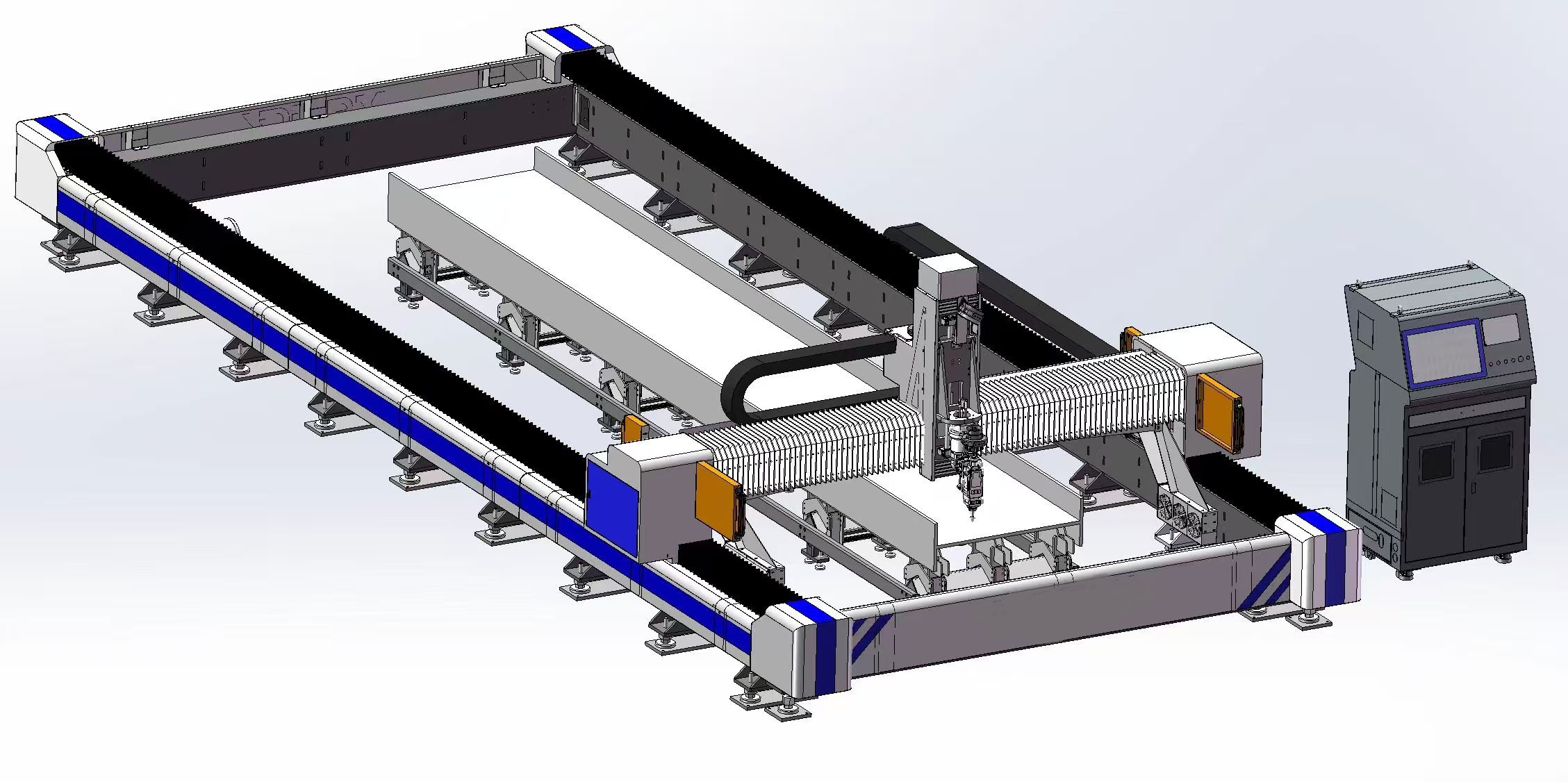
Industrial Application of H-Beam Plasma Cutter
1. Minimal Geometric Distortion
Thermal expansion and subsequent contraction during the cutting process can cause longitudinal camber or twisting in H-beams. Small HAZ technology ensures that the temperature gradient across the beam remains steep, preventing the macroscopic warping that often plagues lower-quality thermal cutting methods. This eliminates the need for secondary straightening processes, reducing production costs and lead times.
2. Enhanced Weldability
The edges produced by a precision plasma cutter require less grinding and preparation before welding. A clean, narrow HAZ ensures that the subsequent weld pool fuses with a base metal that has not been pre-hardened or embrittled. This results in a more homogenous transition between the weld metal and the structural beam, reducing the likelihood of hydrogen-induced cracking in the toe of the weld.
3. Optimized Dross Formation and Edge Squareness
Advanced plasma systems in the Parana region utilize sophisticated CNC algorithms to adjust gas flow and torch height dynamically. This precision minimizes Dross Formation—the solidified oxidized metal that clings to the bottom of the cut. For agricultural machinery, where bolt-hole precision and interlocking joints are critical, achieving an edge angularity within ISO 9013 Range 3 or 4 is essential for assembly accuracy.
Automation and 3D Profiling in Curitiba’s Fabrication Plants
The integration of robotic 5-axis or 6-axis heads onto H-beam processing lines has transformed the Curitiba manufacturing sector. Unlike standard plate cutting, H-beams require 3D profiling to accommodate cope cuts, miter cuts, and bolt hole penetrations across multiple planes. The H-Beam Plasma Cutter systems currently deployed are capable of processing all four sides of a beam in a single pass, utilizing laser sensors to compensate for mill tolerances and beam deviations.
This level of automation is critical for the “Agri-Machinery Longevity” mentioned in the industry requirements. When bolt holes are cut with high-definition plasma, the interior surface of the hole exhibits minimal hardening. This allows for better bolt-tension retention over the lifespan of the machine. In contrast, holes cut with older plasma tech often have a hardened “skin” that can lead to stress risers and eventual bolt loosening or frame failure during high-vibration field work.
Economic Impact on the Global Supply Chain
Curitiba’s adoption of small HAZ technology positions it as a competitive exporter in the global B2B market. By reducing the reliance on secondary machining and manual labor, local manufacturers can offer high-precision structural components at a lower price point than North American or European counterparts, without compromising on metallurgical quality. The longevity of the machinery becomes a selling point, as equipment downtime in the agricultural sector can result in significant financial losses during harvest windows. By ensuring the structural backbone of the machinery—the H-beam—is processed using Structural Integrity-focused plasma technology, Curitiba manufacturers provide a product that withstands the rigors of heavy-duty use for decades.
Concluding Industry Insight: The Shift Toward Digital Metallurgy
As we look toward the future of heavy machinery fabrication, the industry is moving beyond simple mechanical cutting toward what can be termed “digital metallurgy.” The use of an H-Beam Plasma Cutter is no longer just about separating metal; it is about managing the thermal history of the component. In Curitiba, the integration of real-time monitoring and AI-driven gas control suggests a trend where the machine automatically adjusts parameters based on the specific batch chemistry of the steel being processed.
The industry insight for global stakeholders is clear: the focus of structural fabrication is shifting from “speed at any cost” to “precision for longevity.” As agricultural equipment becomes larger and more complex, the margin for error in structural components narrows. Manufacturers who prioritize small HAZ technology will lead the market in reliability. Curitiba’s investment in this specialized infrastructure demonstrates a sophisticated understanding of the relationship between thermal processing and long-term mechanical performance, setting a benchmark for the next generation of global agricultural engineering.
Industrial Expertise & Support
Are you looking for high-performance H-Beam Plasma Cutter tailored for the Global market? Our engineering team provides comprehensive solutions for modern manufacturing.





