Introduction: The Industrial Landscape of Curitiba and the Necessity for Remote Integration
Curitiba, the capital of Paraná, serves as one of Brazil’s most critical industrial epicenters, particularly within the automotive and structural steel sectors. As the region expands its infrastructure through the construction of industrial warehouses, bridges, and high-rise commercial structures, the demand for precision structural steel fabrication has accelerated. Central to this production capacity is the H-Beam Plasma Cutter, a multi-axis robotic system designed to automate the profiling of heavy steel sections.
However, the geographic scale of Brazil presents a unique logistical challenge. Steel fabrication facilities are often located hundreds of kilometers away from technical service hubs. For a facility in Curitiba to maintain peak operational efficiency, the traditional model of on-site technician dispatch is increasingly viewed as an obsolete bottleneck. The integration of remote cloud diagnostics into plasma cutting systems has transformed how these machines are maintained and optimized across vast distances, ensuring that downtime is minimized through real-time data transmission and off-site troubleshooting.
Technical Architecture of the H-Beam Plasma Cutter
The modern H-Beam Plasma Cutter utilized in Curitiba’s fabrication plants is not merely a cutting tool but a sophisticated robotic cell. These systems typically utilize a 6-axis or 8-axis robotic arm capable of maneuvering around the stationary workpiece. This allows for complex cuts, including bolt holes, copes, miter cuts, and weld preparations (bevels) on all four sides of an H-beam or I-beam without the need for manual repositioning.
The precision of these cuts is governed by high-definition plasma power sources. These units utilize a constricted arc to achieve high energy density, resulting in a narrow kerf and minimal heat-affected zones (HAZ). The integration of advanced CNC (Computer Numerical Control) software allows for the direct import of Tekla or AutoCAD files, converting 3D models into precise G-code instructions. In the context of Curitiba’s heavy industry, these machines must handle beam lengths exceeding 12 meters and weights of several tons, necessitating robust material handling systems and high-torque servo motors.
Implementing Remote Cloud Diagnostics for Geographic Resilience
The vastness of the Brazilian interior requires a shift toward the Industrial Internet of Things (IIoT). Remote cloud diagnostics involve the continuous collection of telemetry data from the machine’s sensors and the Programmable Logic Controller (PLC). This data is transmitted via secure VPN tunnels to cloud-based servers where it can be analyzed by engineers located in Curitiba, or even at the manufacturer’s headquarters in Europe, North America, or Asia.
Key parameters monitored include:
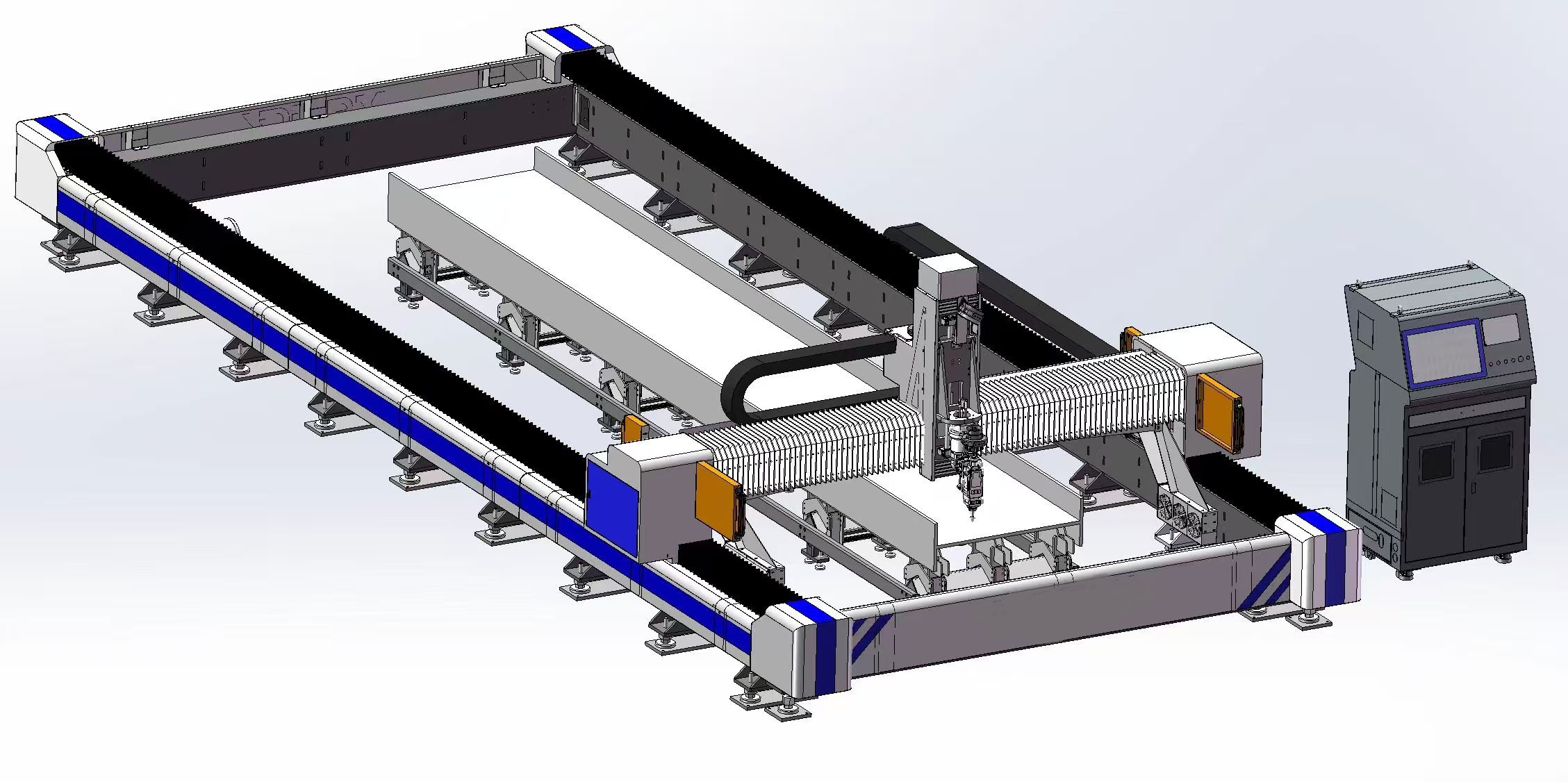
Industrial Application of H-Beam Plasma Cutter
- Gas pressure and flow rates: Ensuring optimal plasma and shield gas ratios for clean cuts.
- Voltage and current fluctuations: Detecting anomalies in the power supply that could lead to premature consumable wear.
- Servo motor temperature and torque: Identifying mechanical resistance or lubrication failures before a breakdown occurs.
- Consumable life tracking: Using algorithms to predict when electrodes and nozzles require replacement based on arc-on time and piercing cycles.
For a steel fabricator in Curitiba, this means that if an error code appears on the operator’s console, a remote specialist can log into the system, view the real-time status of every sensor, and often resolve software-related issues or recalibrate the motion controller without ever stepping foot on the factory floor.
Operational Efficiency and Downtime Mitigation
In high-output environments, the cost of downtime is measured in thousands of dollars per hour. The implementation of remote diagnostics facilitates a transition from reactive maintenance to Predictive Maintenance. By analyzing historical data trends stored in the cloud, the system can identify patterns that precede a component failure. For instance, a subtle increase in the vibration frequency of the robotic arm’s third axis might indicate a bearing reaching the end of its service life.
In the Curitiba industrial corridor, where logistics can be hampered by transit times, having the ability to ship a specific spare part before the machine actually fails is a significant competitive advantage. Furthermore, remote diagnostics allow for “over-the-air” software updates. These updates can optimize cutting paths or introduce new nesting algorithms that reduce material waste, directly impacting the bottom line of the fabrication facility.
Cybersecurity and Data Integrity in Remote Monitoring
A critical concern for B2B stakeholders in Brazil is the security of the data being transmitted to the cloud. Modern H-beam plasma systems employ end-to-end encryption to protect proprietary design files and operational metadata. Access to the machine’s control system is typically gated through multi-factor authentication (MFA) and restricted to specific IP addresses. This ensures that while the machine is “connected,” it remains insulated from external cyber threats. The data harvested is also used to generate comprehensive reports for plant managers, providing insights into machine utilization rates, energy consumption per ton of steel processed, and overall equipment effectiveness (OEE).
Conclusion: Industry Insight into the Future of Global Fabrication
The integration of the H-Beam Plasma Cutter with remote cloud diagnostics in Curitiba represents a broader shift in the global manufacturing paradigm. We are moving away from a product-centric model toward a service-oriented architecture. For manufacturers of heavy machinery, the “product” is no longer just the hardware; it is the guaranteed uptime and the precision of the output.
In regions like Brazil, where the distance between the expertise and the equipment can be vast, cloud connectivity is the bridge that levels the playing field. The data gathered from these machines in Curitiba contributes to a global database that helps manufacturers refine their designs, leading to more resilient hardware in the future. As 5G connectivity becomes more prevalent in industrial zones across South America, we can expect the latency of these diagnostic systems to drop even further, allowing for near-instantaneous remote intervention and the potential for fully autonomous, remote-monitored fabrication facilities. For the global steel industry, the lesson is clear: connectivity is as essential as the plasma arc itself in maintaining structural integrity and economic viability.
Industrial Expertise & Support
Are you looking for high-performance H-Beam Plasma Cutter tailored for the Global market? Our engineering team provides comprehensive solutions for modern manufacturing.





