Strategic Integration of H-Beam Plasma Technology in Curitiba’s Mining Supply Chain
The global mining industry operates under extreme mechanical stress, where equipment downtime is measured in thousands of dollars per hour. In the industrial corridor of Curitiba, Brazil, a significant shift in maintenance, repair, and operations (MRO) strategy has emerged. By leveraging advanced H-Beam Plasma Cutter technology, local manufacturers are transforming the speed and precision with which wear-resistant components are produced for international mining operations. This integration represents a move away from traditional mechanical cutting toward high-speed, multi-axis thermal processing capable of handling the most demanding metallurgical requirements.
Curitiba has established itself as a logistical and technical epicenter in South America, benefiting from a robust infrastructure and a highly skilled engineering workforce. The application of plasma technology within this hub is not merely about structural steel fabrication; it is about the rapid customization of wear-plates and structural reinforcements that protect heavy machinery from abrasion, impact, and erosion. The ability to process complex geometries in heavy-gauge materials ensures that mining sites in the Andes, the Amazon, and across the globe receive components that adhere to strict tolerances.
Technical Specifications of Multi-Axis Plasma Processing
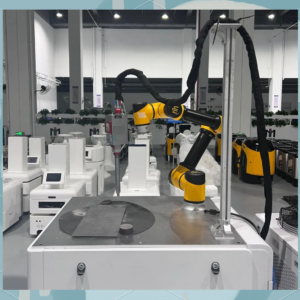
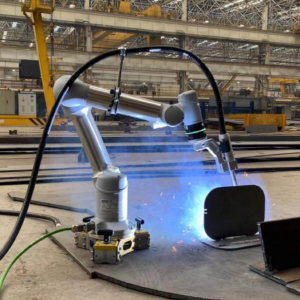
The core of this manufacturing advancement lies in the sophisticated kinematics of the H-Beam Plasma Cutter. Unlike standard 2D plasma tables, these systems utilize 5-axis robotic kinematics to navigate the complex profiles of structural steel and heavy plate. When applied to wear-plate customization, this allows for the creation of compound bevels and countersunk holes in a single pass. This eliminate the need for secondary machining processes, which is critical when dealing with materials that possess high Brinell hardness ratings.
In the context of mining, wear-plates are often composed of quenched and tempered steels or Chromium Carbide Overlay (CCO). These materials are notoriously difficult to process using traditional mechanical means such as drilling or milling due to their extreme surface hardness. Plasma cutting, which relies on an ionized gas stream reaching temperatures upwards of 20,000 degrees Celsius, bypasses mechanical resistance. The CNC systems in Curitiba-based facilities utilize advanced kerf compensation algorithms to ensure that the dimensional accuracy of the cut remains consistent, even as the torch angle changes to accommodate complex fitment requirements for chutes, hoppers, and crusher liners.
Optimizing the Heat-Affected Zone (HAZ) in High-Hardness Steels
A primary technical concern when using thermal cutting on specialized mining steels is the Heat-Affected Zone (HAZ). Excessive heat input can alter the microstructure of the steel, leading to localized softening or increased brittleness, both of which compromise the wear life of the component. The high-definition plasma systems employed in Curitiba utilize narrow-arc technology and optimized gas mixtures—often incorporating oxygen or nitrogen-hydrogen blends—to constrict the plasma arc.
By increasing the energy density of the arc and maintaining high travel speeds, the H-Beam Plasma Cutter minimizes the duration of thermal exposure to the surrounding metal. This precision ensures that the metallurgical properties of the wear-plate are preserved as close to the cut edge as possible. For mining operators, this translates to a component that maintains its design hardness across its entire surface area, maximizing the interval between replacements and reducing the total cost of ownership for heavy equipment.
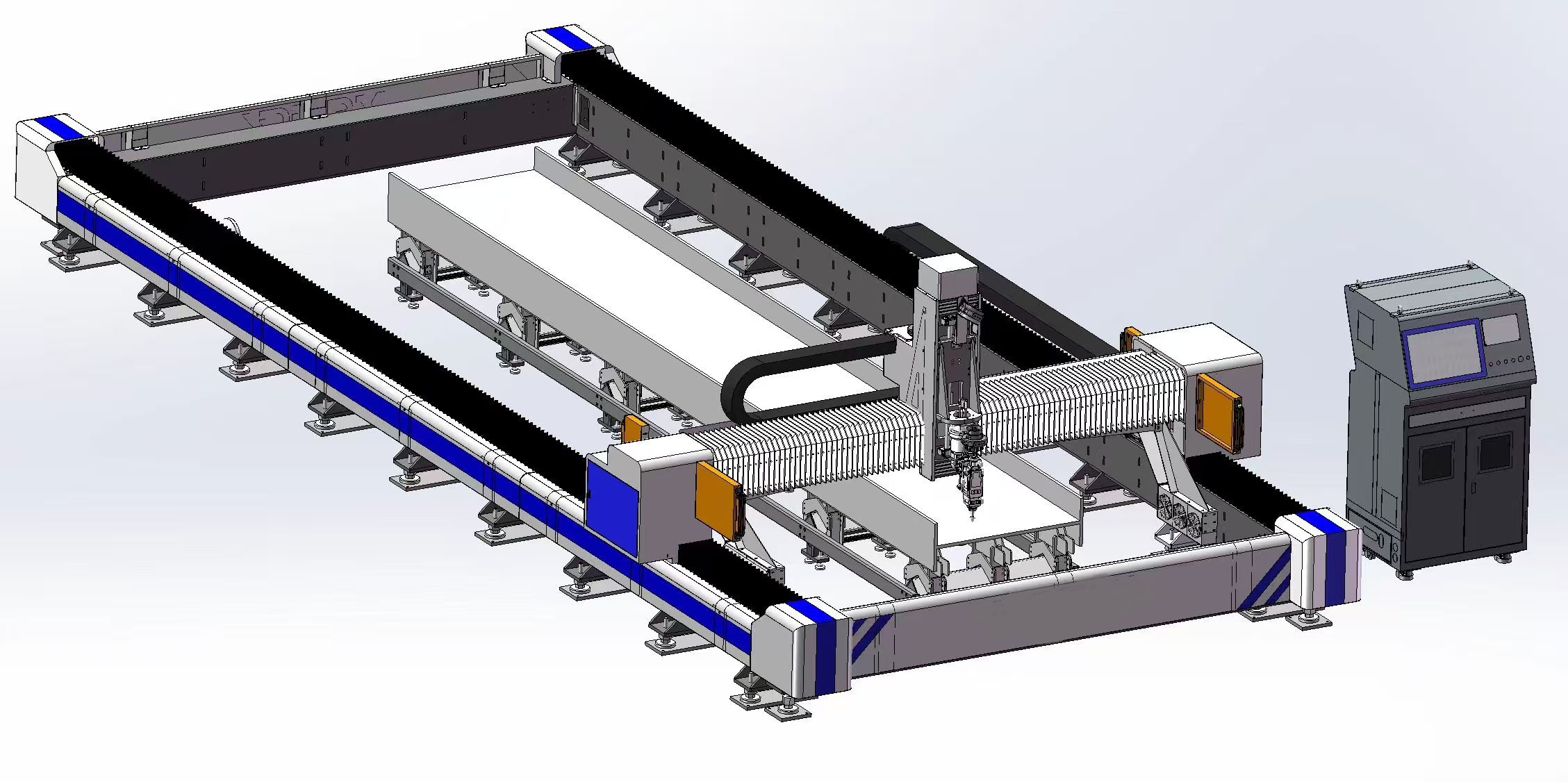
Industrial Application of H-Beam Plasma Cutter
Rapid Customization for Mining Infrastructure
Mining environments are rarely standardized. Variations in ore density, moisture content, and chemical composition require bespoke geometry for liners and structural supports. The flexibility of the H-Beam Plasma Cutter allows Curitiba’s engineering firms to transition from CAD designs to finished products with minimal lead time. The software integration allows for the direct import of 3D models, which the system then translates into complex toolpaths for coping, slotting, and multi-surface bevelling.
This rapid customization is particularly vital for the repair of large-scale structural members, such as the H-beams used in underground mine shoring or the frameworks of massive draglines. When a structural failure occurs, the ability to precision-cut replacement beams with pre-indexed bolt holes and weld preparations is a significant competitive advantage. The Curitiba hub utilizes these capabilities to serve as a high-speed response center for global mining giants, providing components that are “install-ready” upon arrival at the site.
Logistical Advantages and Global Export Standards
The selection of Curitiba as a base for these technical operations is strategic. As a Tier 1 industrial city, it offers direct access to major Atlantic ports and an integrated rail network. This allows for the efficient export of heavy, oversized wear components to mining operations in Africa, Australia, and North America. Furthermore, the local manufacturing sector adheres to ISO and ASTM standards, ensuring that the plasma-cut components meet the rigorous safety and quality benchmarks required by the global extractive industry.
The synergy between high-precision plasma technology and the logistical prowess of the region creates a streamlined supply chain. Mining companies no longer need to maintain massive inventories of wear-plates; instead, they can rely on “just-in-time” delivery of customized parts fabricated to the exact specifications of their current operational needs. This agility is supported by the nesting capabilities of the plasma software, which optimizes material utilization, reducing waste in high-cost alloys and further lowering the unit cost of each component.
Conclusion and Industry Insight
The evolution of the H-Beam Plasma Cutter from a structural steel tool to a critical asset in mining maintenance highlights a broader trend in industrial manufacturing: the convergence of specialized machinery and regional expertise. Curitiba’s emergence as a center for rapid wear-plate customization demonstrates that the value in the B2B supply chain is increasingly found in the ability to combine high-speed thermal processing with sophisticated digital workflows.
As the mining industry moves toward deeper deposits and more abrasive environments, the demand for high-performance materials will only intensify. The industry insight here is that the bottleneck in mining productivity is no longer the availability of raw materials, but the speed of precision fabrication. Facilities that can minimize the Heat-Affected Zone (HAZ) while maintaining 5-axis flexibility will become the primary nodes in the global MRO network. For global mining stakeholders, investing in partnerships with hubs that utilize advanced robotic plasma technology is not just an operational choice; it is a strategic necessity to ensure the resilience and efficiency of their heavy machinery in an increasingly demanding global market.
Industrial Expertise & Support
Are you looking for high-performance H-Beam Plasma Cutter tailored for the Global market? Our engineering team provides comprehensive solutions for modern manufacturing.