Introduction: The Intersection of Precision Engineering and Subtropical Climates
In the industrial corridors of Curitiba, Brazil, structural steel fabrication faces a persistent environmental adversary: high relative humidity. As a primary hub for automotive and heavy machinery manufacturing in the Southern Cone, Curitiba’s Cfb climate—characterized by consistent rainfall and humidity levels frequently exceeding 80%—presents specific challenges for high-precision CNC equipment. For global enterprises deploying an H-Beam Plasma Cutter in this region, standard industrial specifications are often insufficient. The transition from cold nights to humid days creates a dew point threshold that triggers internal condensation, threatening sensitive electronics and pneumatic systems. This article examines the technical requirements for IP54+ climate adaptation in robotic plasma profiling and the engineering necessary to maintain operational uptime in high-humidity zones.
The Impact of Humidity on Plasma Arc Stability and Electronics
High humidity is more than an environmental nuance; it is a variable that directly affects the physics of plasma cutting. In Curitiba, the moisture content in the ambient air can infiltrate the compressed air supply used for plasma gas. If the air filtration system is not specifically rated for high-volume moisture removal, water vapor enters the plasma torch head. This leads to arc instability, increased nozzle wear, and a degradation of the kerf quality. Furthermore, moisture in the air supply causes “double arcing,” a phenomenon where the arc strikes the nozzle instead of the workpiece, leading to premature consumable failure.
Beyond the torch, the electrical cabinets of a standard H-Beam Plasma Cutter are susceptible to Galvanic Corrosion. When moisture settles on copper traces or connector pins, electrolytic reactions occur, leading to micro-shorts and signal degradation in the CNC controller. In a 5-axis or 6-axis robotic system, even a minor variance in voltage due to resistance-build-up can result in positioning errors, compromising the tight tolerances required for structural steel assembly.
Engineering IP54+ Protection for Curitiba’s Industrial Landscape
To mitigate the risks associated with the Paraná climate, the integration of Ingress Protection (IP) ratings of IP54 or higher is mandatory. An IP54 rating signifies that the equipment is protected against dust ingress that could interfere with operation and is shielded against water splashes from any direction. However, in the context of Curitiba, “IP54+” implies additional climate control measures within the machine’s architecture.
Sealed Electrical Enclosures and Heat Exchangers
Standard ventilated cabinets are unsuitable for high-humidity zones because they draw in moist air to cool internal components. IP54+ adaptation utilizes closed-loop cooling systems. These systems employ air-to-air or air-to-water heat exchangers that keep the internal cabinet air separate from the ambient environment. By maintaining a constant internal temperature and preventing the intake of humid air, the risk of condensation is virtually eliminated. For extreme humidity peaks, internal thermo-electric dehumidifiers are integrated to maintain the relative humidity inside the cabinet below 50%.
Advanced Pneumatic Filtration and Drying
The pneumatic circuit of a plasma cutter in Curitiba requires a multi-stage approach. A standard refrigerated dryer is the baseline, but for IP54+ adaptation, high-efficiency coalescing filters and desiccant dryers are added to the sequence. These components ensure that the air reaching the H-Beam Plasma Cutter has a pressure dew point of -40°C. This level of dryness is critical for maintaining the dielectric strength of the plasma gas and protecting the solenoid valves within the gas console from internal oxidation.
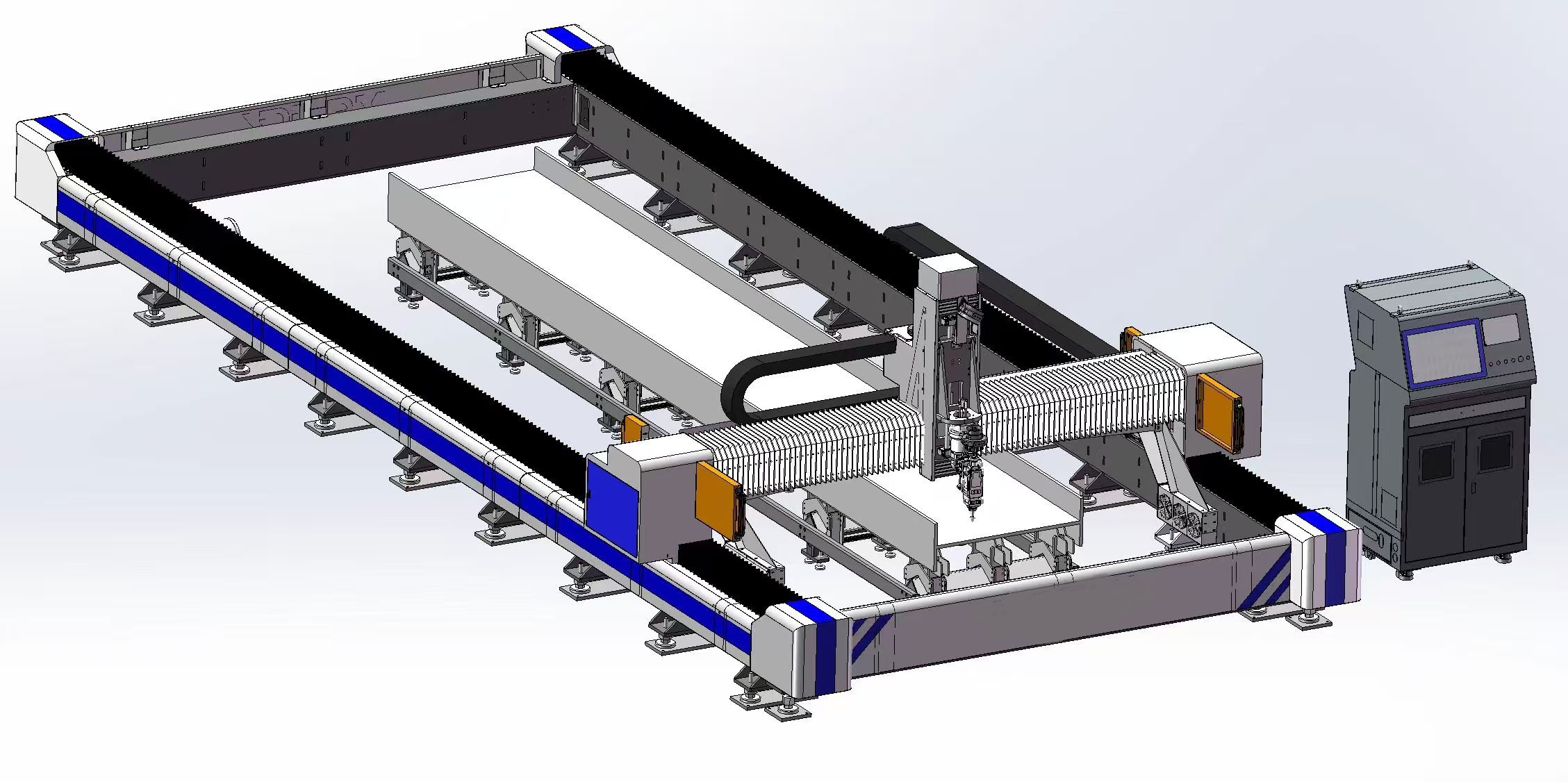
Industrial Application of H-Beam Plasma Cutter
Mechanical Adaptations for Structural Steel Profiling
The physical structure of the H-beam cutter also requires adaptation to prevent surface oxidation and mechanical binding. In Curitiba’s environment, exposed linear rails and ball screws are prone to “flash rust” if not properly shielded. IP54+ systems often utilize bellows or telescopic covers for all motion axes. Furthermore, the use of automated lubrication systems ensures that a consistent film of anti-corrosive grease is applied to moving parts, displacing moisture and preventing Thermal Cycling fatigue on the mechanical interfaces.
Robotic Arm Sealing and Cable Management
In CNC Robotic Profiling, the robotic arm is the most exposed component. Adaptation involves the use of specialized “jackets” or pressurized arm cavities. By maintaining a slight positive pressure inside the robotic arm, the system prevents the ingress of humid air and metallic dust generated during the cutting process. Cable tracks (catenaries) are also upgraded to high-flex, moisture-resistant polymers to prevent the insulation from becoming brittle or porous over time.
Operational Efficiency and ROI in High-Humidity Zones
The capital expenditure for an IP54+ adapted machine is higher than a standard model, but the Return on Investment (ROI) is realized through reduced downtime and lower consumable costs. In a high-volume facility in Curitiba, a machine without climate adaptation may experience a 15-20% higher failure rate in electronic components over a five-year period. Furthermore, the precision of an adapted H-Beam Plasma Cutter remains consistent, ensuring that the bolt holes, copes, and notches in structural steel meet the rigorous standards of the Brazilian NBR 8800 or international AISC specifications.
Data from local fabrication shops indicates that machines equipped with advanced moisture management systems maintain a 98% operational availability rate, compared to 85% for non-adapted units. This difference is critical for meeting the “Just-In-Time” delivery requirements of the construction and infrastructure sectors in Southern Brazil.
Concluding Industry Insight: The Future of Climate-Resilient Manufacturing
As global manufacturing shifts toward more localized production hubs, the ability to adapt high-tech machinery to specific regional climates becomes a competitive necessity. The case of Curitiba highlights a broader industry trend: the move away from “one-size-fits-all” industrial equipment toward climate-resilient engineering. For the structural steel industry, the integration of IP54+ standards and advanced thermal management is no longer an optional upgrade but a foundational requirement for digital manufacturing.
Looking forward, we expect to see the integration of IoT-based environmental sensors that allow an H-Beam Plasma Cutter to dynamically adjust its internal cooling and gas flow parameters based on real-time ambient humidity data. This level of “environmental intelligence” will further bridge the gap between machine precision and atmospheric volatility, ensuring that whether a machine is located in the dry plains of the Atacama or the humid valleys of Curitiba, the output remains uniform, precise, and cost-effective. The future of B2B heavy machinery lies in this synthesis of robust mechanical design and intelligent environmental adaptation.
Industrial Expertise & Support
Are you looking for high-performance H-Beam Plasma Cutter tailored for the Global market? Our engineering team provides comprehensive solutions for modern manufacturing.





