Introduction to Automated Structural Profiling in Córdoba
Córdoba, Argentina, has established itself as a significant industrial corridor, leveraging a deep-rooted history in automotive and aerospace engineering to pivot toward advanced structural steel fabrication. As global demand for infrastructure increases, the integration of the H-Beam Plasma Cutter into local manufacturing workflows has become a necessity for maintaining international competitiveness. These systems are not merely cutting tools but complex robotic cells capable of executing multi-axis maneuvers to process H-beams, I-beams, channels, and hollow structural sections (HSS). However, the technical prowess of these machines must be matched by rigorous safety protocols. In the global B2B marketplace, compliance with CE (Conformité Européenne) and NR-12 (Norma Regulamentadora 12) is the benchmark for operational viability and personnel protection.
Technical Architecture of the H-Beam Plasma Cutter
The modern H-Beam Plasma Cutter utilized in Córdoba’s industrial sector typically employs a 6-Axis Robotic Arm or a specialized gantry system with a tilting torch head. This configuration allows for 360-degree access to the workpiece, enabling complex geometries such as weld preparations, bolt holes, and coping cuts without the need for manual repositioning. The integration of high-definition plasma power sources, such as the Hypertherm XPR300, ensures that the heat-affected zone (HAZ) is minimized, preserving the structural integrity of the steel.
The precision of these cuts is governed by advanced CNC software that translates Building Information Modeling (BIM) data—often from platforms like Tekla Structures—directly into machine code. This digital-to-physical workflow eliminates human error in measurement and layout. To maintain this precision while ensuring safety, the machine’s control system must handle real-time feedback from encoders and sensors, adjusting the torch height and angle dynamically to compensate for material deviations.
CE Compliance: The European Standard for Global Export
For manufacturers in Córdoba looking to export structural components or the machinery itself to the European Economic Area, CE marking is mandatory. CE compliance focuses on several key directives that ensure the machine does not pose a risk to health, safety, or the environment.
The Machinery Directive (2006/42/EC) is the primary framework. It requires a comprehensive risk assessment during the design phase of the plasma cutter. This includes the evaluation of mechanical hazards, such as moving parts and high-pressure gas systems, and electrical hazards. Furthermore, the Electromagnetic Compatibility (EMC) Directive (2014/30/EU) ensures that the high-frequency start of the plasma torch does not interfere with other electronic equipment in the facility. Compliance involves the use of shielded cables, proper grounding techniques, and filtered power supplies to contain electromagnetic emissions.
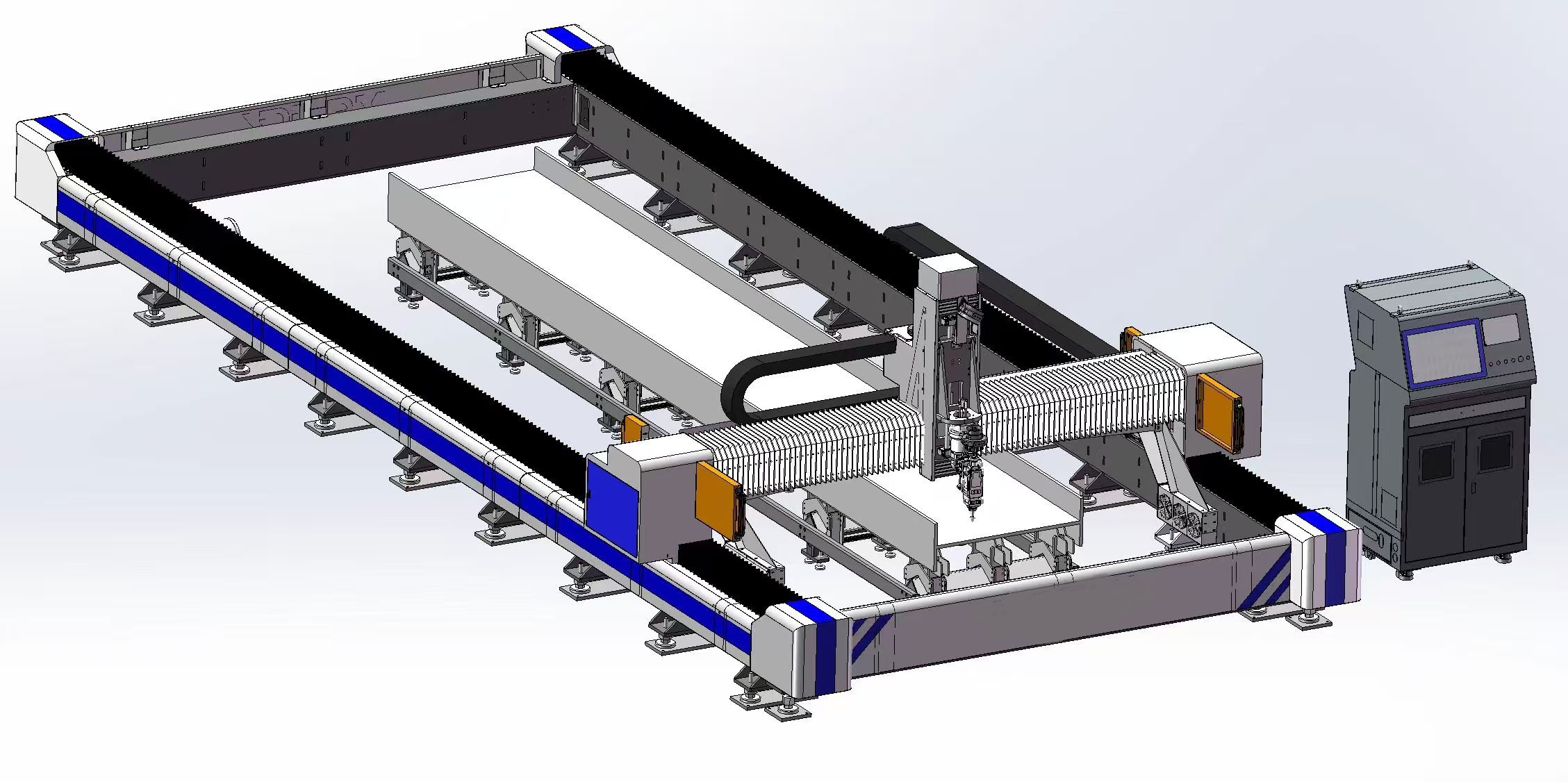
Industrial Application of H-Beam Plasma Cutter
NR-12 Safety Standards: The South American Regulatory Framework
While CE is a global recognized standard, operations within South America, and specifically those interfacing with Brazilian partners or rigorous Argentinian safety inspectors, must adhere to NR-12. This standard is one of the most stringent in the world regarding machinery safety and the protection of workers.
NR-12 mandates that the H-Beam Plasma Cutter be equipped with physical barriers and electronic safety interlocks. In Córdoba, this often manifests as perimeter fencing with light curtains at the entry and exit points of the beam conveyor. If a light beam is broken while the machine is in operation, the system must trigger a Category 0 or Category 1 stop, as defined by IEC 60204-1. This ensures that all hazardous motion ceases before a technician can reach the danger zone.
Additionally, NR-12 requires the use of safety-rated PLCs (Programmable Logic Controllers) and redundant safety relays. These components monitor the integrity of emergency stop buttons and guard switches. Unlike standard control systems, a safety-rated system is designed to fail into a safe state, preventing accidental restarts in the event of a component failure.
Integration of Safety and Performance
The convergence of CE and NR-12 standards within a single H-beam processing line requires sophisticated engineering. In the Córdoba industrial context, this integration is achieved through the use of Inverse Kinematics software, which calculates the safest and most efficient path for the robotic arm. By simulating the cutting process in a virtual environment, engineers can identify potential collisions or safety breaches before the first arc is struck.
Fume extraction is another critical area where safety meets performance. Plasma cutting of heavy structural steel generates significant particulate matter and ozone. Compliance with safety standards necessitates high-capacity downdraft tables or localized extraction hoods that maintain air quality levels within statutory limits. This not only protects the operator but also prevents the accumulation of conductive dust on sensitive electronic components, thereby extending the MTBF (Mean Time Between Failures) of the equipment.
Operational Training and Technical Documentation
Both CE and NR-12 emphasize the importance of the human element. Technical documentation must be provided in the local language, detailing every aspect of operation, maintenance, and emergency procedures. In Córdoba, technical institutes often collaborate with manufacturers to provide specialized training for operators. This training covers the calibration of the plasma arc, the programming of the CNC interface, and the rigorous testing of safety circuits.
A compliant machine must also feature a comprehensive “Logbook” or technical file. This file contains the results of load tests, electrical continuity tests, and the functional verification of all safety devices. For B2B stakeholders, this documentation is a critical asset during audits and is a prerequisite for insurance and liability coverage in high-stakes construction projects.
Concluding Industry Insight
The transition toward fully automated, safety-compliant H-beam processing in Córdoba reflects a broader shift in the global structural steel industry. We are moving away from a paradigm where safety was viewed as a bottleneck to productivity. Today, the integration of CE and NR-12 standards is recognized as a catalyst for efficiency. A machine that is designed to be inherently safe allows for higher duty cycles and reduced downtime, as the risk of industrial accidents—and the subsequent legal and operational paralysis—is virtually eliminated.
Furthermore, as the industry moves toward Industry 4.0, the data collected by safety-rated sensors will play a dual role in predictive maintenance. By monitoring the response times of safety relays and the alignment of light curtains, facilities in Córdoba can predict mechanical wear before it results in a system failure. The future of structural steel fabrication lies in this synergy between high-output robotic precision and uncompromising safety regulation, positioning Córdoba as a vital node in the global industrial supply chain.
Industrial Expertise & Support
Are you looking for high-performance H-Beam Plasma Cutter tailored for the Global market? Our engineering team provides comprehensive solutions for modern manufacturing.





