Introduction: The Industrial Evolution of the Biobío Region
Concepción, Chile, serves as a critical nexus for the South American structural steel and heavy manufacturing sectors. As the capital of the Biobío Region, its proximity to major ports and industrial zones has necessitated a rapid transition toward high-precision automation. In the current global regulatory climate, traditional thermal cutting methods are being scrutinized under rigorous Environmental, Health, and Safety (EHS) frameworks. The implementation of the H-Beam Plasma Cutter with integrated dust-free technology represents a significant shift in how regional fabricators address the dual challenges of high-volume throughput and stringent air quality mandates. This article examines the technical integration of advanced filtration systems within robotic plasma profiling and how these systems align with international EHS standards.
The Technical Architecture of H-Beam Plasma Profiling
The fabrication of structural steel, specifically H-beams and I-beams, involves complex geometries that traditional 2D cutting systems cannot effectively process. Modern systems utilized in Concepción leverage CNC Robotic Profiling to execute multi-axis movements. These machines typically feature a 6-axis robotic arm capable of rotating 360 degrees around the workpiece, allowing for precise bolt hole drilling, coping, and beveling in a single pass.
The plasma power source is the core component, often utilizing high-definition oxygen or nitrogen-shielded arcs to achieve a narrow kerf and minimal heat-affected zone (HAZ). However, the high-velocity plasma jet, which can reach temperatures exceeding 20,000°C, vaporizes metal and creates significant quantities of fine particulate matter. In an enclosed or semi-enclosed industrial environment, these emissions pose substantial risks to both equipment longevity and operator health if not managed by specialized extraction hardware.
Mechanisms of Dust-Free Operation
To achieve “dust-free” status in a technical context, the H-Beam Plasma Cutter must be integrated with a high-efficiency Fume Extraction System. Unlike standard flat-bed tables where downdraft systems are localized under the plate, H-beam processing requires a dynamic extraction approach due to the open-air nature of robotic movement.
1. Source Capture Hoods: The robotic head is often equipped with a localized suction hood that moves in tandem with the torch. This ensures that the primary plume of metal vapor is captured at the point of origin before it can dissipate into the facility’s ambient air.
2. Multi-Stage Filtration: Captured air is moved through a series of pleated flame-retardant filters. These systems are designed to capture Particulate Matter (PM2.5) and PM10 with an efficiency rating often exceeding 99.9%. The use of PTFE-coated filter media allows for automatic pulse-jet cleaning, maintaining constant static pressure and airflow volume.
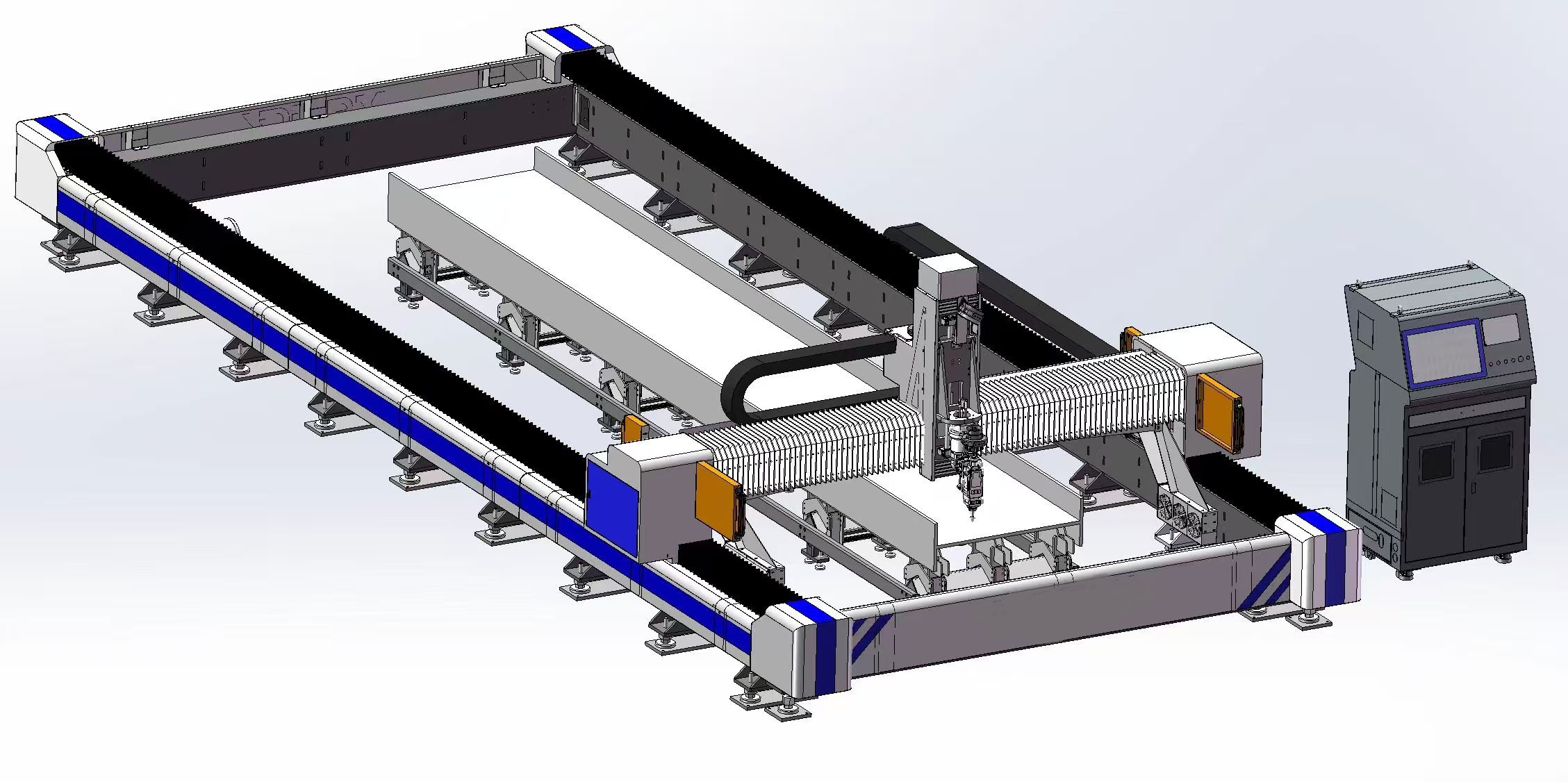
Industrial Application of H-Beam Plasma Cutter
3. Spark Arrestors: Given the high volume of molten dross produced during H-beam cutting, integrated spark arrestors are mandatory. These mechanical baffles cool larger particles and extinguish sparks before they reach the filter chamber, preventing fire hazards and extending the life of the consumables.
EHS Standards and Compliance in Chilean Manufacturing
In Chile, industrial operations must comply with Supreme Decree No. 594, which regulates basic environmental conditions in the workplace. For fabricators in Concepción, adhering to these local laws while meeting international ISO 45001 (Occupational Health and Safety) standards is a prerequisite for bidding on global mining and infrastructure contracts. The transition to dust-free plasma cutting directly addresses the Permissible Exposure Limits (PELs) for hexavalent chromium, manganese, and other hazardous metal oxides commonly found in structural steel fumes.
By maintaining a clean breathing zone for operators, companies reduce the need for heavy-duty personal protective equipment (PPE) and decrease the frequency of health-related downtime. Furthermore, the mitigation of dust accumulation on sensitive electronic components—such as PLC controllers and optical sensors—reduces the risk of electrical short circuits and mechanical abrasion, thereby optimizing the Mean Time Between Failures (MTBF).
Operational Efficiency and Precision Metrics
The integration of a dust-free H-Beam Plasma Cutter does not merely serve safety requirements; it enhances operational precision. Dust and particulate buildup on the linear rails and rack-and-pinion systems of a CNC machine can lead to positioning errors. In structural steel, where tolerances for bolt hole alignment are often within +/- 1mm, any mechanical deviation can result in costly field-fit issues.
In Concepción’s competitive landscape, the ability to deliver “shop-ready” beams that require no secondary cleaning or grinding provides a distinct market advantage. The high-velocity extraction systems also assist in cooling the material faster, which can marginally reduce the thermal expansion of the beam during long-sequence cuts, ensuring better dimensional stability across the entire length of the workpiece.
Economic Analysis of Advanced Extraction Systems
While the initial capital expenditure (CAPEX) for a fully filtered H-beam cutting system is higher than that of an unfiltered alternative, the operational expenditure (OPEX) savings are measurable. Reduced facility cleaning costs, lower HVAC load (due to filtered air being recirculated rather than exhausted externally), and the avoidance of regulatory fines contribute to a favorable Return on Investment (ROI). For a medium-to-large scale fabrication shop in the Biobío region, the payback period for integrated filtration systems is typically achieved within 18 to 24 months through increased uptime and reduced maintenance labor.
Concluding Industry Insight: The Future of Clean Fabrication
The industrial sector in Concepción is a microcosm of the global shift toward “Green Steel” processing. The convergence of robotic precision and advanced environmental controls is no longer an optional upgrade but a fundamental requirement for modern EHS compliance. As global supply chains demand greater transparency regarding the environmental footprint of their structural components, the use of dust-free plasma technology will become the baseline standard.
The future of the industry lies in the integration of “Smart Extraction” systems that utilize sensors to adjust airflow based on the thickness of the material and the intensity of the plasma arc. This will further optimize energy consumption while ensuring that air quality remains within safe parameters. For fabricators in Chile and beyond, investing in high-performance extraction technology for their H-beam lines is a strategic move that secures both worker safety and long-term commercial viability in an increasingly regulated global market.
Industrial Expertise & Support
Are you looking for high-performance H-Beam Plasma Cutter tailored for the Global market? Our engineering team provides comprehensive solutions for modern manufacturing.