Precision Engineering in the Industrial Heart of Southern Brazil
The industrial landscape of Caxias do Sul, located in the Serra Gaúcha region of Brazil, has evolved into a critical node for global agricultural machinery manufacturing. As the second-largest metal-mechanic hub in the country, this region hosts a sophisticated ecosystem of Tier 1 and Tier 2 suppliers specializing in heavy-duty structural components. At the center of this manufacturing evolution is the adoption of the H-Beam Plasma Cutter, a technology that has redefined the parameters of structural fabrication. For global OEMs (Original Equipment Manufacturers) sourcing components from South America, the integration of high-definition plasma systems into the production of H-beams and structural profiles represents a significant leap in component durability and assembly precision.
The agricultural sector demands machinery capable of withstanding extreme mechanical stress, corrosive environments, and constant vibration. Harvesters, large-scale grain carts, and specialized chassis frames rely on the structural stability of H-beams and I-beams. Traditional methods of processing these beams, such as mechanical sawing and manual drilling, often introduce structural inconsistencies and limit design complexity. In contrast, the automated plasma cutting systems deployed in Caxias do Sul utilize multi-axis robotic arms to execute complex geometries, including bolt holes, copes, and weld preparations, in a single pass. This transition from manual to automated structural processing is not merely an efficiency gain; it is a fundamental shift in metallurgical quality management.
The Technical Role of the H-Beam Plasma Cutter in Modern Fabrication
A H-Beam Plasma Cutter functions by utilizing a constrained arc of ionized gas to melt and blow away material from a workpiece. In the context of the Caxias do Sul industrial cluster, these machines are typically integrated with CNC (Computer Numerical Control) software that interfaces directly with BIM (Building Information Modeling) and CAD files. This integration ensures that the physical output matches the digital twin with tolerances often exceeding +/- 0.5mm. For agricultural machinery, where frame alignment is critical for the performance of moving parts and hydraulic systems, this level of precision is non-negotiable.
The 6-axis robotic capability of these cutters allows for the processing of all four sides of an H-beam without the need for repositioning. This capability eliminates the cumulative errors associated with manual handling. Furthermore, the ability to cut complex bevels for weld preparation directly on the plasma table ensures that the subsequent welding processes are more consistent. Proper weld prep leads to deeper penetration and more uniform bead profiles, which are essential for the high-load joints found in agricultural equipment chassis.
Mitigating the Heat Affected Zone (HAZ) for Enhanced Longevity
One of the primary technical challenges in thermal cutting is the management of the Heat Affected Zone (HAZ). The HAZ is the area of the base metal that has not been melted but has had its microstructure and mechanical properties altered by the intense heat of the cutting process. In high-carbon or alloy steels commonly used in heavy machinery, an excessive HAZ can lead to local hardening, increased brittleness, and the formation of martensite. These metallurgical changes create potential failure points where micro-cracks can initiate under cyclic loading.
Advanced plasma cutting facilities in Caxias do Sul utilize high-definition plasma power sources that narrow the plasma arc and increase energy density. By increasing the cutting speed and concentrating the thermal energy, the Heat Affected Zone (HAZ) is significantly minimized compared to traditional oxy-fuel cutting or older plasma systems. A smaller HAZ preserves the original Structural Integrity of the H-beam, ensuring that the steel retains its designed tensile strength and ductility. For agricultural machinery operating in rugged terrain, where the frame must flex without fracturing, maintaining the base metal’s properties near the cut edge is vital for long-term fatigue resistance.
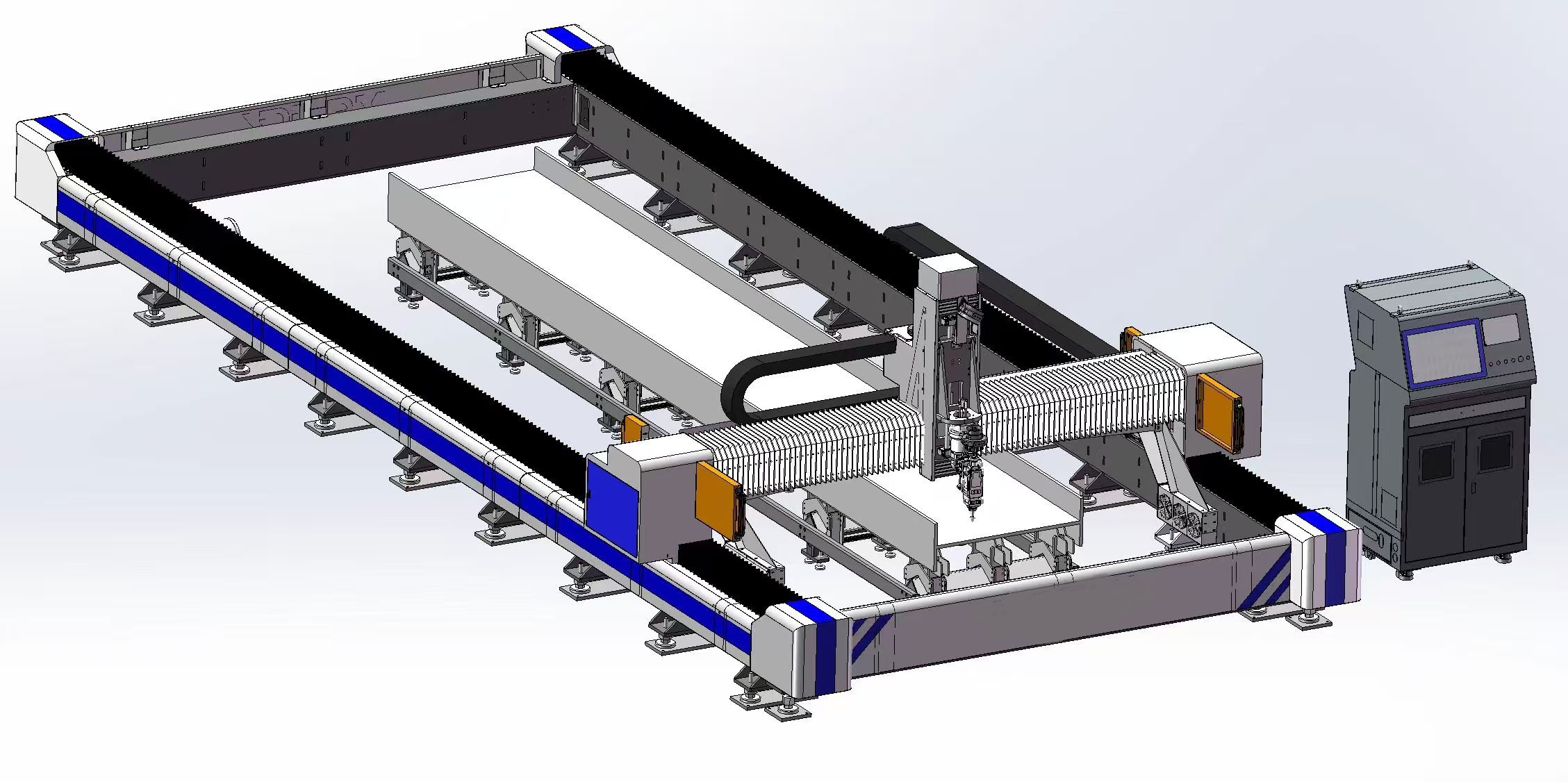
Industrial Application of H-Beam Plasma Cutter
Structural Integrity and Fatigue Resistance in Agricultural Applications
Agricultural equipment is subject to dynamic loading, which makes fatigue the primary failure mode for structural components. When an H-beam is processed with a high-definition plasma cutter, the resulting edge finish is smoother and the thermal impact is localized. Rough edges produced by inferior cutting methods act as “stress risers,” where mechanical stress concentrates and eventually leads to crack propagation. By providing a superior surface finish and a minimal HAZ, the technology employed in the Caxias do Sul cluster directly contributes to the Structural Integrity of the final machine.
In addition to edge quality, the precision of bolt-hole geometry is critical. In many agri-machinery assemblies, structural beams are bolted together to allow for modularity or field repairs. If a plasma cutter produces tapered holes or significant dross, the bolt will not seat correctly, leading to uneven load distribution across the joint. The high-precision H-Beam Plasma Cutter systems used by Brazilian fabricators utilize specialized hole-cutting protocols (such as True Hole or similar technologies) to ensure that holes are perfectly cylindrical and free of lead-in/lead-out defects. This ensures that the mechanical fasteners perform as intended, preventing the loosening of joints that often plagues equipment subjected to the vibrations of field operation.
Economic and Supply Chain Advantages of the Caxias do Sul Cluster
For global procurement managers, sourcing from Caxias do Sul offers more than just technical precision; it provides a streamlined supply chain advantage. The concentration of steel suppliers, plasma processing centers, and specialized logistics providers in a single geographic area reduces lead times and logistics costs. The Brazilian expertise in agricultural engineering, driven by the country’s status as a global food production powerhouse, means that local fabricators have a deep understanding of the specific stressors that equipment will face in the field.
The adoption of Small HAZ technology also reduces the need for secondary operations. In traditional fabrication, edges often require grinding or machining to remove the hardened layer of the HAZ before welding or painting. Because high-definition plasma cutting leaves a weld-ready edge with minimal metallurgical alteration, manufacturers can move components directly from the cutting table to the welding station. This reduction in labor-intensive secondary processes offsets the initial capital investment in high-end plasma machinery and results in a more competitive total cost of ownership for the global buyer.
Material Versatility and High-Strength Steels
Modern agricultural design increasingly utilizes High-Strength Low-Alloy (HSLA) steels to reduce overall machine weight without sacrificing strength. These materials are particularly sensitive to thermal input. The specialized H-Beam Plasma Cutter configurations found in the Caxias do Sul region are calibrated to handle these advanced alloys. By fine-tuning the gas mixtures (using oxygen, nitrogen, or H35 blends) and adjusting the arc voltage in real-time, fabricators can maintain the narrowest possible HAZ even on thinner-walled H-beams. This precision allows for the design of lighter, more fuel-efficient machinery that can carry larger payloads without increasing the soil compaction footprint—a key requirement for modern sustainable farming practices.
Concluding Industry Insight
The convergence of robotic automation and high-definition plasma technology in Caxias do Sul reflects a broader trend in the global B2B manufacturing sector: the transition from “commodity fabrication” to “engineered component production.” As agricultural machinery continues to grow in scale and complexity, the margin for structural error diminishes. The ability to minimize the Heat Affected Zone (HAZ) is no longer an optional refinement but a core requirement for ensuring the 20-year operational lifecycle expected of modern heavy equipment. For the global market, the Brazilian industrial hub provides a blueprint for how regional clusters can leverage specific technological investments—like the H-Beam Plasma Cutter—to become indispensable nodes in the international high-tech supply chain. The future of machinery longevity lies not just in the grade of steel used, but in the precision and thermal control of the processes that shape it.
Industrial Expertise & Support
Are you looking for high-performance H-Beam Plasma Cutter tailored for the Global market? Our engineering team provides comprehensive solutions for modern manufacturing.





