Introduction: The Structural Transformation of Caxias do Sul
Caxias do Sul, located in the Serra Gaúcha region of Brazil, stands as the nation’s second-largest metal-mechanical hub. Historically, the region’s industrial parks built their reputation on robust manufacturing for the automotive, transport, and agricultural sectors. However, the global shift toward lean manufacturing and high-precision structural steel fabrication has necessitated a technological pivot. Central to this evolution is the implementation of the H-Beam Plasma Cutter, a specialized CNC system designed to automate the processing of structural profiles. By replacing traditional manual layout, drilling, and sawing processes with integrated thermal cutting solutions, local enterprises are achieving measurable improvements in throughput and operational efficiency. This article examines the technical application of these systems within the Caxias do Sul industrial landscape and the resulting Return on Investment (ROI) for high-capacity fabrication facilities.
Technical Specifications and System Integration
The transition from mechanical sawing to plasma-based profiling involves a sophisticated integration of hardware and software. Modern H-beam processing lines utilize Multi-axis Robotic Kinematics to navigate the complex geometry of structural sections, including I-beams, H-beams, channels, and hollow structural sections (HSS). Unlike standard 2D plasma tables, these systems employ a 5-axis or 6-axis robotic arm capable of reaching all four sides of a beam without manual repositioning.
In the industrial parks of Caxias do Sul, technical departments are increasingly adopting High-Definition (HD) plasma power sources. These units utilize oxygen and nitrogen as plasma gases to produce narrow kerf widths and minimal dross. The integration of Kerf Compensation algorithms within the CNC controller ensures that bolt holes and cope cuts meet the stringent tolerances required by international standards such as ISO 9013. For local firms exporting to North American or European markets, this level of precision is non-negotiable for structural integrity and assembly fit-up.
Quantifying ROI: Labor Reduction and Material Optimization
The primary driver for the adoption of the H-Beam Plasma Cutter in Brazil is the drastic reduction in man-hours per ton of processed steel. Traditional fabrication involves a multi-stage workflow: marking the beam, drilling holes, sawing to length, and manual coping for connections. Each stage requires material handling, which introduces cumulative errors and significant downtime.
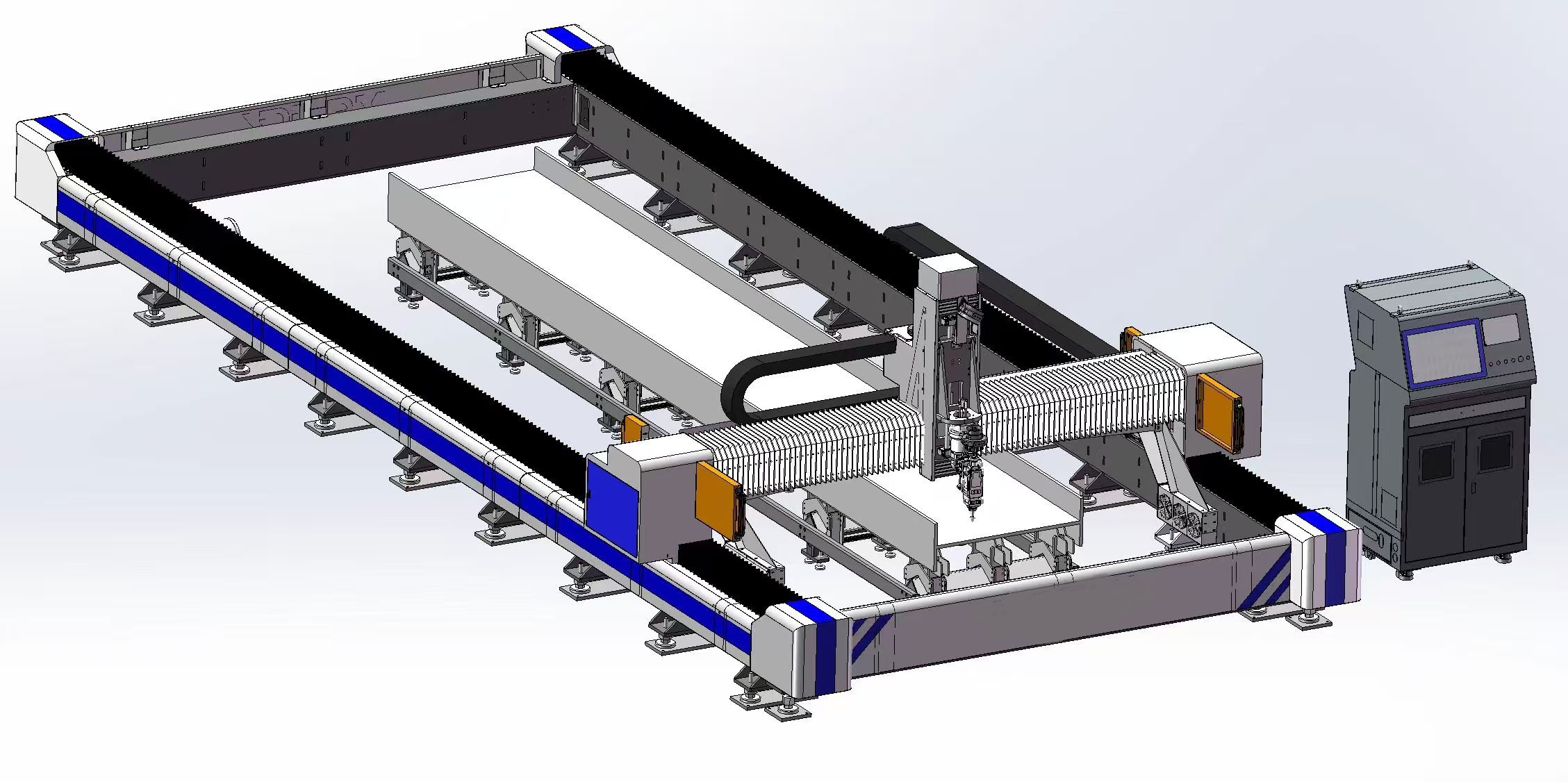
Industrial Application of H-Beam Plasma Cutter
Data from local industrial parks indicate that a robotic plasma system can perform these operations in approximately 20% of the time required by manual methods. For instance, a standard beam requiring four bolt holes and two cope cuts can be processed in under four minutes, including loading and unloading cycles. When calculated over a fiscal year, the reduction in direct labor costs often covers the capital expenditure of the machine within 18 to 24 months. Furthermore, the elimination of manual layout errors reduces material scrap rates by an average of 15%, as the CAD/CAM Nesting Software optimizes the placement of cuts across the stock length of the beam, maximizing material utilization.
Supply Chain Resilience and Global Competitiveness
Caxias do Sul serves as a critical node in the South American supply chain. By localizing advanced fabrication capabilities, regional companies reduce their reliance on imported pre-processed steel. The ability to perform complex cuts, such as miter joints and weld preparations (beveling), in-house allows for greater flexibility in project scheduling. This is particularly relevant for the renewable energy sector—specifically wind tower internal structures—where demand for processed H-beams is high.
The technical advantage also extends to the quality of the final product. Oxy-fuel Integration within the same robotic cell allows for the processing of thicker flanges that exceed standard plasma capacities, ensuring the machine remains versatile across diverse project requirements. By consolidating multiple fabrication steps into a single workstation, local firms minimize the footprint required for machinery, allowing for higher production density within existing industrial park facilities.
Maintenance and Operational Longevity in Tropical Climates
While the ROI is compelling, the technical longevity of these systems in the specific environmental conditions of Southern Brazil requires consideration. The industrial parks in Caxias do Sul experience significant humidity and temperature fluctuations. To maintain the precision of the robotic sensors and the plasma arc stability, local manufacturers prioritize systems with enclosed electronics and robust dust extraction units.
Preventative maintenance schedules focus on the consumables—nozzles, electrodes, and swirl rings—which are the primary variable costs in plasma cutting. Modern systems now feature automated monitoring that alerts operators to electrode wear before it impacts cut quality. This data-driven approach to maintenance prevents unplanned downtime, which is critical for maintaining the high-volume output typical of the Caxias do Sul metal-mechanical cluster.
Digital Workflow and Industry 4.0 Compatibility
The ROI of an H-Beam Plasma Cutter is not limited to the physical cutting process; it extends into the digital workflow of the engineering department. Most systems installed in the region are compatible with direct BIM (Building Information Modeling) file imports, such as .DSTV or .STEP files. This eliminates the need for manual data entry at the machine interface, which is a frequent source of dimensional errors.
By connecting the plasma cutter to the factory’s ERP system, management gains real-time visibility into production metrics, including gas consumption, arc-on time, and parts completed per shift. This level of transparency allows for more accurate bidding on international contracts, as the cost per part is calculated based on empirical data rather than estimates. For the industrial parks of Caxias do Sul, this digital maturity is a prerequisite for participating in the global Industry 4.0 landscape.
Concluding Industry Insight
The industrial sector in Caxias do Sul is currently at a technological crossroads. As the demand for complex structural steel increases, the reliance on traditional, labor-intensive fabrication methods becomes a liability rather than a standard. The data from local implementations confirms that the H-Beam Plasma Cutter is no longer an optional luxury but a fundamental requirement for maintaining a competitive edge in the global market. The convergence of robotic precision, automated nesting, and digital integration provides a clear pathway to rapid ROI. Moving forward, the industry will likely see a shift toward fully autonomous fabrication lines where material handling and secondary finishing are integrated with the plasma cutting cell. For stakeholders in the Brazilian metal-mechanical sector, the message is clear: investment in high-precision thermal cutting technology is the most viable strategy for long-term operational resilience and profitability in an increasingly automated global economy.
Industrial Expertise & Support
Are you looking for high-performance H-Beam Plasma Cutter tailored for the Global market? Our engineering team provides comprehensive solutions for modern manufacturing.





