Accelerating Structural Steel Fabrication: The Rise of AI-Integrated Plasma Systems in Caxias do Sul
The industrial landscape of Caxias do Sul, Brazil, has long been recognized as one of the premier metal-mechanic clusters in Latin America. As global demand for structural steel increases, the regional manufacturing sector is pivoting toward high-precision automation to maintain a competitive edge. At the center of this transition is the advanced H-Beam Plasma Cutter, a system that integrates 6-Axis Robotic Kinematics with artificial intelligence to redefine the throughput capabilities of fabrication shops. Traditionally, the operation of such complex machinery required months of specialized training. However, the introduction of AI-driven Human-Machine Interfaces (HMI) has compressed this learning curve to a mere 48 hours, creating a significant shift in how labor is deployed in the structural steel industry.
Technical Architecture of the H-Beam Plasma Cutter
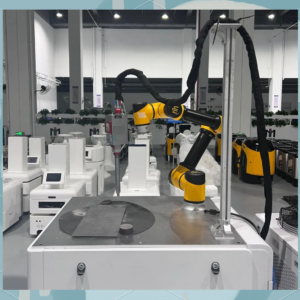
The modern H-Beam Plasma Cutter is not merely a cutting tool but a comprehensive robotic work cell designed for the multi-dimensional processing of structural profiles. These systems typically utilize high-definition plasma power sources capable of piercing thick-walled carbon steel with minimal heat-affected zones (HAZ). The hardware configuration in Caxias do Sul facilities often features a specialized conveyor system integrated with laser-based measurement sensors that detect beam deviations, such as camber and sweep, in real-time.
The core of the system’s precision lies in its Nesting Optimization software. This software calculates the most efficient use of material, minimizing scrap by arranging cuts across the H-beam’s flange and web with mathematical precision. Unlike traditional manual layouts, the plasma torch can move across six axes, allowing for complex geometries, including cope cuts, bolt holes, and weld preparations (bevels) to be executed in a single pass. This eliminates the need for secondary processes, such as drilling or manual grinding, thereby streamlining the entire production line.
The AI-Driven HMI: Simplifying Complex G-Code
Historically, the bottleneck in adopting robotic plasma cutting was the complexity of the AI-Driven Human-Machine Interface. Operators were required to have an intimate understanding of G-code, Cartesian coordinates, and robotic path planning. In the high-output environments of Caxias do Sul, the move toward AI-integrated HMIs has stripped away these layers of complexity. The AI acts as an intermediary layer that translates standard CAD/BIM files (such as .IFC or .TEKLA) directly into machine instructions without requiring manual programming.
The interface uses predictive algorithms to suggest optimal cutting speeds and gas pressures based on the specific metallurgical properties of the beam being processed. If the system detects a slight misalignment in the raw material, the AI automatically recalibrates the cutting path to ensure dimensional accuracy. This level of autonomy is what enables a non-specialist operator to achieve professional-grade results within a very short timeframe.
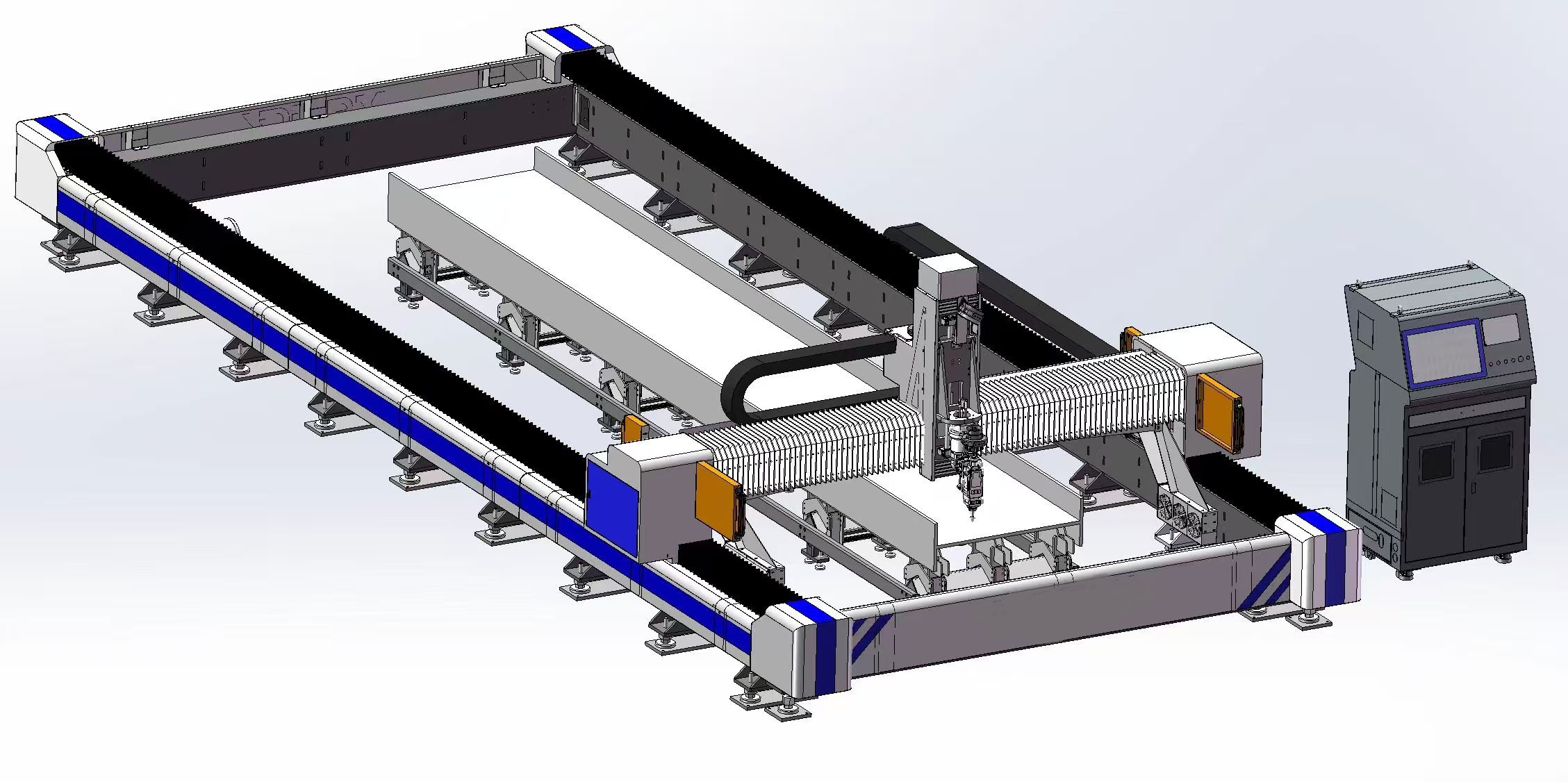
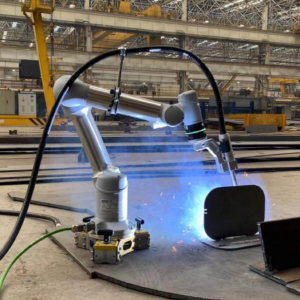
Industrial Application of H-Beam Plasma Cutter
The 2-Day Operator Learning Curve: A Functional Breakdown
The reduction of the learning curve to two days is a strategic advantage for global manufacturers facing skilled labor shortages. The training protocol implemented in Brazilian fabrication hubs is divided into four distinct phases over a 48-hour period.
Day 1: System Architecture and File Ingestion
The first eight hours focus on machine safety, hardware initialization, and digital file management. Operators learn to import 3D models into the HMI. Because the AI handles the Nesting Optimization and pathing, the operator’s role shifts from “programmer” to “process supervisor.” Training involves identifying material grades and thickness, which the AI then uses to auto-populate the cutting parameters. By the end of the first day, operators are typically capable of running standard straight cuts and simple bolt-hole patterns.
Day 2: Advanced Geometries and Preventive Maintenance
The second day focuses on the execution of complex cope cuts and multi-axis beveling. Operators learn how to interpret the AI’s real-time feedback loops, which monitor consumable wear and gas flow. The AI HMI provides visual alerts when a nozzle or electrode is nearing the end of its operational life, allowing for scheduled maintenance rather than reactive downtime. By the end of the second day, the operator is proficient in managing the full lifecycle of a structural project, from raw beam loading to the offloading of finished, weld-ready components.
Economic and Operational Impact in Caxias do Sul
The adoption of this technology in Caxias do Sul has resulted in a measurable increase in kilograms of steel processed per man-hour. In traditional setups, a team of three or four workers might be required to layout, drill, and cut an H-beam. With the H-Beam Plasma Cutter, a single operator manages the entire process. The precision of the AI-driven cuts ensures that when the beams arrive at the construction site, the fit-up is perfect, reducing on-site welding time and structural failures.
Furthermore, the localized expertise in Brazil has fostered a secondary market for software customization. Local engineers are working to integrate these AI systems with ERP (Enterprise Resource Planning) software, allowing for real-time tracking of production costs and material inventory. This level of data integration is essential for global B2B contracts where transparency and lead-time accuracy are contractual requirements.
Concluding Industry Insight
The evolution of H-beam processing in Caxias do Sul serves as a blueprint for the global structural steel industry. The critical takeaway is not merely the speed of the plasma arc, but the democratization of technical skill through the AI-Driven Human-Machine Interface. As the industry moves toward Industry 4.0 standards, the value of a fabrication facility will no longer be measured solely by its hardware, but by the agility of its workforce and the intelligence of its software interfaces.
The transition to a 2-day learning curve represents a fundamental shift in industrial human resources. By lowering the barrier to entry for operating sophisticated robotics, manufacturers can mitigate the risks of an aging workforce and volatile labor markets. In the coming decade, we expect to see AI-driven autonomous calibration become the standard, where the machine not only executes the cut but also performs its own quality assurance via 3D scanning, further insulating the production process from human error and maximizing global supply chain reliability.
Industrial Expertise & Support
Are you looking for high-performance H-Beam Plasma Cutter tailored for the Global market? Our engineering team provides comprehensive solutions for modern manufacturing.