Introduction: The Industrial Landscape of Callao and Structural Steel Fabrication
Callao, Peru, serves as a critical maritime and industrial nexus, housing one of South America’s most significant ports and a burgeoning sector for heavy engineering and shipbuilding. In this environment, the demand for precision structural steel components is constant. The transition from manual oxy-fuel cutting to automated systems has necessitated the deployment of the H-Beam Plasma Cutter. However, the integration of high-precision CNC (Computer Numerical Control) machinery into coastal industrial grids presents unique electrical challenges. Grid stability in concentrated industrial zones often fluctuates due to heavy inductive loads from neighboring facilities, leading to voltage sags and surges that can compromise sensitive electronic components and arc consistency.
For global enterprises operating in or exporting to regions like Callao, the technical priority has shifted from raw cutting speed to the reliability of the power electronics. Machines must now incorporate sophisticated internal power conditioning to ensure that the quality of the cut remains uniform regardless of the external electrical environment. This article examines the technical architecture of voltage regulation within plasma cutting systems and its necessity for maintaining operational uptime in volatile grid conditions.
The Technical Architecture of the H-Beam Plasma Cutter
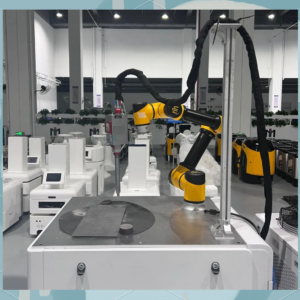
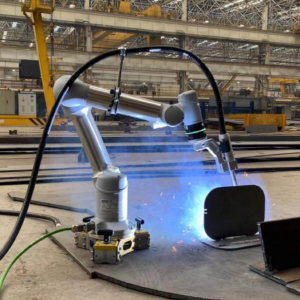
An H-Beam Plasma Cutter is a multi-axis robotic or gantry-based system designed to execute complex geometries on structural profiles, including H-beams, I-beams, and channels. The system typically utilizes a 3D six-axis robotic arm or a specialized rotating torch head to facilitate coping, mitering, and hole-cutting. The precision of these movements is governed by high-resolution servo motors that require a clean, stable power supply to maintain signal integrity and positional accuracy.
The plasma power source itself is an inverter-based system. Modern units utilize IGBT Inverter Technology (Insulated Gate Bipolar Transistor) to convert high-voltage AC input into a stable DC output for the plasma arc. The efficiency of this conversion is paramount. In environments where the input voltage may deviate by 10 percent or more from the nominal rating, the inverter must compensate in real-time. Without internal regulation, voltage drops result in a weakened arc, leading to increased dross formation and poor kerf quality, while voltage spikes can lead to catastrophic failure of the inverter bridge or the control PC.
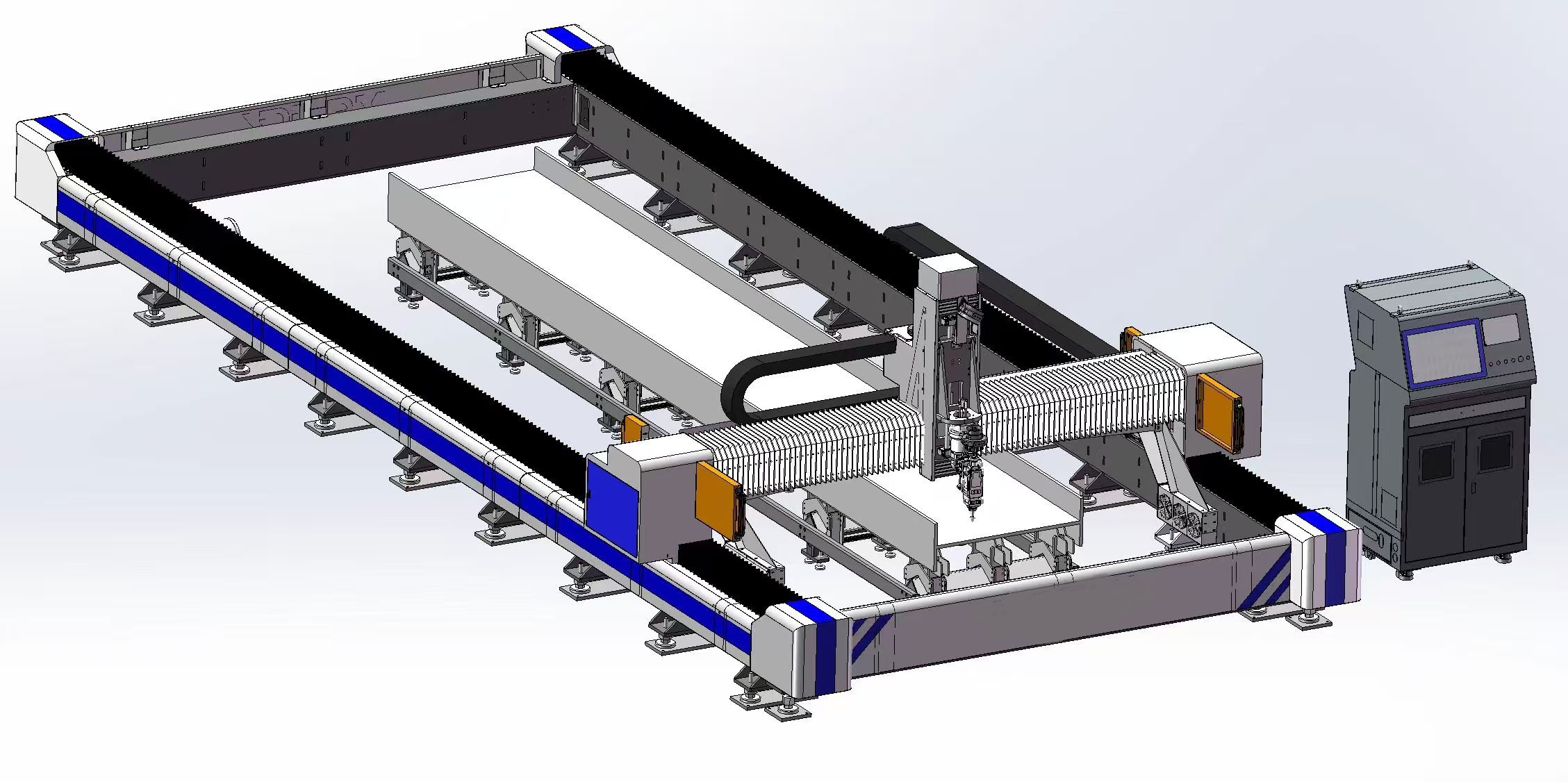
Industrial Application of H-Beam Plasma Cutter
Grid Stability Challenges in Coastal Industrial Hubs
In Callao, the industrial grid is subjected to heavy loads from port cranes, massive refrigeration units, and large-scale manufacturing plants. These factors contribute to a high level of Total Harmonic Distortion (THD) and frequent voltage fluctuations. For a CNC plasma system, these fluctuations are not merely an inconvenience; they are a primary cause of mechanical and electronic fatigue.
When the grid voltage drops, the amperage required to maintain the plasma arc increases, which elevates the thermal load on the internal components. Conversely, transient voltage surges can bypass standard fuse protections and damage the sensitive logic boards that manage the CNC Motion Control. To mitigate these risks, the latest generation of H-beam cutters deployed in these regions features integrated Automatic Voltage Regulation (AVR) modules. These modules act as a buffer, decoupling the machine’s internal DC bus from the volatile AC grid, ensuring that the robotic trajectory and arc intensity remain decoupled from external electrical noise.
Implementing Built-in Voltage Regulation for Operational Continuity
The integration of built-in voltage regulation is a departure from traditional external stabilizers, which often lack the response speed required for high-frequency plasma starts. Internal regulation systems utilize high-speed capacitors and reactive power compensation to stabilize the internal DC link. This allows the machine to operate within a wide input window—often ranging from 340V to 460V for a nominal 400V system—without interrupting the cutting cycle.
Technically, this is achieved through a double-conversion process. The incoming AC power is first rectified to DC, then filtered and regulated, and finally inverted back to the precise frequency and voltage required by the plasma torch and the servo drives. This architecture ensures that the “noise” generated by other heavy machinery in the Callao industrial zone does not interfere with the high-frequency pilot arc start or the sensitive encoders on the robotic arm. The result is a significant reduction in “lost” beams due to mid-cut failures or positioning errors caused by power dips.
Economic Impact: ROI through Power Conditioning
From a B2B perspective, the procurement of an H-Beam Plasma Cutter with integrated power conditioning represents a strategic investment in risk mitigation. In the structural steel industry, the cost of a single damaged H-beam can be substantial, but the cost of machine downtime during a peak production cycle is often higher. By eliminating the need for external voltage regulators, which occupy floor space and require additional maintenance, manufacturers reduce the total cost of ownership.
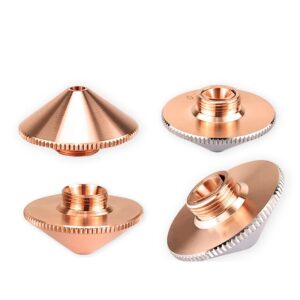
Furthermore, stable power directly correlates to the lifespan of consumables. Plasma electrodes and nozzles are sensitive to arc instability; a fluctuating arc causes uneven wear and premature failure of the copper components. By maintaining a constant current through rigorous voltage regulation, the system extends the life of these consumables by up to 30 percent. In a high-volume facility in Callao, these savings contribute directly to the bottom line, offsetting the initial premium paid for high-specification power electronics.
Technical Specifications and Performance Metrics
When evaluating these systems for global industrial applications, several key metrics must be analyzed:
1. Input Voltage Tolerance: The ability to handle +/- 15% fluctuations without derating the output current.
2. Response Time: The speed at which the AVR reacts to a transient surge, typically measured in milliseconds.
3. Duty Cycle: High-performance cutters should maintain a 100% duty cycle at maximum output, even in ambient temperatures common to coastal Peru (up to 35-40 degrees Celsius in industrial sheds).
4. Harmonic Filtration: The presence of EMI (Electromagnetic Interference) filters to prevent the machine from feedbacking noise into the local grid, which can affect other sensitive equipment.
These specifications ensure that the machine is not just a cutting tool, but a resilient piece of infrastructure capable of operating in the “real-world” conditions of emerging and established industrial markets alike.
Industry Insight: The Future of Decentralized Power Management
The industrial sector is moving toward a model where the machinery itself must take responsibility for power quality. As global supply chains rely more heavily on localized manufacturing in regions with developing infrastructure, the “ruggedization” of electronic control systems becomes a competitive necessity. The deployment of the H-Beam Plasma Cutter in Callao serves as a case study for this trend. We are seeing a shift where power conditioning is no longer viewed as an optional peripheral but as a core component of the machine’s internal logic.
Looking forward, the integration of IoT-based power monitoring within these cutters will allow operators to track grid health in real-time. This data can be used to predict maintenance needs before a component fails due to electrical stress. In the context of global B2B trade, providing equipment that is “grid-agnostic” through advanced voltage regulation is the most effective way to ensure brand reliability and operational success in diverse geographic markets. The ability to maintain sub-millimeter precision in the face of macro-level electrical instability is the hallmark of modern heavy engineering.
Industrial Expertise & Support
Are you looking for high-performance H-Beam Plasma Cutter tailored for the Global market? Our engineering team provides comprehensive solutions for modern manufacturing.