Strategic Integration of H-Beam Plasma Cutting Technology in the Andean Industrial Corridor
The industrial landscape of Cali, Colombia, has undergone a significant transformation, evolving into a critical hub for structural steel fabrication and heavy engineering within the Andean region. As infrastructure projects across South America demand higher precision and accelerated delivery timelines, the reliance on automated thermal cutting solutions has become a prerequisite for competitiveness. The deployment of the H-Beam Plasma Cutter in this region represents a shift from manual layout and mechanical drilling to integrated robotic processing. This transition is underpinned by a localized support infrastructure designed to mitigate the risks associated with international supply chain volatility.
For global enterprises operating or sourcing from the Valle del Cauca region, the availability of high-specification machinery is only one variable in the operational equation. The secondary, and perhaps more critical, variable is the localized ecosystem of technical support and component availability. This article examines the technical specifications of H-beam processing and the logistical framework that ensures 24-hour service responsiveness in the Cali industrial sector.
Technical Specifications and Kinematic Versatility
The modern H-Beam Plasma Cutter utilized in Cali’s fabrication facilities typically utilizes a 6-axis robotic arm configuration. Unlike traditional 2D plate cutters, these systems must navigate the complex geometry of structural profiles, including I-beams, H-beams, channels, and square tubing. The kinematic complexity allows for the execution of weld preparations, bolt holes, and coping cuts in a single pass, eliminating the need for secondary handling.
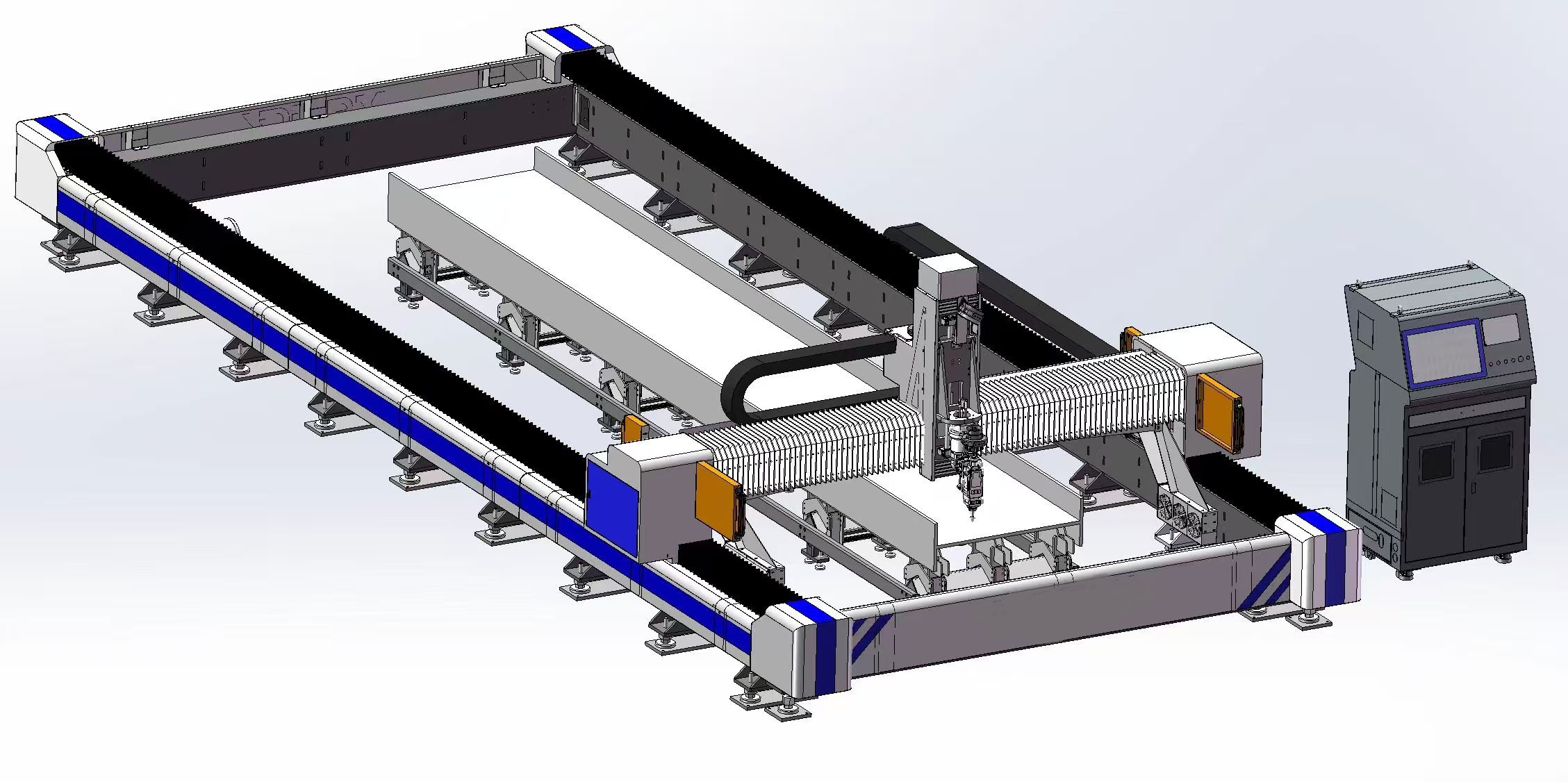
Industrial Application of H-Beam Plasma Cutter
From a data-processing perspective, these machines utilize IGES/STEP file integration, allowing for a direct “CAD-to-Part” workflow. This eliminates manual measurement errors and ensures that the physical output matches the structural engineer’s digital twin with tolerances often exceeding +/- 0.5mm. In the context of Cali’s seismic building codes, this level of precision in bolt hole alignment and flange preparation is non-negotiable for structural integrity.
Thermal Management and Power Supply
The cutting systems are frequently paired with high-definition plasma power sources, such as the Hypertherm XPR300 or similar high-amperage units. These power sources are capable of piercing thick-walled structural steel while maintaining a narrow kerf width. Effective thermal management is achieved through sophisticated gas console modulation, which adjusts the mixture of O2, N2, and H35 depending on the material thickness and desired edge quality. This level of technical control reduces the Heat Affected Zone (HAZ), ensuring that the metallurgical properties of the steel remain within the specified limits for heavy-load applications.
Localized Spare Parts: Mitigation of Operational Downtime
In the B2B sector, the cost of downtime is calculated by the hour, often reaching thousands of dollars in lost productivity and liquidated damages on construction contracts. Historically, the adoption of advanced CNC machinery in Colombia was hindered by the “import lag”—the 10 to 15 days required to clear essential consumables or electronic components through international customs.
The current operational model in Cali has addressed this by establishing localized inventories of critical spares. This inventory includes:
- Consumables: Nozzles, electrodes, swirl rings, and shields specifically calibrated for high-definition cutting.
- Mechanical Components: Rack and pinion sets, linear guides, and specialized bearings for the robotic gantry.
- Electronic Spares: Servo drives, PLC modules, and high-flex cabling that are susceptible to wear in high-duty cycle environments.
By maintaining these components within the Cali metropolitan area, the logistical chain is reduced from thousands of miles to a few kilometers. This localized redundancy allows fabricators to maintain lean operations without the risk of extended stoppages due to minor component failures.
24-Hour Service Response: The Technical Protocol
A 24-hour service response is not merely a marketing claim but a structured technical protocol. In Cali’s industrial zones, this service level is maintained through a combination of remote diagnostics and on-site engineering intervention. When a system anomaly is detected, the process follows a rigorous sequence:
Phase 1: Remote Telemetry and Diagnostics
Technicians access the machine’s control system via secure VPN to analyze error logs and I/O status. Approximately 40 percent of operational issues, particularly those related to software calibration or parameter optimization, are resolved at this stage without physical intervention.
Phase 2: Rapid Deployment of Field Engineers
If a mechanical or hardware failure is identified, a field engineer is dispatched from the local Cali service center. These engineers are trained in both the robotic kinematics and the plasma power supply electronics, ensuring a holistic approach to repair rather than a “part-swapping” methodology.
Phase 3: Root Cause Analysis (RCA)
Post-repair, the service protocol requires a root cause analysis to determine if the failure was due to component fatigue, environmental factors (such as voltage fluctuations), or operator error. This data is then used to update the preventive maintenance schedule for the specific facility.
Economic Impact on Structural Steel Throughput
The integration of an H-Beam Plasma Cutter with localized support significantly alters the ROI calculation for steel service centers. Traditional fabrication methods require a larger footprint and a higher headcount for marking, drilling, and torching. By consolidating these processes into a single automated station, the throughput per square meter of factory floor space increases by an estimated 300 to 400 percent.
Furthermore, the reduction in scrap material—achieved through advanced nesting algorithms—contributes directly to the bottom line. When these efficiencies are combined with the security of a 24-hour service guarantee, Cali-based fabricators can confidently bid on international projects, knowing their production schedules are insulated from the common pitfalls of industrial automation.
Concluding Industry Insight
The industrial evolution in Cali, Colombia, serves as a blueprint for the future of localized manufacturing. The global trend is moving away from centralized service hubs toward distributed technical ecosystems. In the structural steel industry, the machine itself is becoming a commodity; the true value lies in the “uptime insurance” provided by local engineering expertise and immediate parts availability. As the Andean region continues to invest in infrastructure, the facilities that prioritize these localized support structures will inevitably lead the market. The synergy between high-end robotic hardware and localized, rapid-response technical service is no longer an advantage—it is the baseline for industrial survival in a high-stakes global economy.
Industrial Expertise & Support
Are you looking for high-performance H-Beam Plasma Cutter tailored for the Global market? Our engineering team provides comprehensive solutions for modern manufacturing.





