Precision Fabrication: The Rise of Advanced H-Beam Processing in Cali, Colombia
The industrial landscape of Cali, Colombia, has undergone a significant transformation, evolving from a regional manufacturing hub into a sophisticated center for heavy structural steel and non-ferrous metal fabrication. Central to this evolution is the deployment of the H-Beam Plasma Cutter, a system engineered to handle the geometric complexities of structural profiles. As global demand for infrastructure increases, the necessity for high-speed, high-precision cutting of H-beams, I-beams, and channels has become a priority for engineering firms operating in the Valle del Cauca region. This transition is not merely about speed; it is about the integration of specialized technologies designed to overcome the physical limitations of traditional thermal cutting, particularly when dealing with highly conductive and reflective materials like copper and aluminum alloys.
Cali’s strategic proximity to the Port of Buenaventura facilitates the import of high-end CNC components and the export of finished structural components, making it a critical node in the global supply chain. The adoption of automated plasma systems in this region addresses the need for tighter tolerances and reduced labor-intensive secondary processes. By utilizing robotic kinematics and advanced power source management, fabricators in Cali are now achieving levels of accuracy that were previously reserved for high-cost European or North American facilities.
Technical Challenges of Non-Ferrous Metal Processing
While the H-Beam Plasma Cutter is traditionally associated with carbon steel, modern industrial requirements often necessitate the processing of copper and aluminum for specialized electrical and aerospace applications. These materials present unique challenges to standard plasma systems due to their high thermal conductivity and electrical reflectivity. In standard plasma cutting, the arc is maintained between the electrode and the workpiece. However, with copper and aluminum, the rapid dissipation of heat and the potential for “back-arc” interference can lead to premature consumable failure and inconsistent kerf widths.
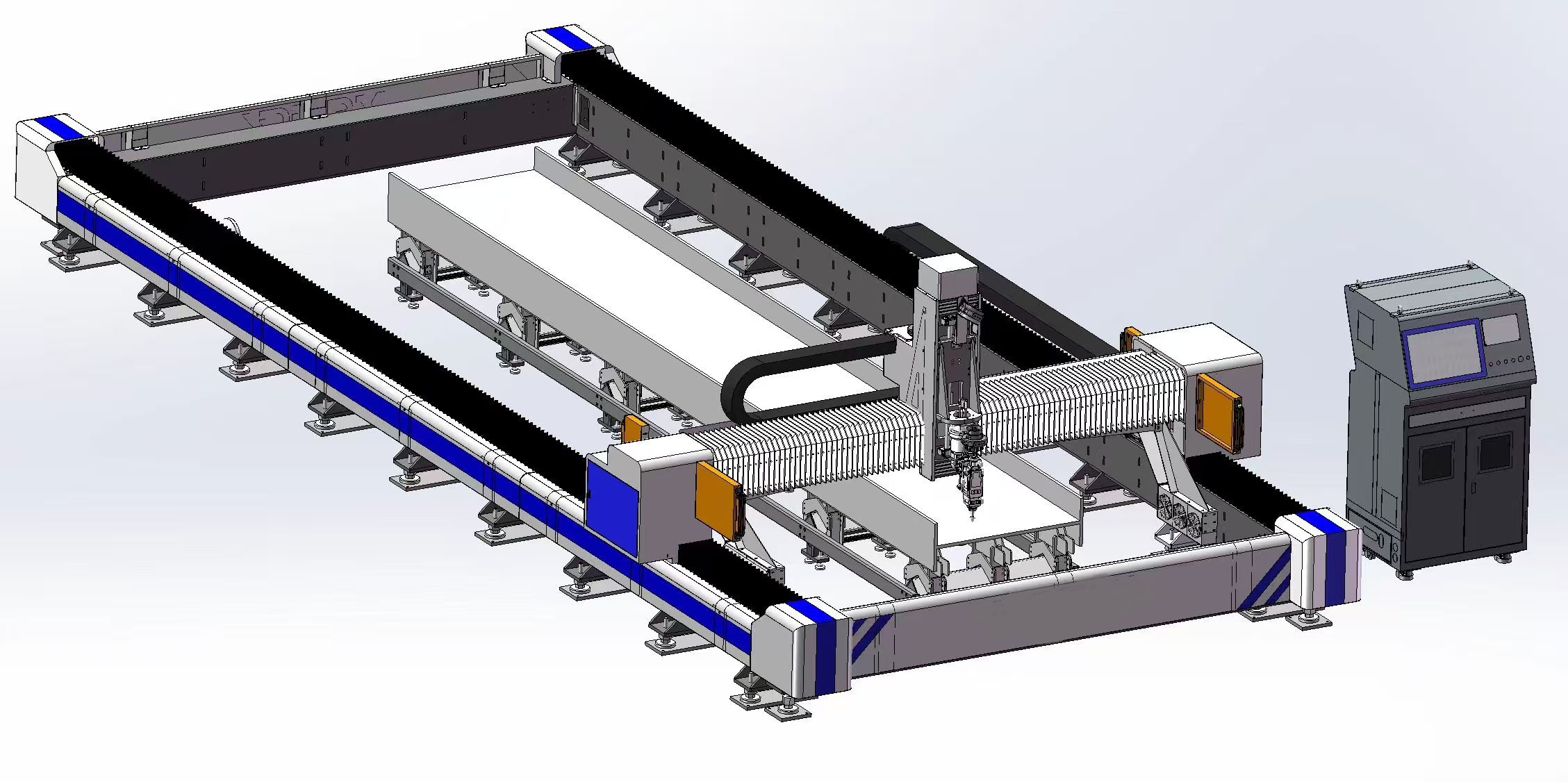
Industrial Application of H-Beam Plasma Cutter
The term Anti-Reflection Technology in this context refers to a suite of hardware and software optimizations designed to stabilize the plasma column against the high electromagnetic feedback characteristic of non-ferrous alloys. Without these protections, the plasma power supply is susceptible to voltage spikes caused by the reflective properties of the molten pool. In Cali’s high-output fabrication environments, maintaining arc stability is essential for ensuring that the structural integrity of the H-beam is not compromised by an unstable Heat-Affected Zone (HAZ).
Implementing Anti-Reflection Technology in Plasma Systems
To mitigate the risks associated with cutting reflective metals, advanced plasma cutters utilize a high-frequency (HF) starting mechanism combined with precise gas flow regulation. Anti-reflection measures involve the use of specialized shield gases—often mixtures of argon, hydrogen, and nitrogen—which constrict the arc and increase its energy density. This constriction ensures that the energy is focused entirely on the material displacement rather than being reflected back into the torch head.
Furthermore, the power supplies used in these systems are equipped with rapid-response inverter technology. These inverters monitor the arc voltage at microsecond intervals. If a fluctuation occurs—indicative of a reflection or a change in material density—the system adjusts the current output instantaneously to maintain a constant arc length. This level of control is vital when navigating the flanges and webs of an H-beam, where the thickness and orientation of the cut change rapidly. The integration of Non-Ferrous Metal Processing capabilities into an H-beam line allows a single facility to diversify its output, moving from standard construction beams to specialized industrial components with minimal downtime for reconfiguration.
Robotic Kinematics and 6-Axis Accuracy
The mechanical execution of the cut is as critical as the electrical stability. In Cali’s top-tier fabrication shops, the H-Beam Plasma Cutter is typically mounted on a 5-axis or 6-axis robotic arm. This allows the torch to maintain a perpendicular relationship with the beam surface at all times, even when performing complex miter cuts, cope cuts, or bolt hole perforations. The robotic system must account for the physical irregularities inherent in hot-rolled steel and extruded aluminum profiles.
Advanced sensing technology, such as laser profiling or initial height sensing (IHS), is used to map the beam’s dimensions before the cut begins. This data is fed into the CNC controller, which adjusts the tool path in real-time to compensate for any twisting or bowing in the beam. For copper and aluminum, where the thermal expansion coefficient is higher than that of steel, this real-time compensation prevents geometric distortion. The result is a finished product that requires zero manual grinding or secondary finishing, significantly reducing the total cost per ton of fabricated material.
Data Integration and Industry 4.0 in Colombia
The modern fabrication facility in Cali is increasingly data-driven. The H-beam systems are integrated with Building Information Modeling (BIM) software and DSTV file formats. This allows engineers to transfer complex designs directly from the architectural model to the plasma cutter. The automation of the workflow minimizes human error and maximizes material utilization through advanced nesting algorithms. By optimizing the nesting of parts on a single H-beam, fabricators can reduce scrap rates by up to 15 percent, a critical factor when dealing with expensive materials like high-grade aluminum or industrial copper.
Moreover, these machines are equipped with IoT (Internet of Things) sensors that monitor consumable wear, gas pressure, and power consumption. This predictive maintenance capability ensures that the system remains operational during high-demand periods. In the global B2B market, the ability to provide documented proof of precision and material traceability is a significant competitive advantage, and the facilities in Cali are leveraging these technical capabilities to secure international contracts.
Concluding Industry Insight: The Shift Toward Hybrid Material Capability
The global structural steel industry is entering a phase where the distinction between ferrous and non-ferrous fabrication is blurring. As sustainable building practices and high-conductivity industrial requirements rise, the demand for “hybrid” facilities—those capable of switching seamlessly between carbon steel H-beams and aluminum structural profiles—will become the market standard. Cali, Colombia, is positioning itself as a leader in this niche by investing in Anti-Reflection Technology and high-DOF (Degrees of Freedom) robotic plasma systems.
The technical insight for global stakeholders is clear: the value of a H-Beam Plasma Cutter is no longer measured solely by its raw cutting speed, but by its adaptive intelligence. The ability to mitigate the physical challenges of reflective metals while maintaining the structural tolerances of heavy beams is the new benchmark for manufacturing excellence. Facilities that prioritize arc stability and robotic precision over legacy mechanical methods will dominate the next decade of global infrastructure supply. This technological leap in South America signifies a broader trend toward localized, high-tech manufacturing nodes that can meet stringent international standards with greater logistical efficiency.
Industrial Expertise & Support
Are you looking for high-performance H-Beam Plasma Cutter tailored for the Global market? Our engineering team provides comprehensive solutions for modern manufacturing.





